Choosing the Right Ice Axe and Crampons for Your Objective
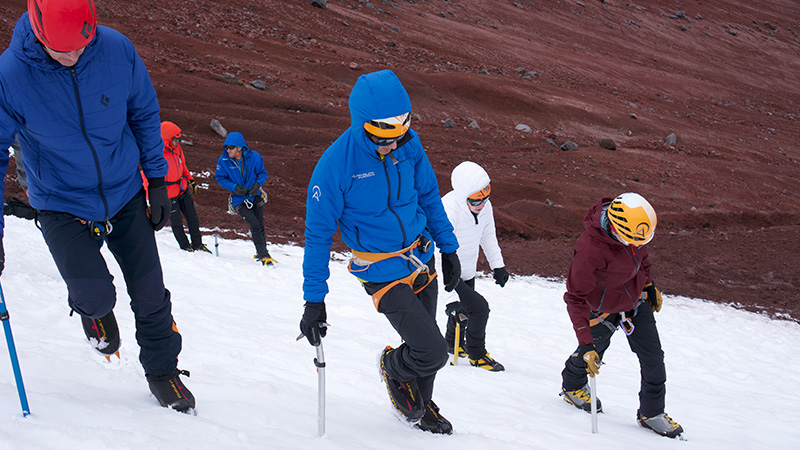
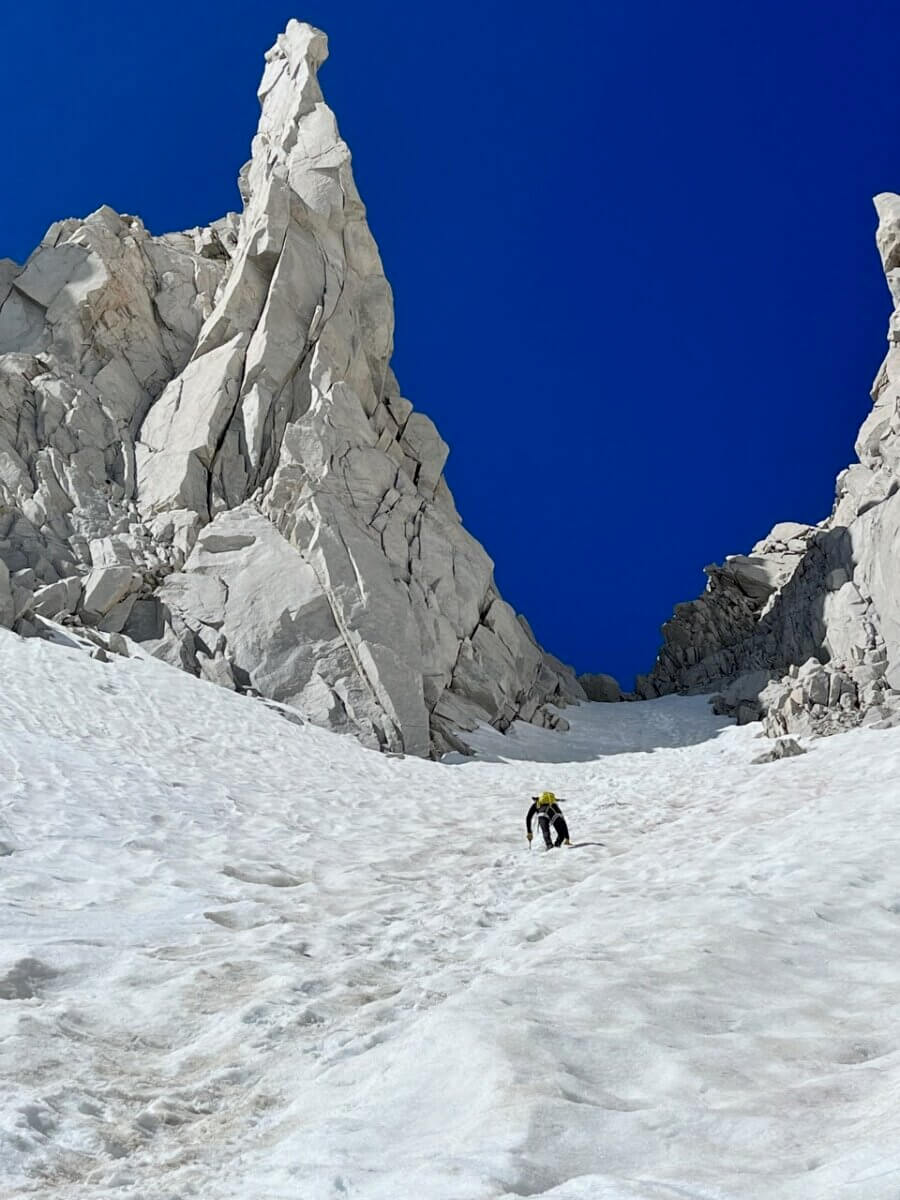
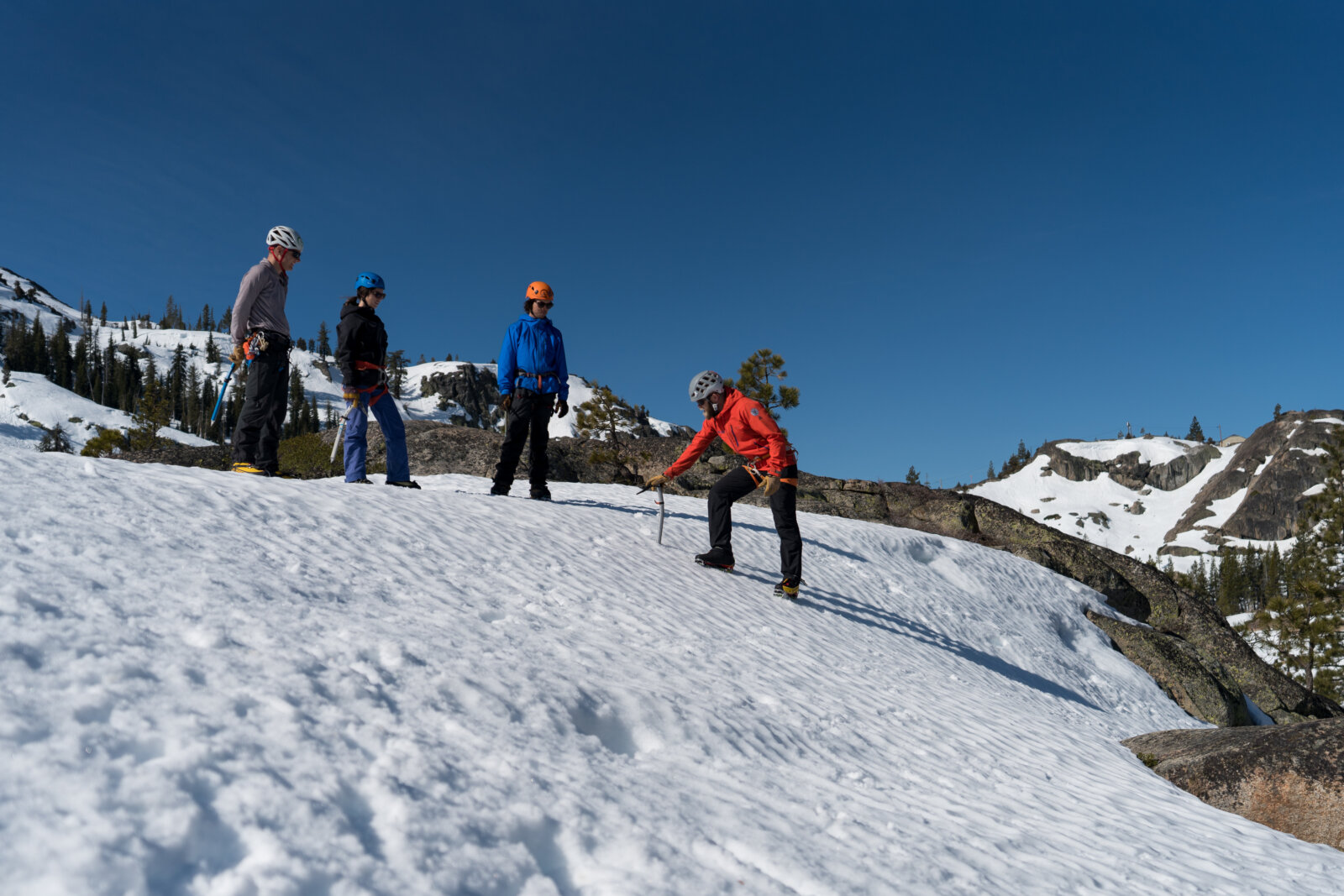
Your ice axe and crampons should match the terrain you expect to travel through. Different objectives call for different tools, and understanding the range of options can make choosing the right setup much easier.
In general mountaineering, the goal is efficiency and security across a variety of conditions. Snow slopes, glaciers, alpine ridges, and steep ice all require slightly different tools. Below is a breakdown of the most common ice axe and crampon types and where each one performs best.
Ice Axes
Classic Mountaineering Axe
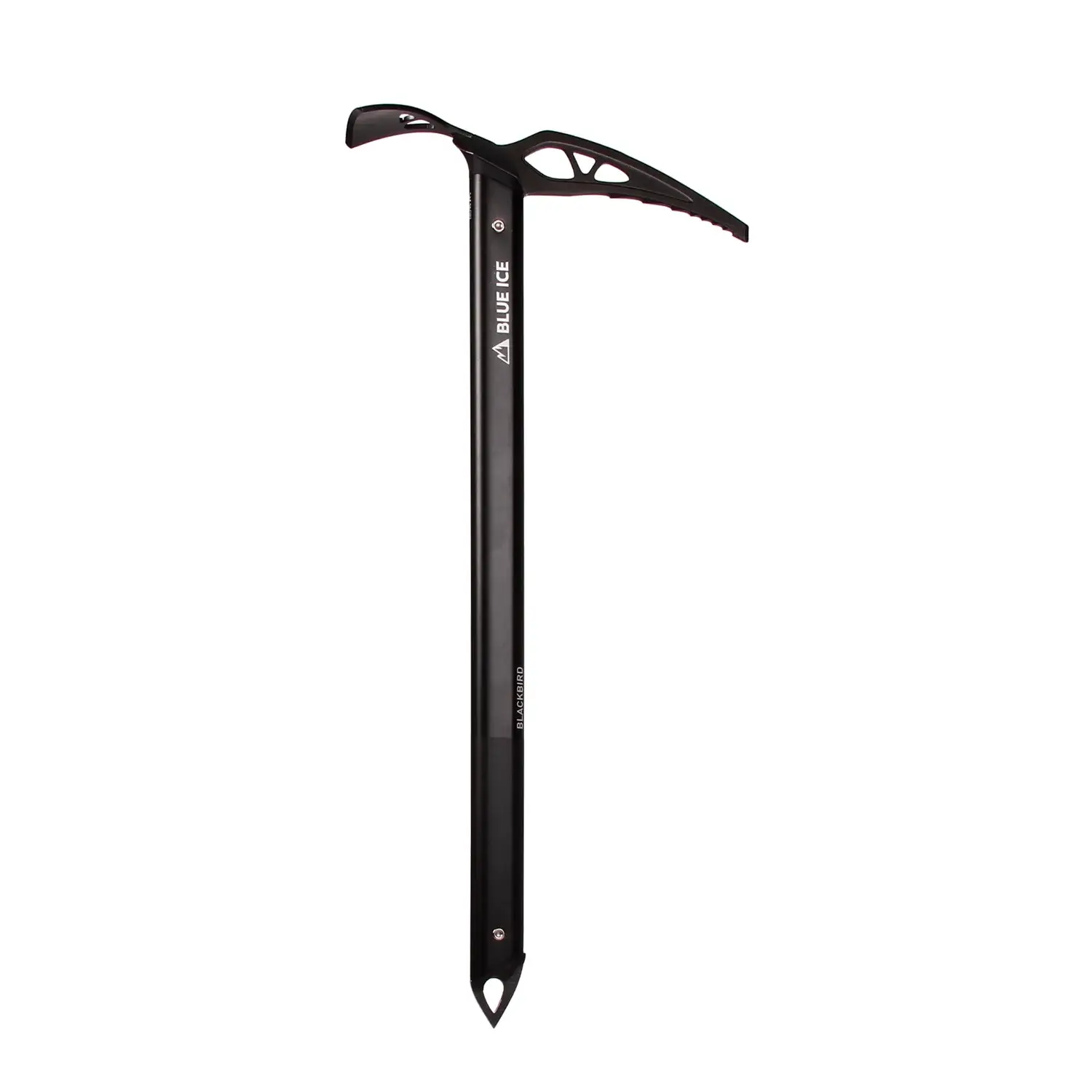
The classic mountaineering axe is the most commonly used ice axe in alpine climbing. It’s designed primarily for balance while moving on snow, as well as self-arrest if a climber slips.
These axes typically have a straight or slightly curved shaft and are long enough to use like a walking tool on moderate slopes. The pick and adze allow climbers to cut steps, anchor themselves in snow, or stop a fall.
This type of axe is commonly used on:
- Glacier routes
- Moderate snow slopes (generally 30–45°)
- Non-technical alpine summits
- Introductory mountaineering routes
Classic axes are the standard tool on objectives like Aconcagua, Mount Rainier, Mount Baker, and Cotopaxi.
For many climbers, this is the first ice axe they purchase and the one they use most frequently.
Hybrid Alpine Axe
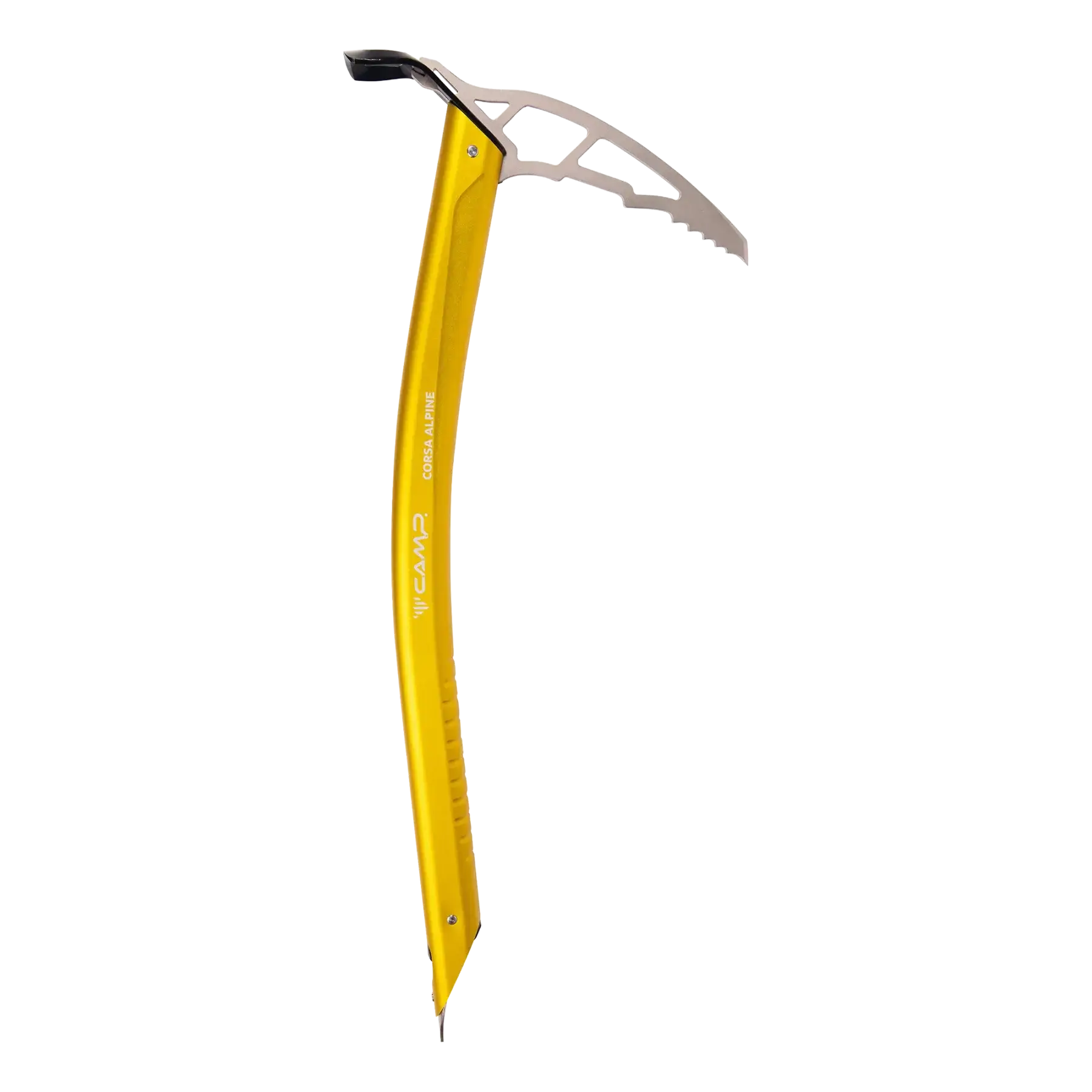
Hybrid alpine axes bridge the gap between classic mountaineering axes and technical ice tools. They feature a slightly curved shaft that improves performance on steeper snow or moderate ice.
The curved shape allows the pick to engage more effectively on steeper terrain while still maintaining enough length to be used as a walking tool.
These axes are popular for:
- Alpine routes with steeper snow
- Snow and ice couloirs
- Mixed alpine terrain
- Climbers moving toward more technical objectives
Many climbers choose this style when they begin transitioning from general mountaineering to more technical alpine climbing.
Technical Ice Tools
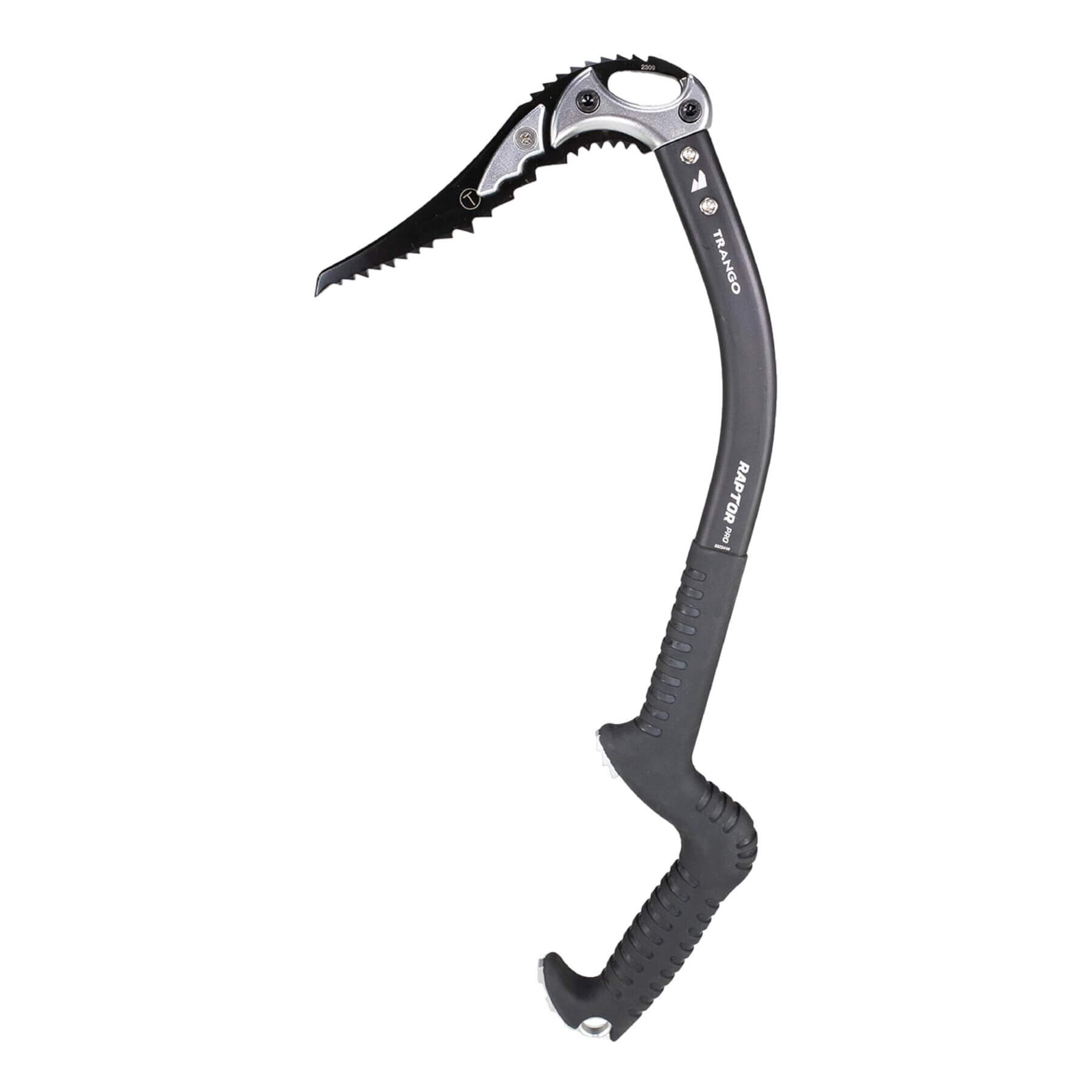
Technical ice tools are designed for steep ice and mixed climbing where traditional mountaineering axes become inefficient.
These tools are shorter and have aggressively curved shafts. The pick geometry is optimized for secure placements in vertical or near-vertical ice. Climbers typically use them in pairs.
Technical ice tools are used on:
- Waterfall ice climbs
- Steep alpine ice routes
- Mixed terrain involving rock and ice
- Technical couloirs with sustained steep sections
While excellent for climbing steep terrain, they are not ideal for long approaches or general mountaineering travel because they are too short to function well as walking tools.
Crampons
Crampons provide traction on snow and ice, but different styles exist depending on the terrain and the type of boots you are wearing.
The main differences between crampons come down to binding style, rigidity, and front-point configuration.
Strap-On Crampons
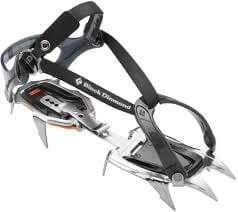
Strap-on crampons attach to boots using webbing straps that secure the crampon at both the toe and heel. Because they don’t require special welts on the boot, they can fit a wide variety of footwear.
They are typically paired with slightly more flexible frames, which makes them comfortable for walking on snow and glaciers.
Strap-on crampons are commonly used for:
- Glacier travel
- Moderate snow climbs
- Entry-level mountaineering objectives
- Routes where steep front-pointing is limited
Their main advantage is versatility. They work with many boots and are easy to adjust.
Semi-Automatic (Hybrid) Crampons
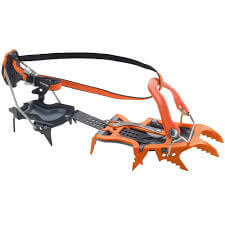
Semi-automatic crampons use a heel lever that clips onto a rear boot welt while the front of the crampon is secured with a strap.
This setup requires a mountaineering boot with a heel welt but still allows some flexibility in the toe. The result is a more secure attachment than a full strap-on system.
Semi-automatic crampons are commonly used for:
- Technical mountaineering routes
- Steeper snow or alpine ice
- Mixed terrain where a secure fit is helpful
Many climbers consider this the most versatile crampon style for alpine climbing.
Automatic (Step-In) Crampons
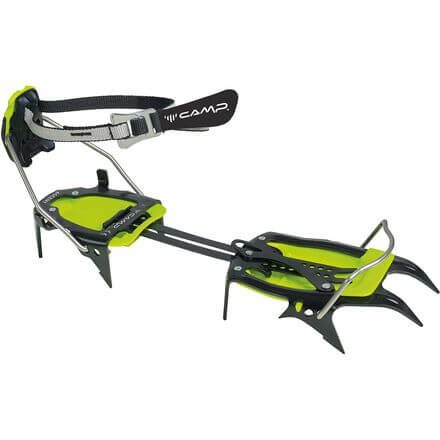
Automatic crampons attach using metal bails at the toe and heel that snap directly onto mountaineering boots with front and rear welts.
This system provides the most rigid and secure connection between the boot and crampon.
Automatic crampons are typically used for:
- Technical ice climbing
- Steep alpine ice routes
- Mixed climbing
- Highly technical terrain where precision matters
Because they require specialized mountaineering boots, they are less universal than strap-on systems but offer the best performance on steep ground.
Matching Your Tools to the Objective
The best equipment setup depends on the type of terrain you expect to encounter.
A general guideline looks like this:
Glacier travel and moderate snow climbs
- Classic mountaineering axe
- Strap-on or semi-automatic
Steeper alpine routes or couloirs
- Hybrid alpine axe
- Semi-automatic
Technical ice or mixed climbing
- Technical ice tools
- Automatic
For many climbers, a classic mountaineering axe paired with semi-automatic crampons provides a versatile setup capable of handling a wide range of alpine objectives.
Final Thoughts
Understanding the differences between ice axes and crampons is an important step toward moving confidently in the mountains. The right tools make steep snow and ice feel more controlled and allow you to travel efficiently across a wide range of alpine terrain.
If you’re unsure which setup makes sense for your goals, the best place to start is by building skills alongside experienced guides. Courses like an Intro to Mountaineering program, a Glacier Travel and Crevasse Rescue course, or a High Sierra Alpine Day are designed to help you learn these systems in real mountain terrain. You’ll practice using the tools, understand when each piece of equipment makes sense, and walk away with the confidence to choose the right setup for your next objective.
Learn Mountaineering & Explore the High Sierra with us
Intro to Mountaineering Course
Glacier Travel & Crevasse Rescue Course
High Sierra Alpine Climbing
Mount Shasta Mountaineering School
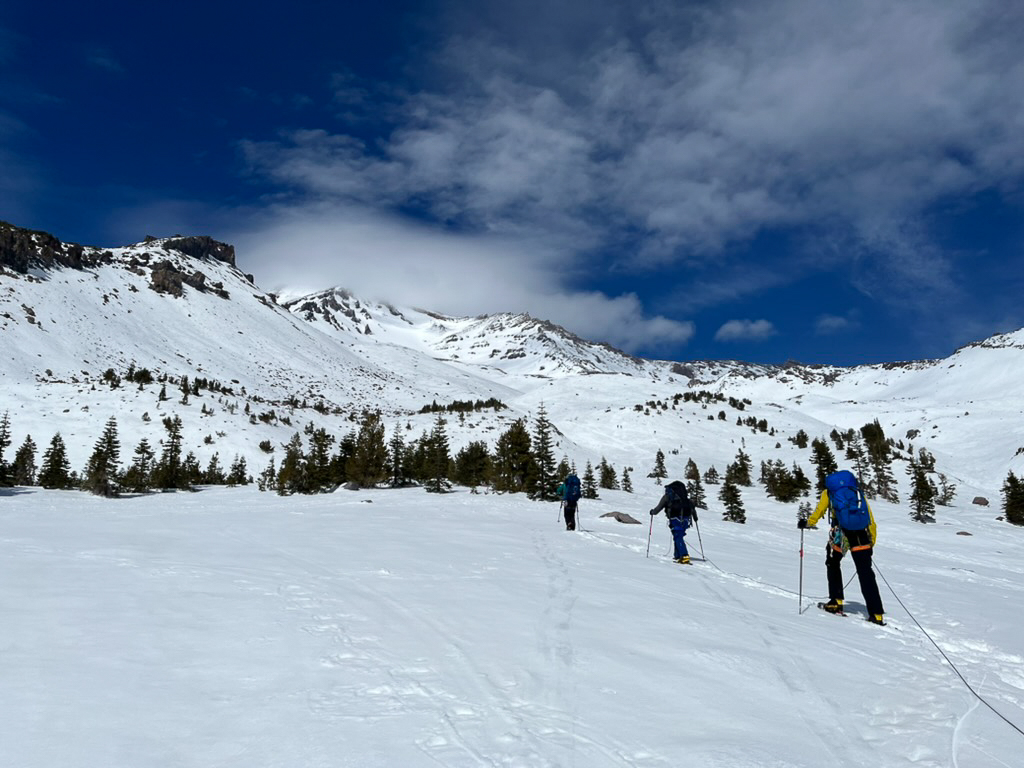
Mount Shasta Avalanche Gulch Climb
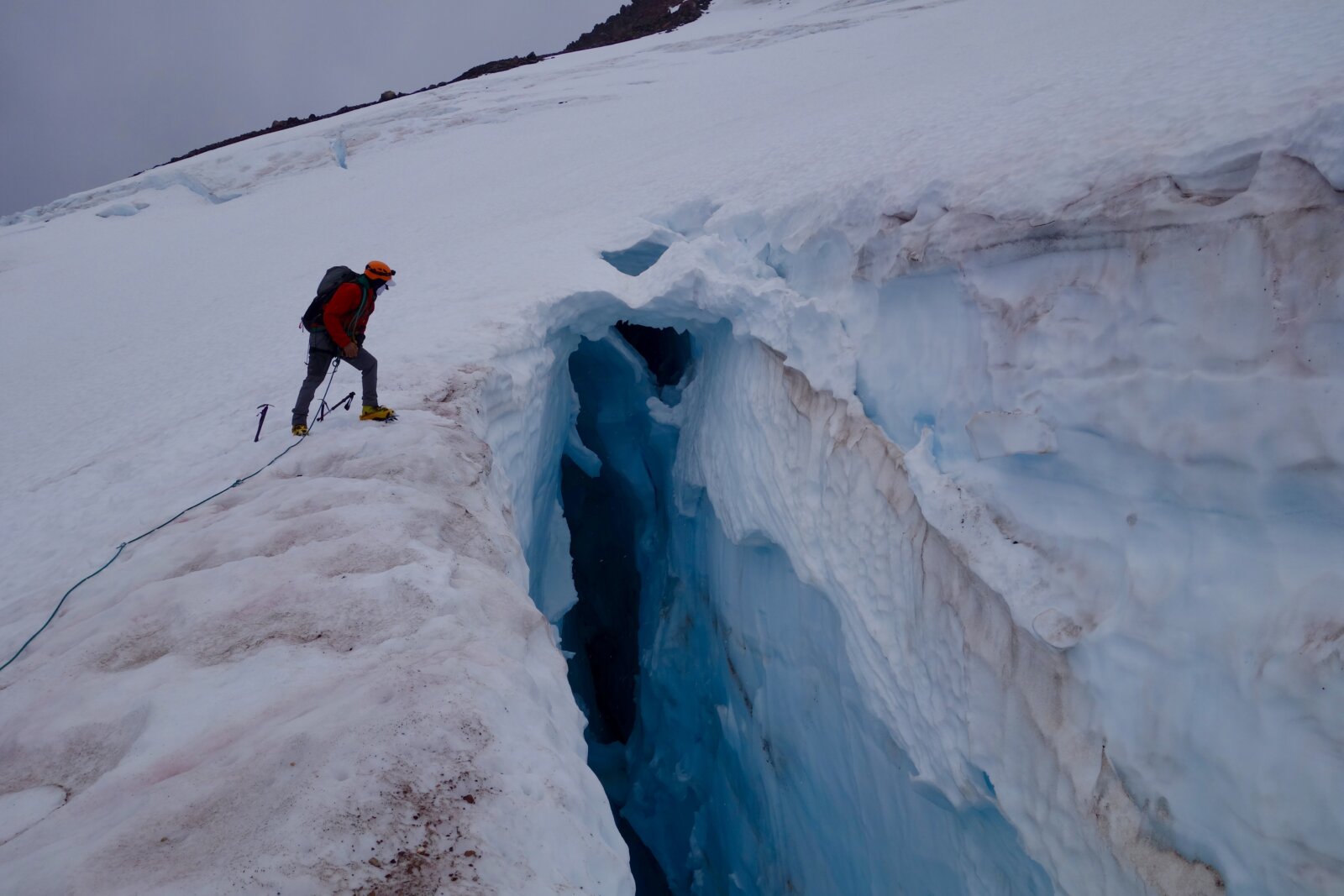
Mount Shasta West Face Climb
Keep Reading About Mountaineering
“Give Yourself the Time”: Graduating from Trekking to Climbing with Topo Mena
While ‘walking’ may sound trivial, a number of big mountains involve a lot of walking, albeit in extreme places. To talk about the journey, we connected with IFMGA-certified Alpenglow guide Esteban ‘Topo’ Mena about graduating from trekking to climbing. For beginners, he had this advice to offer: “At first, it’s important to give yourself the time to walk in the mountains and appreciate the land and the opportunity to just be there.”Read the story
A Beginner’s Guide To Climbing Mount Shasta
Alpenglow Expeditions’ Guides answer all of your questions about climbing Mount Shasta. Join a Shasta trip to learn mountaineering with us!Read the story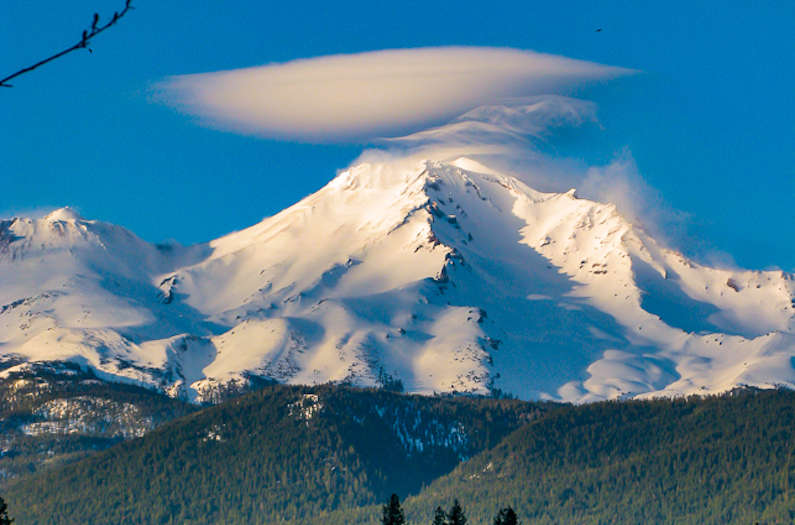
A Brief History of Mt. Shasta
Mount Shasta, a pinnacle of beauty and grandeur in Northern California’s landscape, boasts a history as intriguing as its rugged slopes. From its volcanic birth to indigenous reverence to challenges faced by early climbers, the mountain’s story is one of geological wonder and human endeavor. Today, it’s a place revered by countless climbers, skiers, and those who simply admire the mountain’s natural beauty.Read the story
Episode 49: How David Goettler’s Introduction to Alpine Climbing Defined His Style for Decades at the Top
David Goettler has been a professional alpinist for nearly 3 decades, and part of The North Face athlete team his entire career. With a focus on classical alpine style climbing on the highest peaks of the world, David has set out on a quest to climb in the way that suits him.Read the story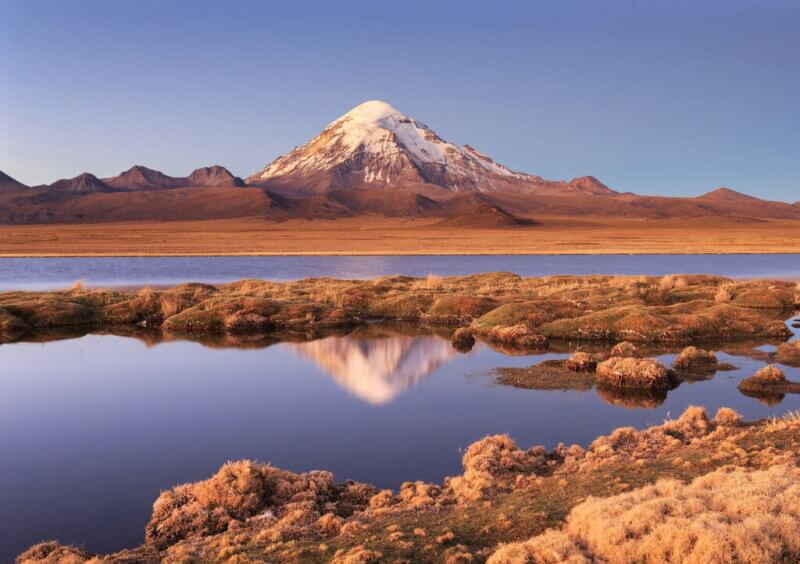
“More Than Just a Climbing Trip”: Mike Pond on the Mountains of Bolivia
In November 2023, Alpenglow guide Mike Pond returned to Bolivia for the fifth time for a private climbing trip. Moreover, it reminded us of our responsibility as climbers to listen to the mountains. As much as we may think of ourselves as mountain guides, it is equally as important to remember that the mountains guide us as well.Read the story