What to Wear While Skiing in the Backcountry
How to Layer in the Backcountry
A practical system for staying dry, regulated, and protected in the mountains
Layering in the backcountry just as much about staying warm as it is about staying dry. Conditions change quickly, effort levels fluctuate constantly, and the margin for error gets smaller the longer the day goes on. A good layering system helps you manage moisture, regulate heat, and protect yourself from wind, weather, and sun without burning unnecessary energy.
The biggest shift most people need to make is understanding that layering is active. You should expect to adjust layers multiple times throughout the day. If you are sweating heavily on the climb, be willing and prepared to adjust. The goal is to stay slightly cool while moving so you are not soaked when you stop.
Start with moisture management
Everything starts with your base layer. Because it sits directly against your skin, its job is to move sweat away from your body as efficiently as possible. Merino wool and synthetic fabrics do this well. Cotton does not. Cotton holds moisture, dries slowly, and will make you cold the moment you stop moving.
Most people default to base layers that are too warm. On high-output days, especially when skinning uphill for hours, a lightweight base layer is usually the right choice. You can always add insulation later. You cannot undo a soaked shirt halfway up a climb.

Why sun hoodies have become a go-to base layer
In recent years, sun hoodies have become a staple for experienced backcountry travelers, and for good reason. Sun exposure in snowy, high-elevation environments is intense. Snow reflects a large amount of UV radiation, and exposure increases with altitude. Clear winter and spring days can lead to serious sunburn even when temperatures are cold.
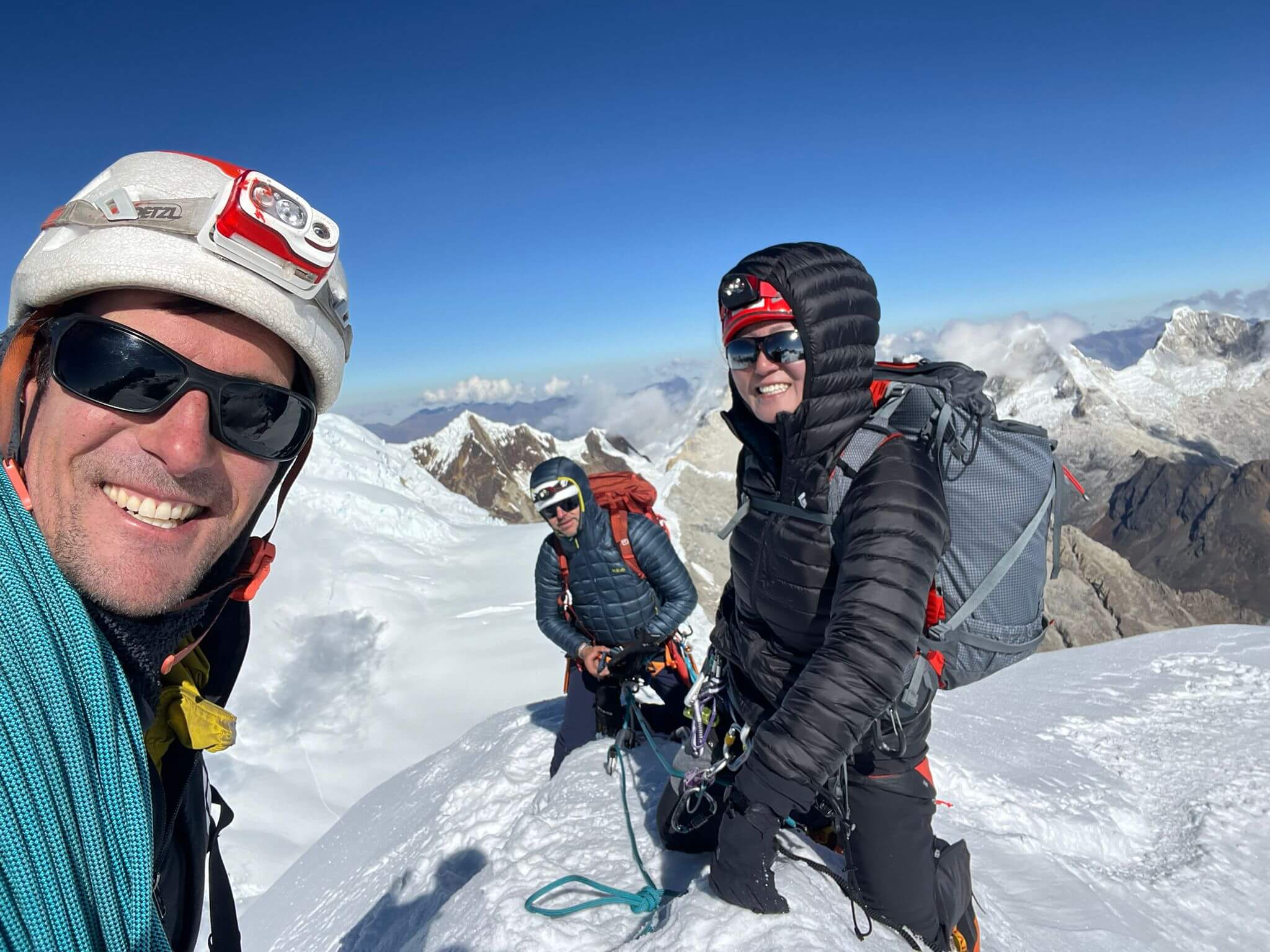
A sun hoody is a lightweight, breathable base layer designed to block UV radiation while still managing moisture. Worn directly against the skin, it provides continuous protection to areas that are easy to miss with sunscreen, like the back of the neck, ears, and jawline.
Sunburn in the backcountry is more than a comfort issue. It can contribute to dehydration, fatigue, headaches, and poor recovery. Over long days or multi-day trips, that adds up. Managing sun exposure is part of managing energy and decision-making.
The hood is one of the most valuable features. Pulled up under a helmet, it provides reliable coverage without trapping much heat. Thumb loops add protection to the backs of your hands, another common burn zone during long climbs. You will also find that a sun hoody actually helps keep you cooler by blocking direct sun while still allowing airflow.
On warm or sunny tours, it is common to wear a sun hoody as the only base layer, adding insulation and or a shell only when stopping or descending.
Active insulation for movement
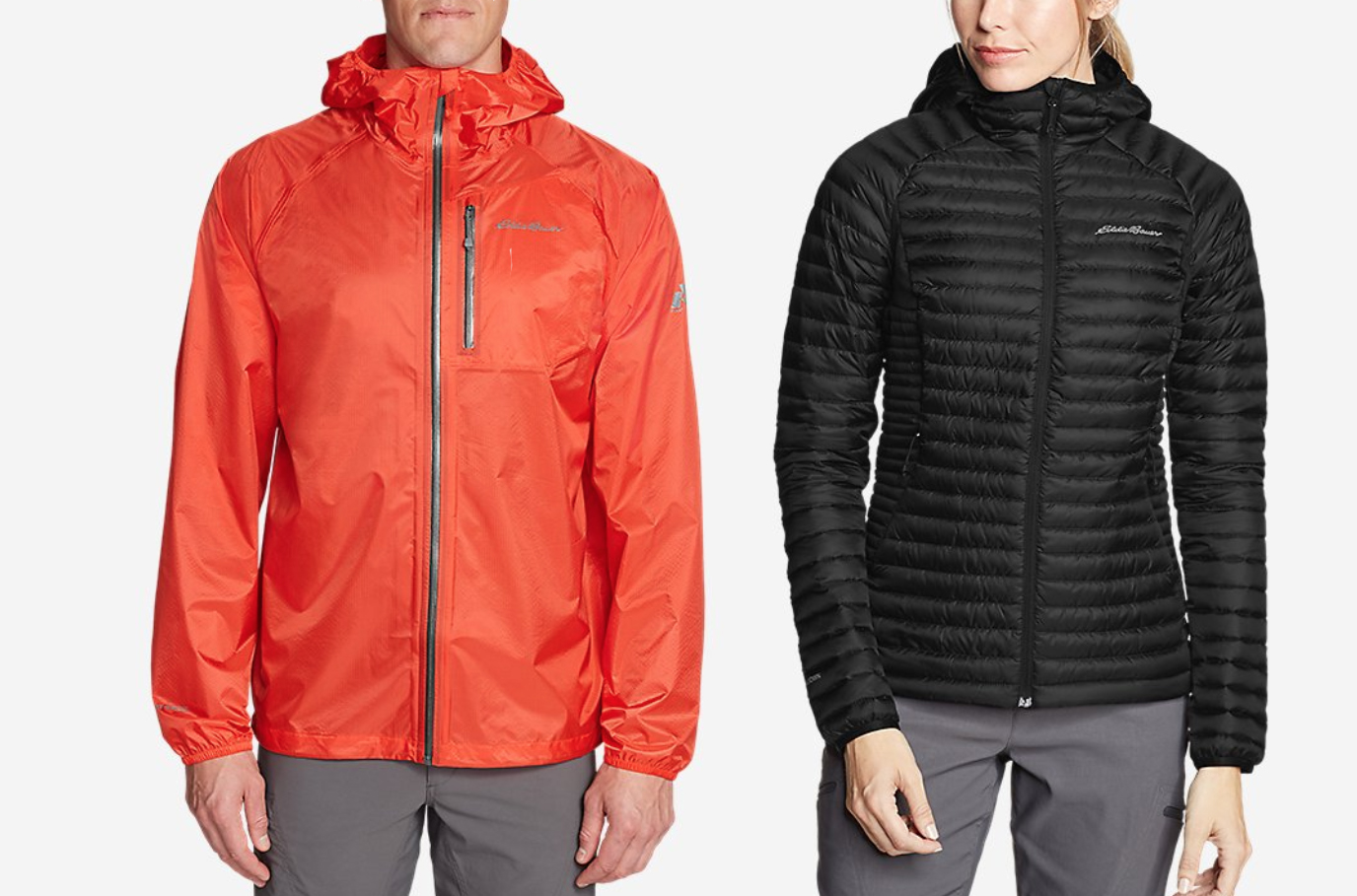
The mid layer is where warmth and breathability need to balance. This layer does most of its work while you are moving, especially in colder temperatures. Lightweight fleece or breathable synthetic insulation are common choices because they provide warmth without trapping too much heat. A softshell is helpful in colder, windy weather to help keep you protected while also being breathable and keeping you dry.
For many tours, the mid layer becomes the outer layer on the uphill, with the shell staying in the pack. If your mid-layer is too warm, you will sweat. If it is too thin, you will chill quickly during short pauses. Dialing this layer is one of the biggest factors in staying comfortable throughout the day.
Shell layers and wind management
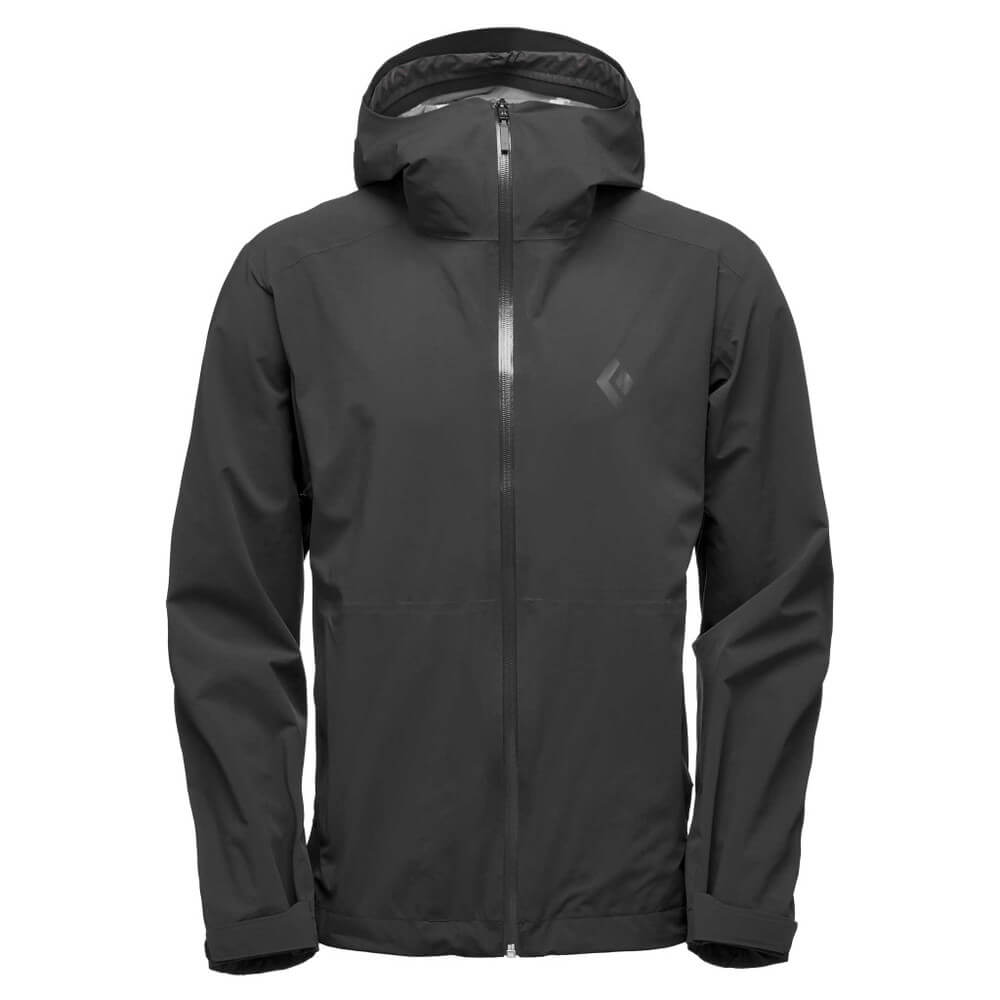
Your shell is there to protect you from wind, snow, and precipitation. In calm, dry conditions, it may stay in your pack for most of the climb. In exposed terrain or changing weather, it becomes essential.
Wind is often what makes people cold, not air temperature alone. A shell that blocks wind effectively can dramatically increase warmth without adding insulation. Softshells work well in cold, dry environments where breathability matters. Hardshells are critical when storms, heavy snow, or wet conditions are in play.
Most people put their shell on for transitions and descents, when wind exposure increases and heat production drops.
Insulation for stopping and transitions
Your insulation layer, usually a puffy jacket, is for moments when you are not moving. This layer matters more than people realize. The fastest way to get cold is to stop without putting insulation on immediately.
Down insulation is warmer for its weight and works well in dry climates. Synthetic insulation handles moisture better and is more forgiving in storms. Both can work if used correctly.
If you are debating whether to put your puffy on, put it on. Waiting even a few minutes can make it difficult to regain warmth.
Lower body layering stays simpler
Legs generate heat efficiently and generally require fewer layers than your upper body. Most backcountry travelers use a lightweight or midweight base layer under breathable softshell pants. Shell pants come out when weather, wind, or deep snow demand them.
Over-layering your legs is a common cause of overheating on the climb. Breathability matters more than insulation here, especially during long ascents.
Hats are critical for temperature control
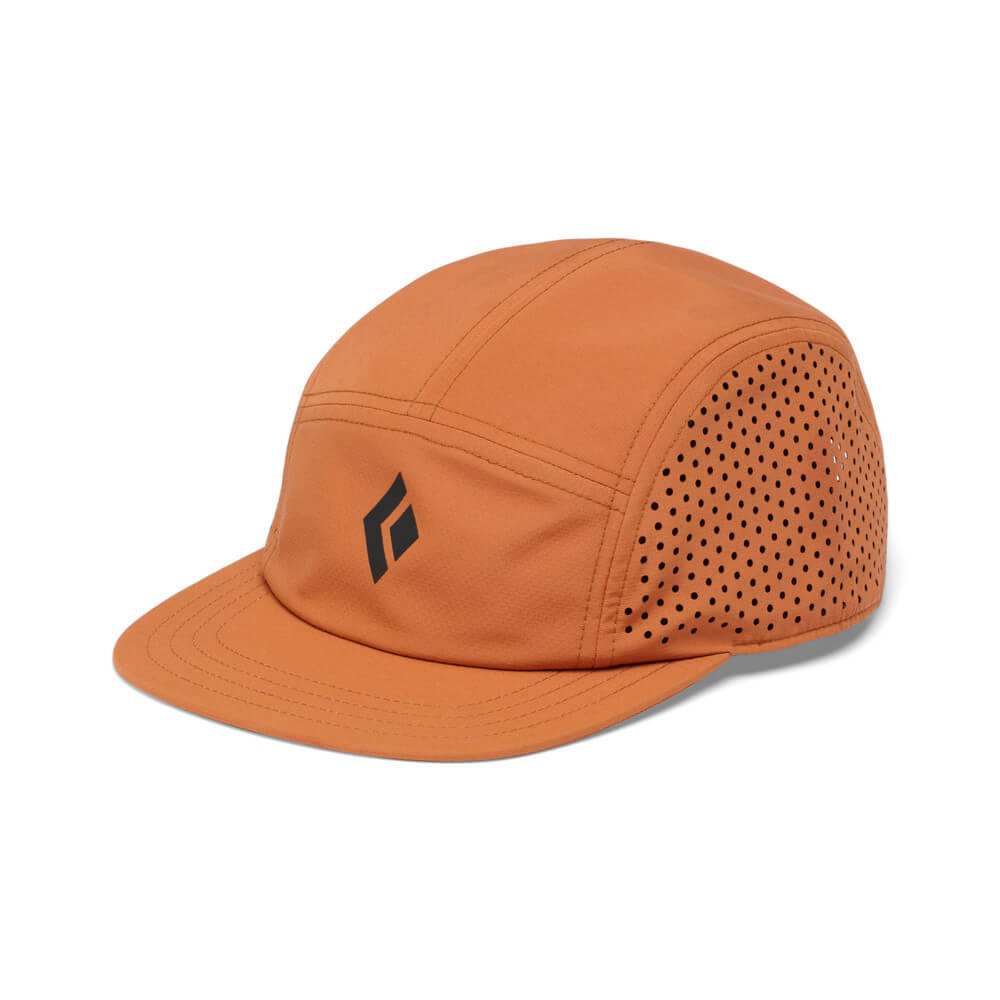
Hats are one of the most effective and overlooked tools in a layering system. Adjusting what is on your head is often faster and more efficient than changing jackets. Because a significant amount of heat is lost through the head and neck, small changes here have an outsized impact.
On the uphill, a thin beanie or low-profile ball cap is often enough. It keeps sweat out of your eyes and provides light warmth without overheating. In sunny conditions, the bill of a ball cap will be crucial in keeping the sun out of your eyes and off your face.
A warmer insulated hat is best saved for transitions and descents. Putting it on as soon as you stop helps trap heat quickly and pairs well with a puffy during longer breaks. Wind protection at the head matters as much as insulation. A light hat that blocks wind can feel significantly warmer than a thicker one that does not. Layering with a buff over the hat can help you quickly regulate temperature. Just quickly pull it down or up while you’re in the skin track.
Accessories fine-tune the system
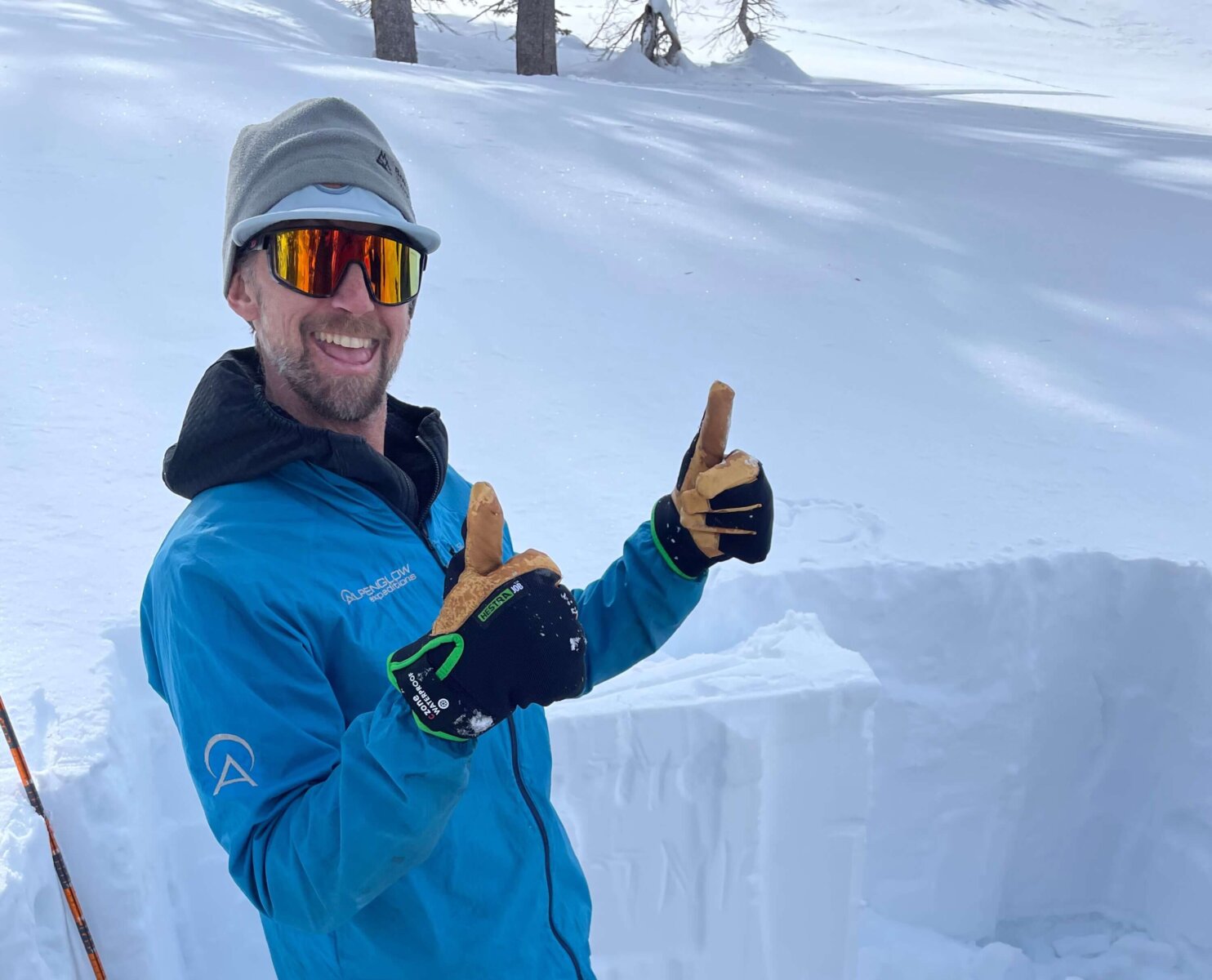
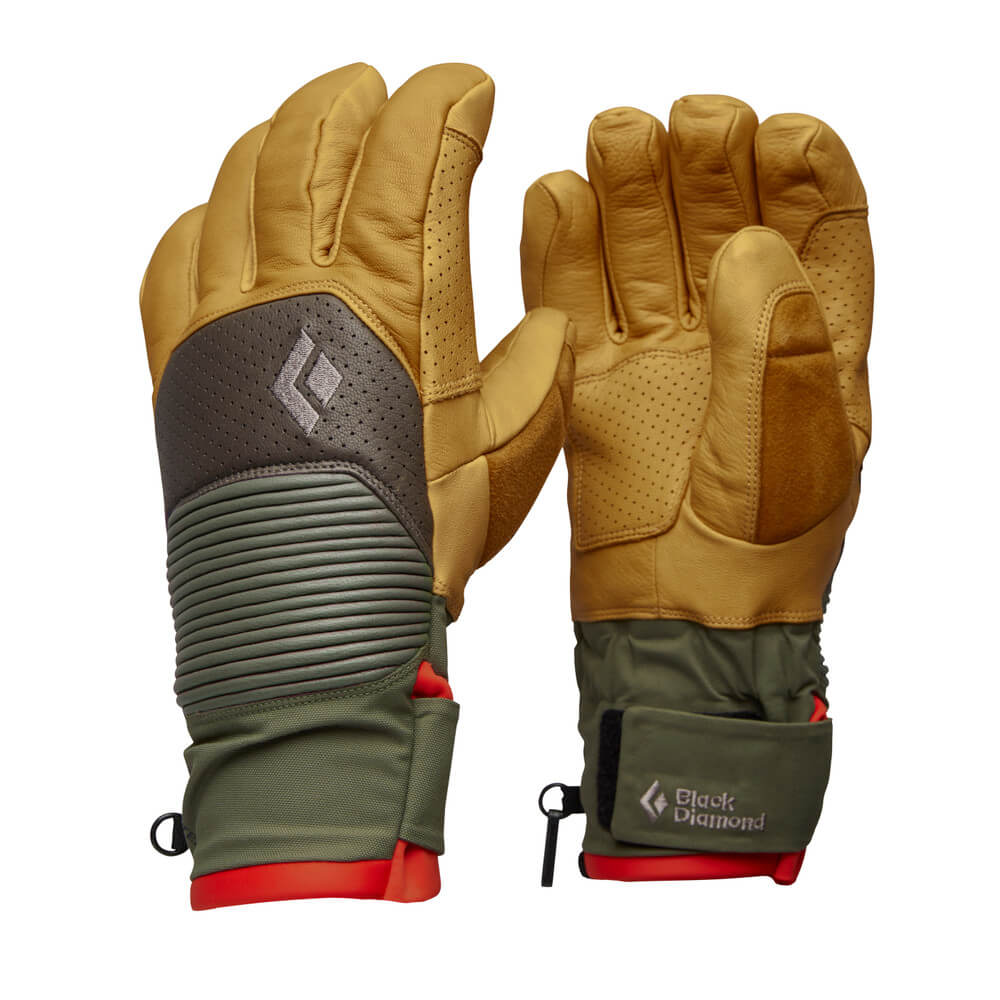
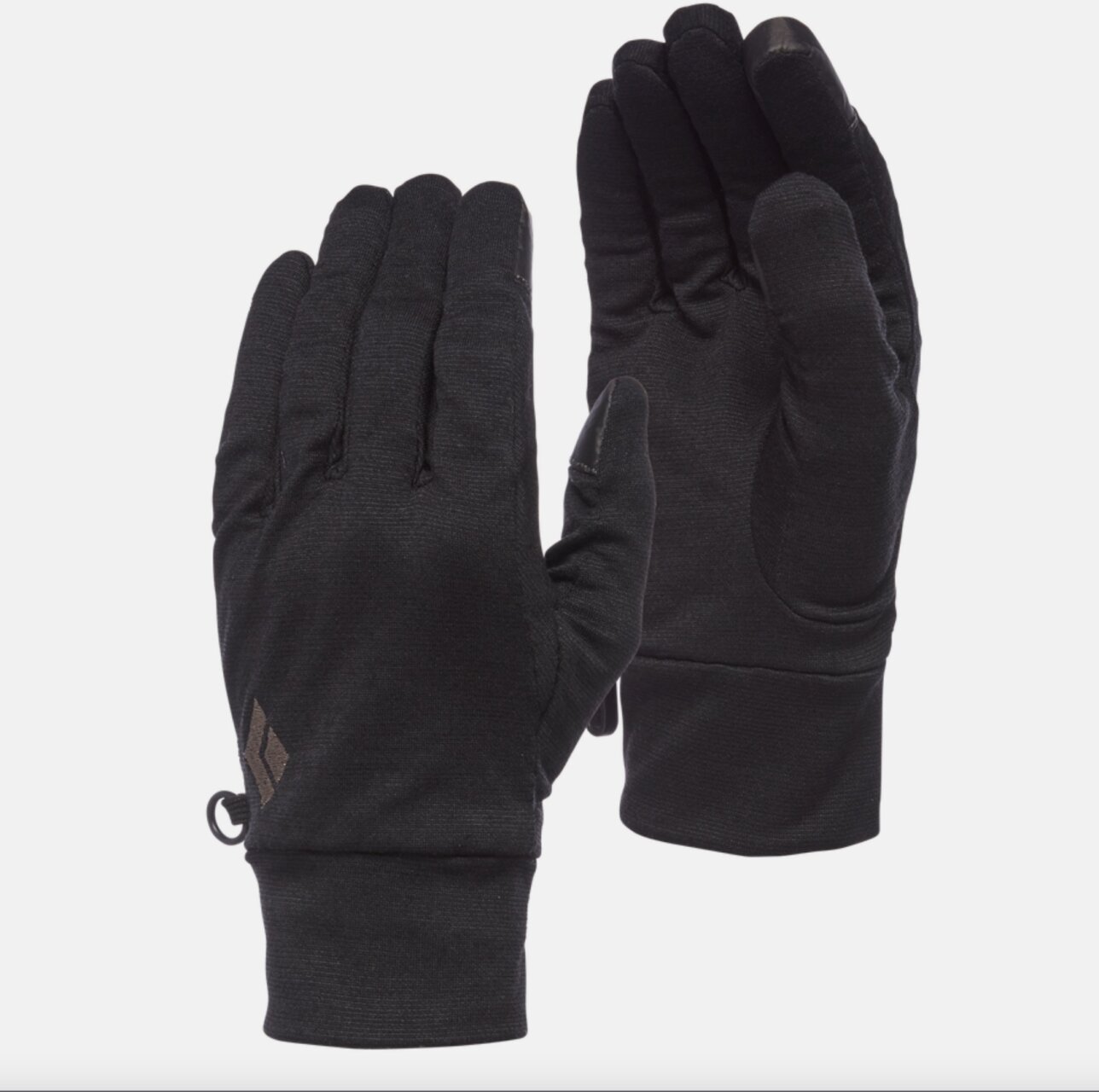
Gloves, neck gaiters, and socks help you make small adjustments without changing core layers. A thin touring glove for the climb and a warmer backup pair for descents is a common setup. An extra pair of “oh shit” gloves in case you spend more time out there than planned, or weather changes come quickly, will keep you safe and more comfortable.
A thin pair of ski wool socks will keep you warmer as they are better able to wick moisture away from your feet. They are also less likely to stretch and become ill-fitting over the day, leading to blisters.
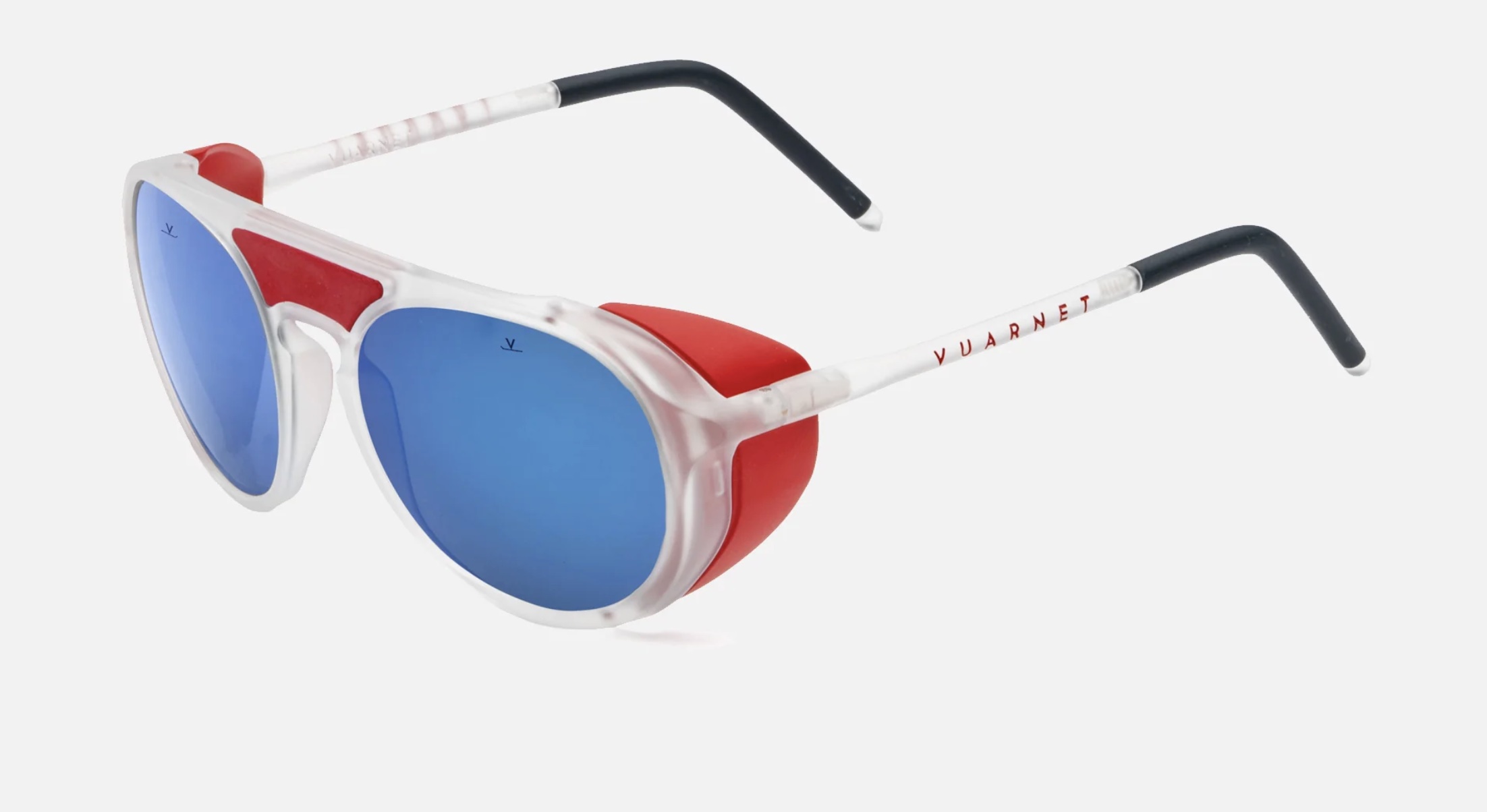
Sunglasses will serve you well on the uphill and protect your goggles from fogging up. Even when it’s not too sunny, remember to protect your eyes with glasses that wrap around your face or have side shields.
These small pieces are where you can make quick corrections before problems start.
Putting it all together
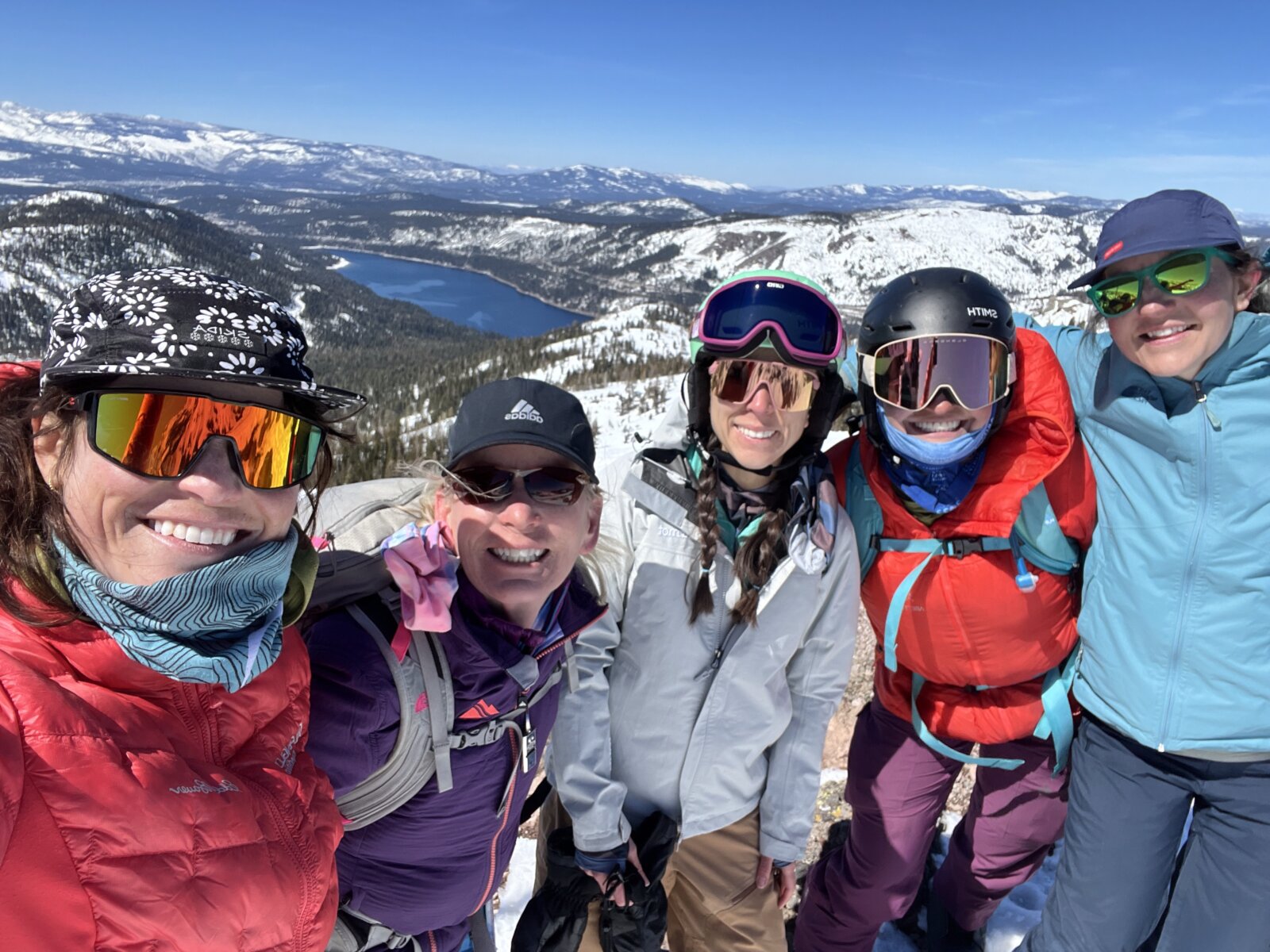
A typical, effective setup looks like this: a sun hoody or lightweight base layer with a breathable mid layer for the climb, insulation added immediately at transitions, and a shell layered on for wind and descents. A thin hat that’s warm but not too warm for the uphill and fits under your helmet. Gloves are adjusted constantly as effort and exposure change. Generally, a lighter pair of gloves for uphill and a warmer pair of gloves for the downhill.
The best layering systems are managed early and often. Small adjustments made before you are soaked or shivering go a long way.
Remember:
Control moisture, control heat, and control exposure to wind and sun. Sun protection is not an afterthought in snowy, high-altitude environments. It is a core part of staying comfortable, efficient, and focused over long days.
When your layering system is dialed, you move better, make clearer decisions, and enjoy more consistent days in the mountains.
If you want to learn more and get even more dialed in the backcountry, book a day of Private Ski Guiding, AIARE course or Backcountry course with us!
Hetch Hetchy Yosemite Backpacking Adventure