Why We’re Still Guiding in Ecuador
Concern about safety in Ecuador is understandable. The news cycle does its job, and headlines about instability in South America can make anyone pause before booking a flight to Quito. But headlines about Ecuador are rarely about the places we operate, and the conditions that drive them are rarely relevant to the experience of a climber heading into the Andes.
Here’s what we actually know after more than twenty years of guiding in Ecuador.
Where the Risk Is, and Where We Are
Ecuador’s security concerns are concentrated in specific urban and coastal zones, primarily along the western lowlands and in parts of a few major cities. Quito is Ecuador’s capital and our primary transit hub, and it is not immune to crime. But violent incidents affecting travelers are rare, and they are not characteristic of the neighborhoods and infrastructure that climbers move through.
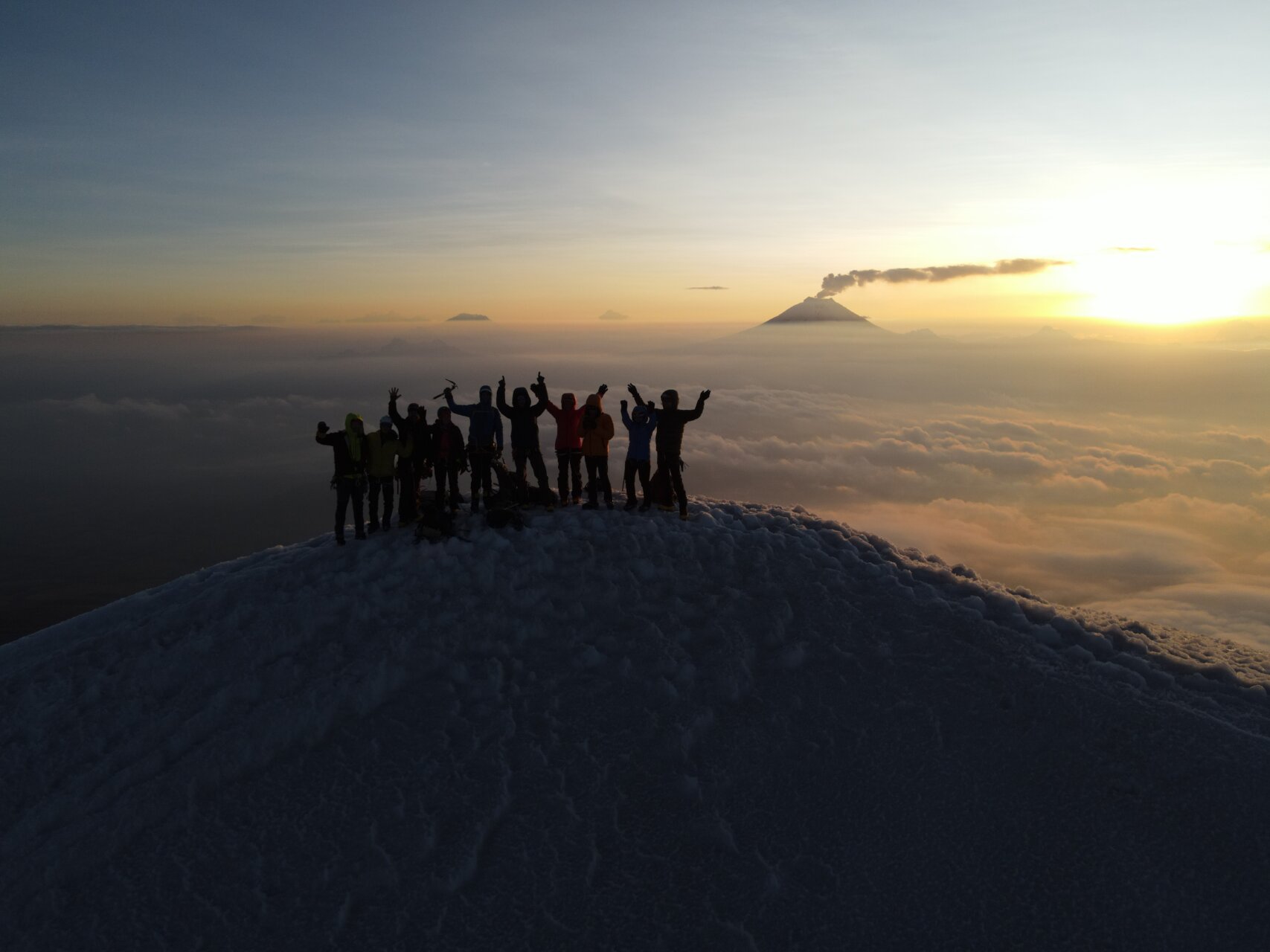
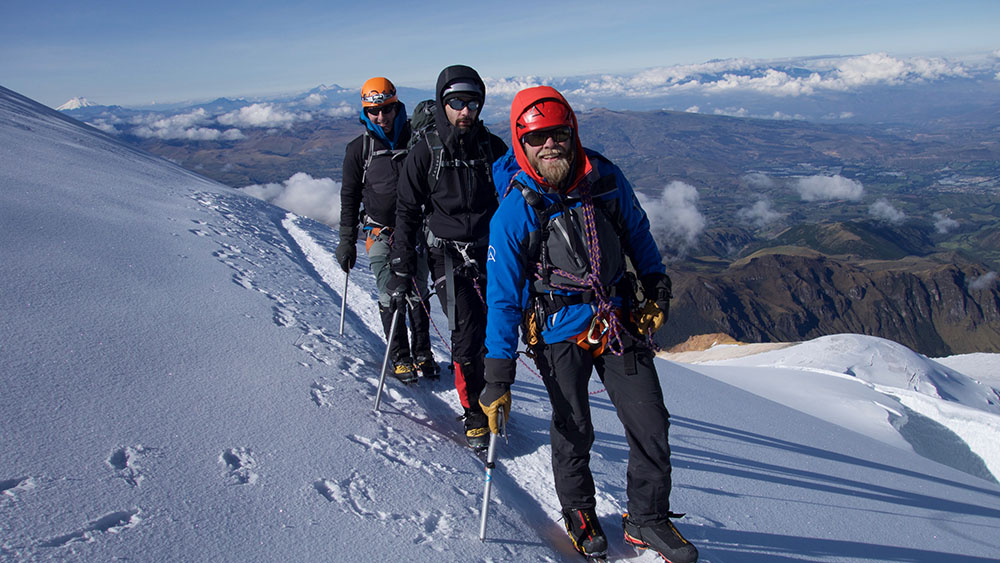
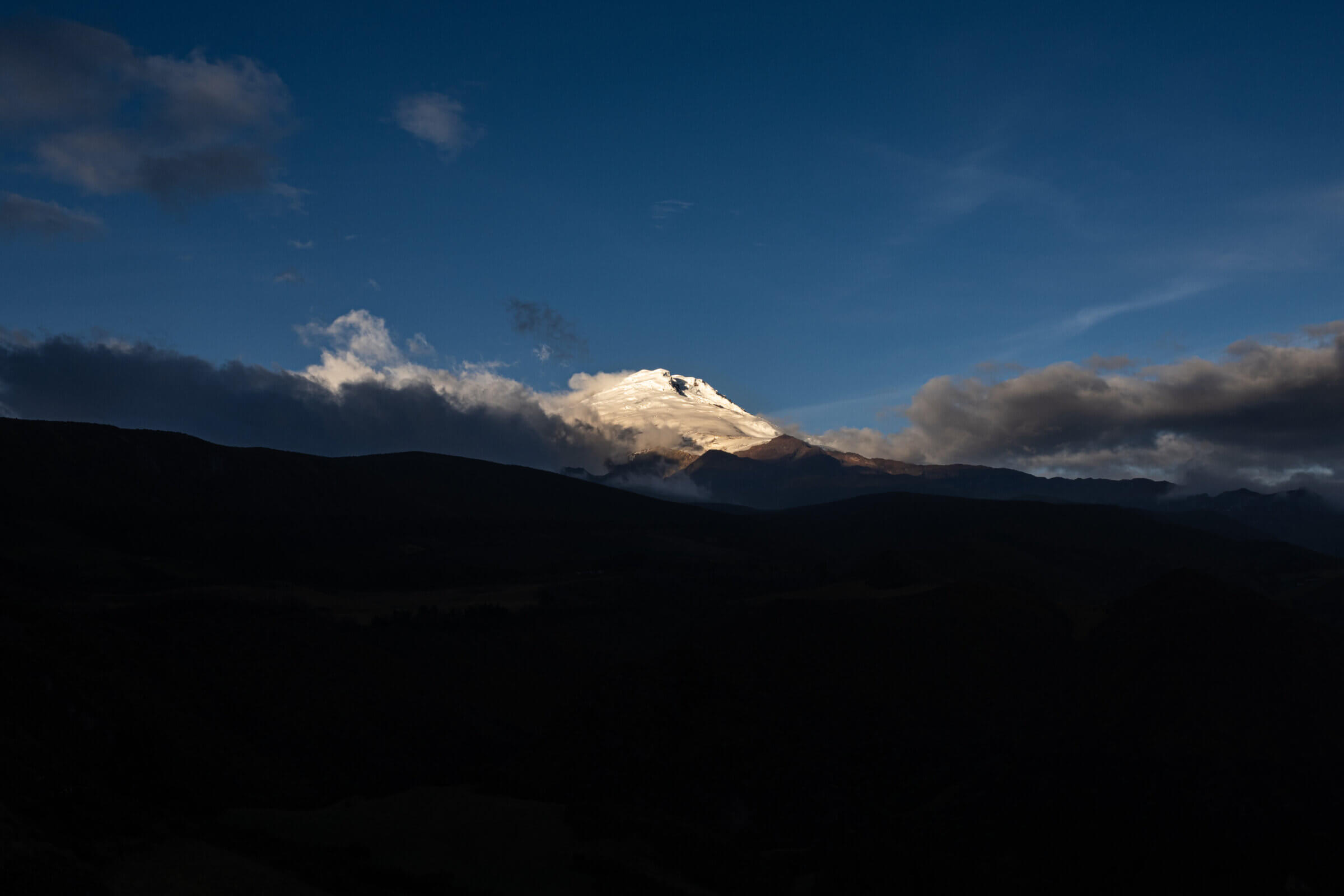
Most of our time in Ecuador is spent far from any city. From the moment we leave Quito, we’re in the highlands, moving toward 15,000, 18,000, and 20,000-foot volcanoes. The mountain environment is remote, the population is sparse, and the concerns that generate security headlines simply don’t apply there. If you’re acclimatizing on the flanks of Cotopaxi or ascending toward the crater rim at sunrise, you are not in a place where urban instability has any presence.
Our Logistics Partners
We have been working with the same ground operators in Ecuador for over two decades. Our Ecuadorian family consists of relationships built across hundreds of expedition cycles, with teams who know the local conditions, the routes, the mountain huts, the permits, and the seasonal rhythms as well as anyone in the country.
Our partners are plugged into on-the-ground intelligence that no travel advisory can replicate. They know when conditions are shifting before those shifts make the news, and they communicate that to us directly. That network of local knowledge is one of the most important safety assets we have, and it is something that has been built deliberately over a long period of time.
How We Monitor and Decide
Alpenglow Expeditions does not operate on a fixed schedule regardless of what’s happening on the ground. We track travel advisories from the U.S. State Department, monitor reports from our local partners. Our guides live and work in Ecuador year-round and update us continually on conditions.
When circumstances warrant a change, we change. If we ever determine that a trip cannot be operated safely, we don’t operate it. That standard applies to Ecuador the same way it applies to every destination in our portfolio.
At this time, our assessment is that Ecuador remains safe to operate. We are running our Ecuador expeditions as planned, with full confidence in our team, our partners, and our protocols.
What This Means for You
If you are considering the Ecuador Climbing School, a Cotopaxi Rapid Ascent, or the Ring of Fire and have questions about current conditions, the right move is to contact us directly. We can give you a current, specific, honest assessment. Our operations team is in daily contact with our Ecuador partners and can speak to what’s on the ground right now.
Ecuador is one of the most accessible high-altitude climbing programs we run. Cotopaxi and the surrounding volcanoes are serious objectives, and the logistics of operating there safely are something we have refined over many seasons.
If you’d like to speak with our team, CLICK HERE to schedule a time with us, or send us an email at info@alpenglowexpeditions.com and we’d be happy to chat.
Read More from Ecuador
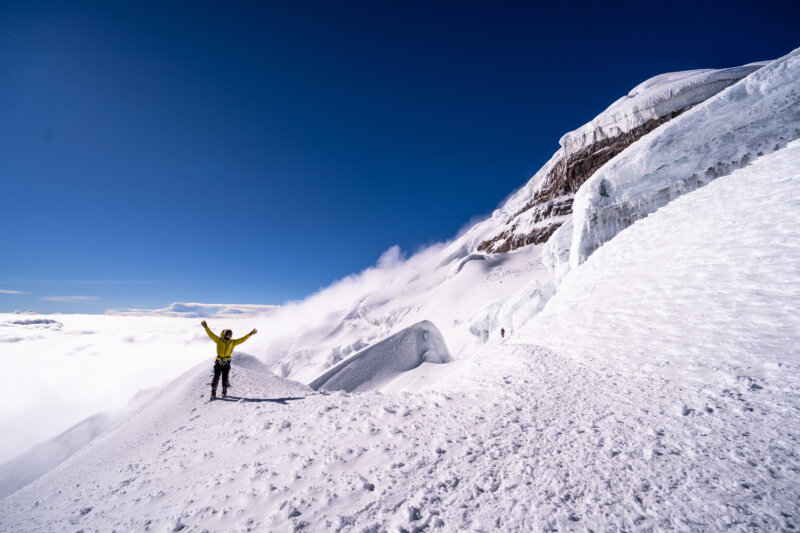
Ecuador vs. Peru Climbing School
Read about the differences between our climbing schools in Ecuador and Peru.Read the story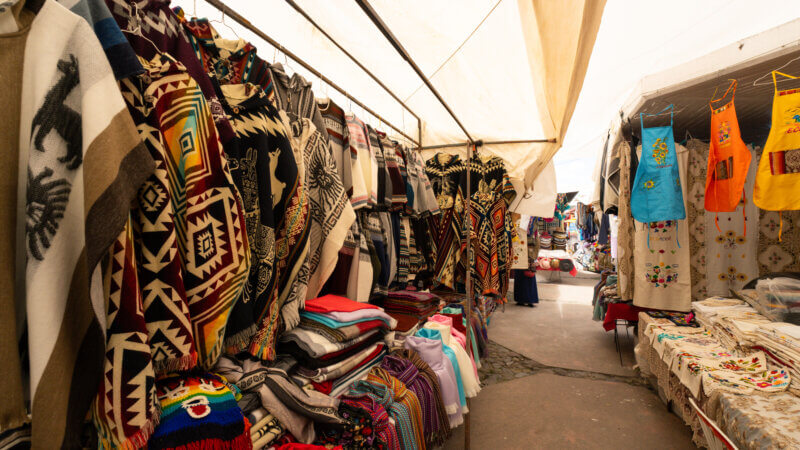
Beyond the Summits: Immersive Andean Culture on the Ecuador Climbing School
Climbing Ecuador’s towering volcanoes isn’t just about the summits. The Ecuador Climbing School offers an immersive experience that goes beyond the physical challenge of ascending peaks like Cayambe, Cotopaxi, and Chimborazo. From visiting vibrant indigenous markets to tasting traditional highland cuisine, the expedition introduces climbers to the rich culture of the Andean highlands.Read the story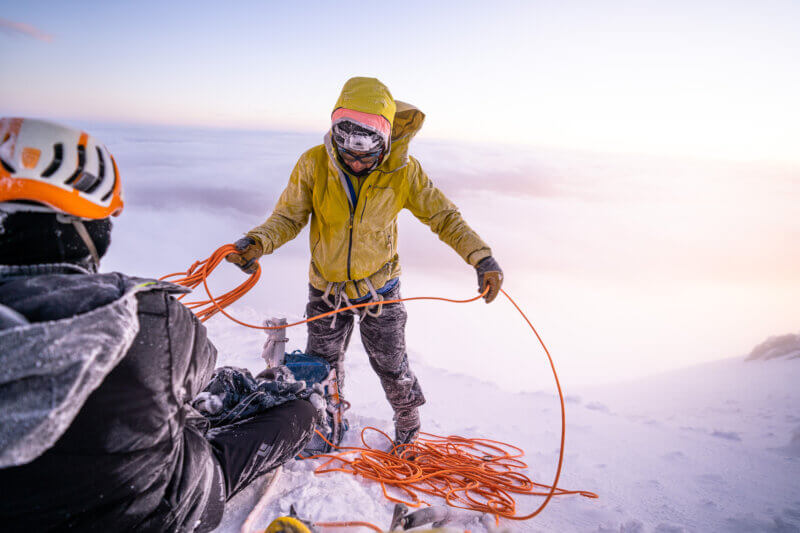
“Give Yourself the Time”: Graduating from Trekking to Climbing with Topo Mena
While ‘walking’ may sound trivial, a number of big mountains involve a lot of walking, albeit in extreme places. To talk about the journey, we connected with IFMGA-certified Alpenglow guide Esteban ‘Topo’ Mena about graduating from trekking to climbing. For beginners, he had this advice to offer: “At first, it’s important to give yourself the time to walk in the mountains and appreciate the land and the opportunity to just be there.”Read the story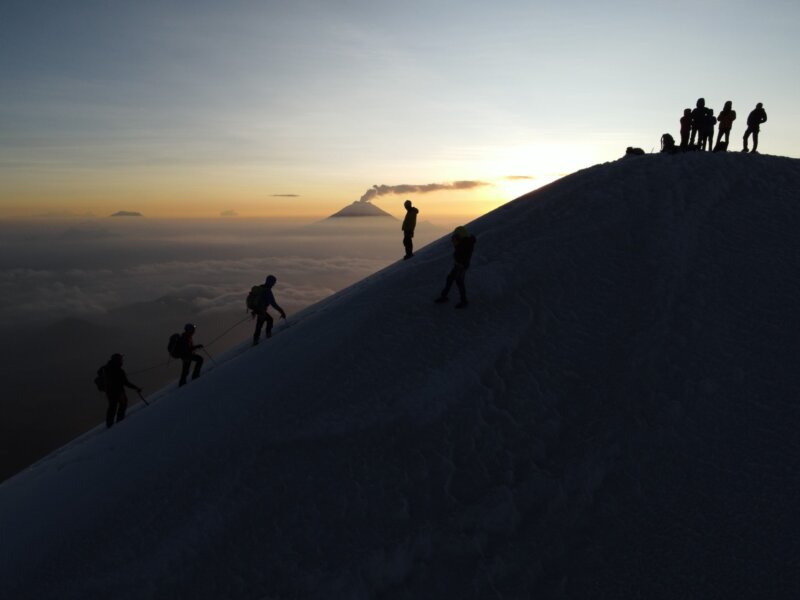
Are You Ready for an International Ski Expedition?
Most backcountry skiers reach a point where the local terrain starts to feel familiar in a way that’s hard to describe. The challenge is still there, but something has shifted. The mountain has become known. That feeling is worth paying attention to, because it usually means something: you’re ready to go somewhere else.Read the story
Cotopaxi Rapid Ascent™ – High Altitude in Just Five Days
Thanks to our Rapid Ascent™ system, climbers can attempt Cotopaxi in just five days—making it possible to step into big-mountain terrain without taking weeks away from home.Read the story
Episode 02: Esteban ‘Topo’ Mena: From Climbing 8,000m Peaks to Relearning to Walk
In Episode 2 of the Duffel Shuffle Podcast, Adrian sit’s down with Ecuadorian Mountain Guide, and Black Diamond athlete, Topo Mena. Topo talks about his start in climbing, his mentor Iván Vallejo, and a recent accident paragliding. After Topo’s accident, he’s been forced to adjust his perspective on life, and the love he has for the mountains.Read the story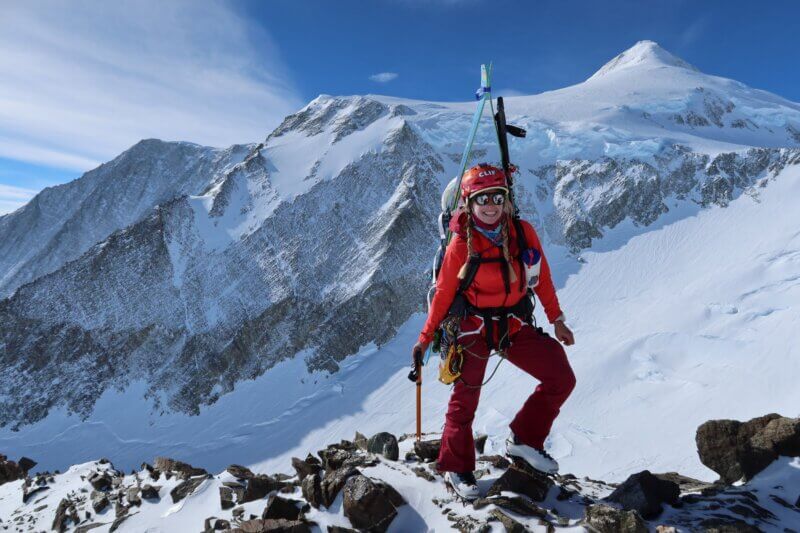
Episode 03: Caroline Gleich – From Skis To The US Senate
In Episode 3 of The Duffel Shuffle, Adrian and Sam sit down with ski mountaineer Caroline Gleich. The start off talking about one of Caroline’s most notable accomplishments, becoming the fourth person and first woman to ski all lines in Andrew McLean’s book, The Chuting Gallery. Following this accomplishment, Caroline set her sights on the greater ranges. With Everest as a goal, Caroline gained experience at altitude in places like Ecuador and Peru, before ultimately finding success on the tallest mountain in the world.Read the story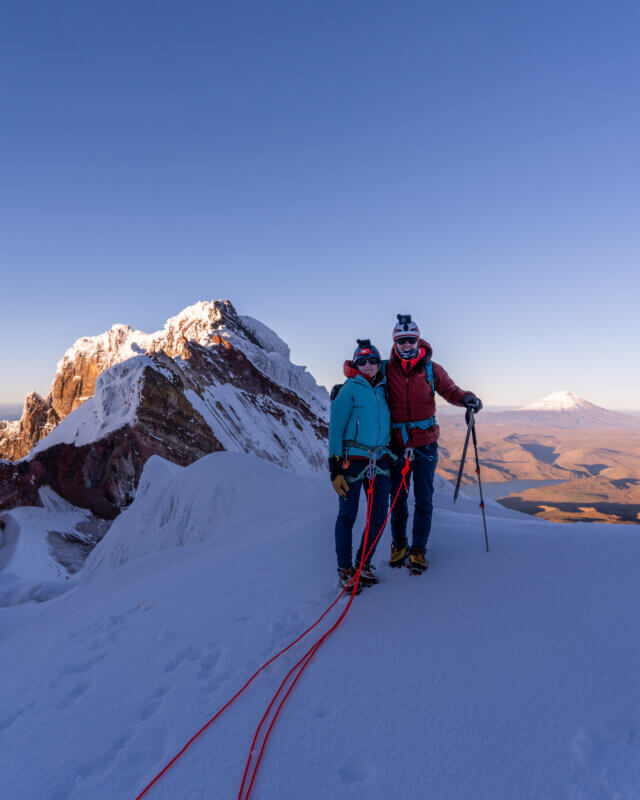
Episode 11: The Adventure Addicts – The Importance of Authenticity
Sam and Adrian sit down with Zoe and Kelby of The Adventure Addicts. These two have built a career as influencers, and they share a bit about their path, their jobs and their passions. The episode dives into the significant role influencers play in the outdoor industry, and the importance of remaining authentic. Their channel, @the_adventureaddicts on Instagram, has amassed nearly 500,000 followers, including a loyal 10 who just joined Zoe and Kelby on an Alpenglow Expeditions trip to Ecuador.Read the story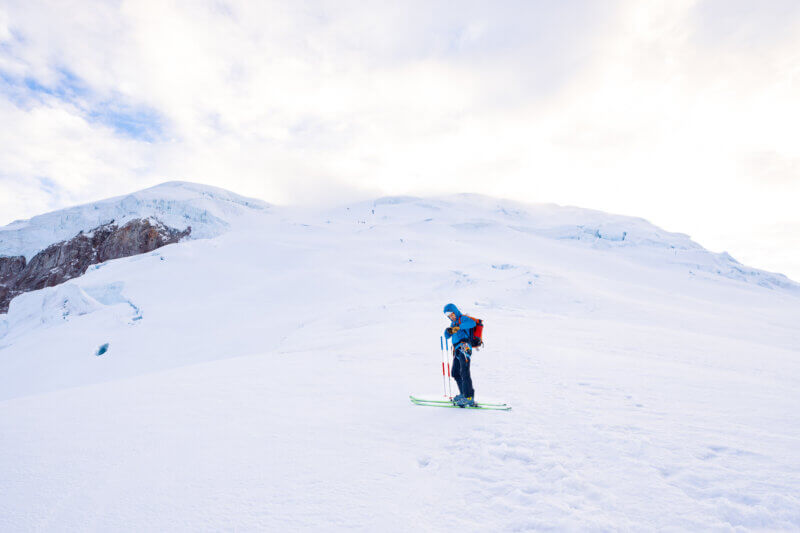
From Backcountry Skier to Ski Mountaineer on Ecuador’s Ring of Fire
If you’re looking to delve into the world of ski mountaineering, the Ecuador Ring of Fire Ski Expedition is an excellent opportunity to learn new skills while perfecting familiar ones in a unique high altitude environment. This expedition offers hands-on experience on some of Ecuador’s most spectacular volcanoes: Cayambe, Cotopaxi, and Chimborazo.Read the story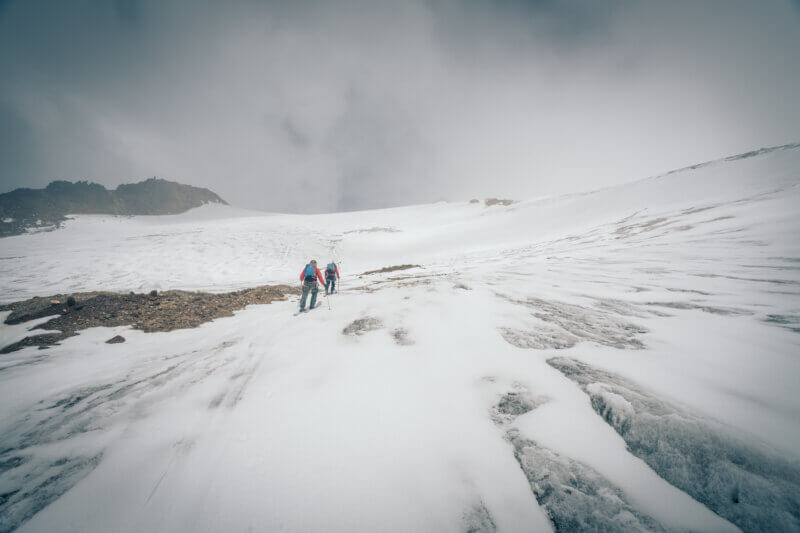
One Itinerary, Two Styles: Climb or Ski Ecuador’s Big Volcanoes
With Alpenglow Expeditions, you can do either—on the same 16-day itinerary. The Ecuador Climbing School and the Ring of Fire Ski Expedition both summit Cayambe (18,996’ / 5,790m), Chimborazo (20,564’ / 6,268m), and either Cotopaxi or Antisana, depending on mountain conditions.Read the story