Women’s Ecuador Climbing School w/ Kayli King
Women’s Ecuador Climbing School w/ Kayli King
IF THE DATES ARE GREYED OUT – the expedition is sold out and you’ll need to join our waitlist! Please email info@alpenglowexpeditions.com to join the waitlist.
What is included in the trip cost:
All lodging according to itinerary, including double occupancy lodging while in town and group lodging in mountain huts.
Breakfasts in town, all meals while on the mountain
Group camping and climbing equipment
All park/climbing permits
Scheduled in-country transportation
Airport transfers
Certified guides
What is not included in the price:
Additional nights in hotel outside of the itinerary
Flights to/from the city where the expedition begins
Airport taxes or Visas
In-town dinners
Tips for guides or local staff
Travel, rescue, or any other type of insurance
Hospitalization or evacuation costs
Single supplement charges
Excess baggage charges
Alcohol
Other personal expenses
The costs of delays or changes to itinerary that are beyond the control of Alpenglow Expeditions or its agents are not included.
- CERTIFIED AND PROFESSIONAL GUIDES
- HIGH END TRANSPORT AND LODGING
- QUALITY LOGISTICS AND MOUNTAIN INFRASTRUCTURE
- FRESH FOOD
- OFFICE STAFF SUPPORT
- January 9th, 2027 – January 17th, 2027
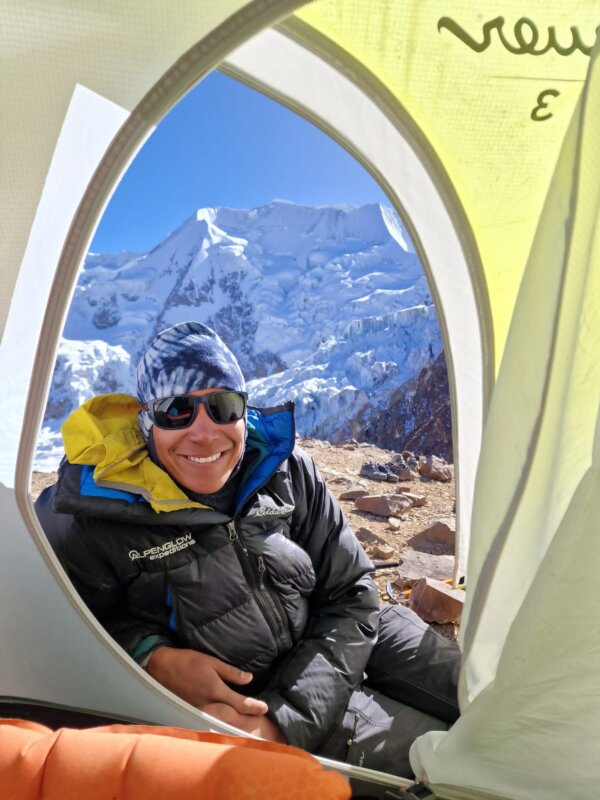
Learn the essential skills of high-altitude climbing in Ecuador with Kayli.
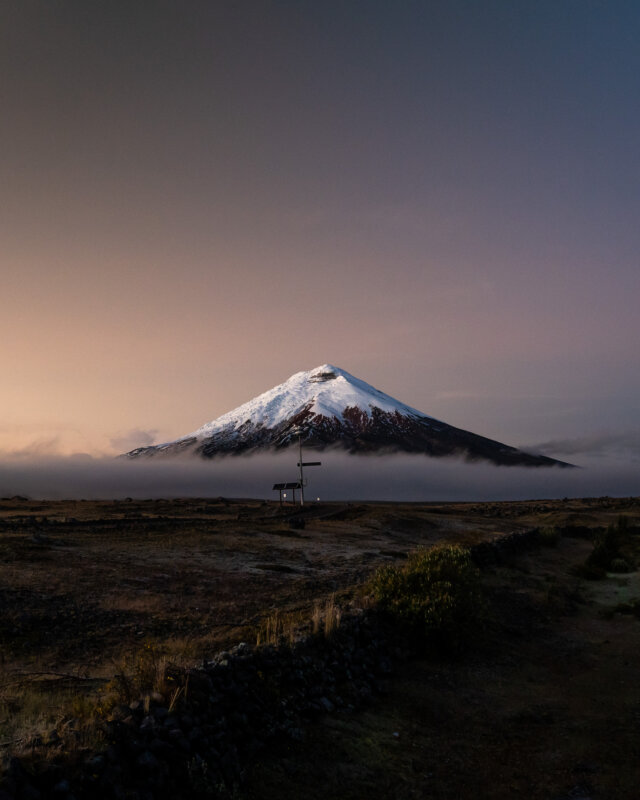
On this women’s-only mountaineering course expedition, we will focus on education, building technical skills, and gaining mountaineering experience on an attempt to summit Cayambe, the third tallest peak in Ecuador.
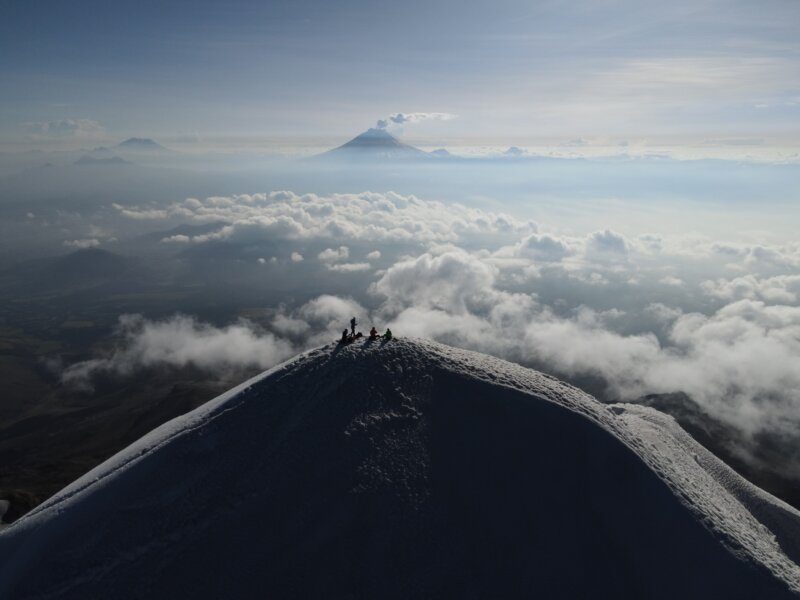
Cayambe’s highest point is at 18,996’/5,790m and it is heavily glaciated. The main goal of our “school” programs is to develop the foundations of high altitude mountaineering. This will help you grow into a confident and active participant on present and future expeditions.
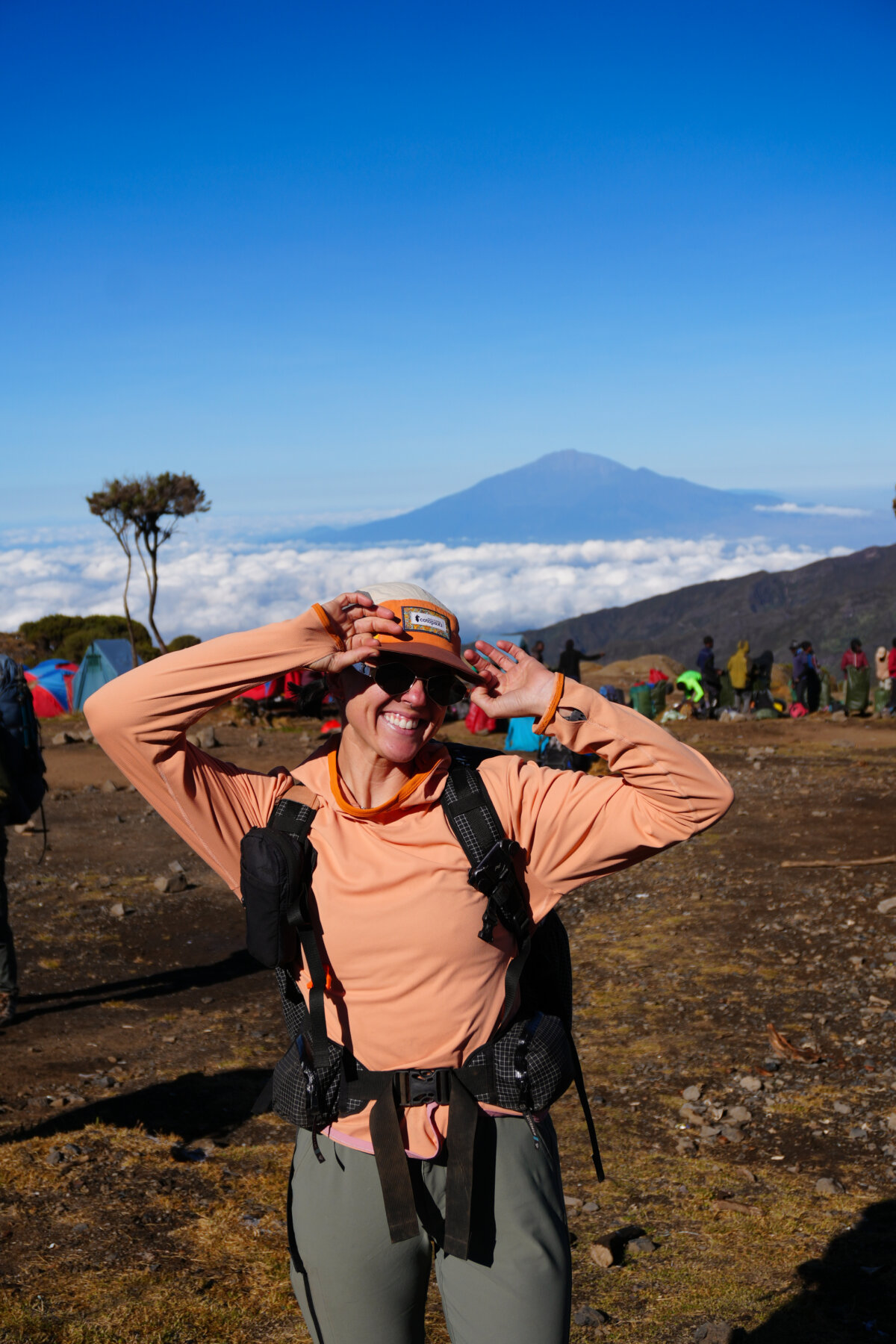
The Alpenglow Difference
Ecuador’s Certified Guides
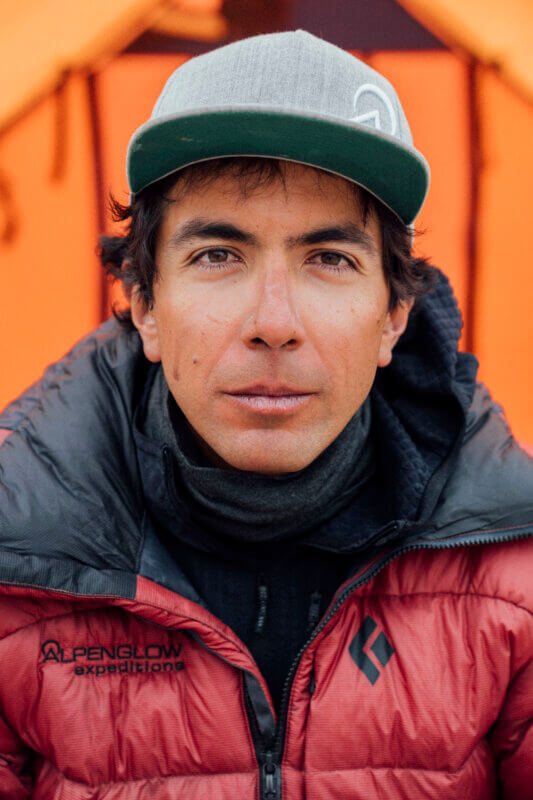
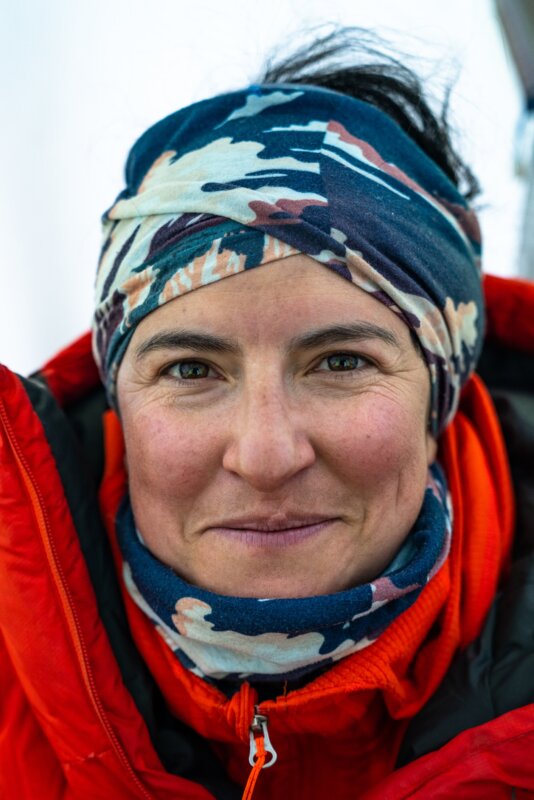
Alpenglow’s AMGA/IFMGA-certified lead guides manage our Ecuador Climbing School. This certification is the most prestigious in the world, attained only by the most experienced and dedicated guides. Our lead guides have traveled and climbed extensively throughout South America and possess intimate knowledge of the area. A thorough understanding of the culture combined with a passion for developing climbers into competent mountaineers guarantees an experience you won’t soon forget.
We combine our guides’ experience with the local expertise of our Ecuadorian guide team. This team, based in Quito, are some of Ecuador’s most respected guides and they have also guided in Nepal, Peru, Bolivia, and Alaska. Their local knowledge (of the mountains, the markets, and the salsa clubs) is essential to the experience
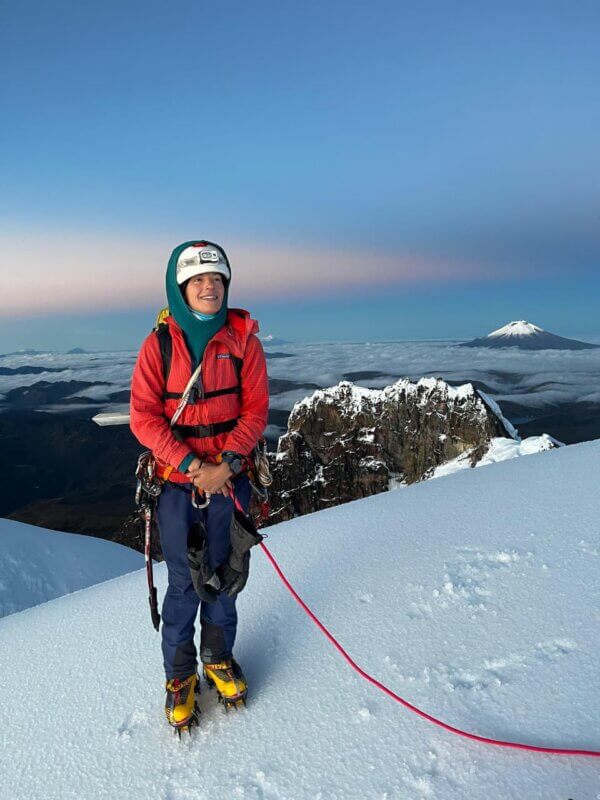
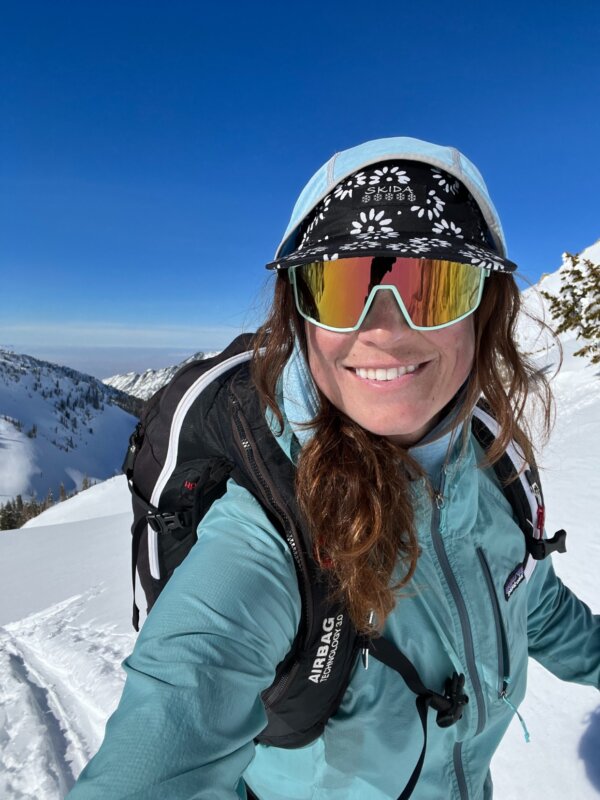
This expedition will be led by female guides, but there may be male guides on the expedition.
Comfortable Lodging in Ecuador
Often when we think of mountain expeditions, we think about a base camp of tents, and high camps built on the freezing ground of a glacier, but Ecuador provides beautiful huts on 2 out of the 3 climbs. Chimborazo does include a camp before the summit push, but we do this intentionally to give our climbers a chance to work on camp craft, furthering the skills they’ve learned along the way.
Teaching Fundamentals
Educating mountain travelers who have a passion for climbing is a core value at Alpenglow expeditions, and our climbing schools both in Lake Tahoe and around the globe are examples of that value put into practice. These schools are designed to take a new climber to new heights, and will help an experienced climber brush up on skills and teamwork.
Flexible Itineraries
Due to our strong connection to Ecuador and the close relationship with our partners, we can have an incredibly flexible schedule to take advantage of weather windows, climbing conditions, and of course hot springs and local markets.
Rental Gear Available
Because Ecuador is a hub for our international guiding team, it’s easy for us to arrange gear rentals for you at no additional cost. We can provide a harness, helmet, crampons, and ice axe. We also have a small fleet of boots to rent, however, we strongly recommend investing in a good pair that will take you higher once you complete your climbs in Ecuador. Rental gear is first come first serve, reach out to the team to make sure we have the equipment you need.
Ecuador Climbing Itinerary Overview
Acclimatization in Quito
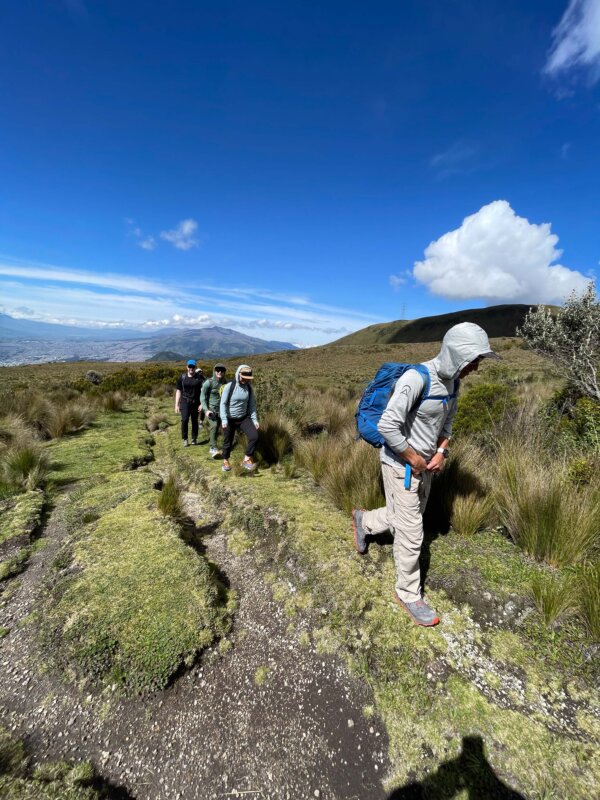
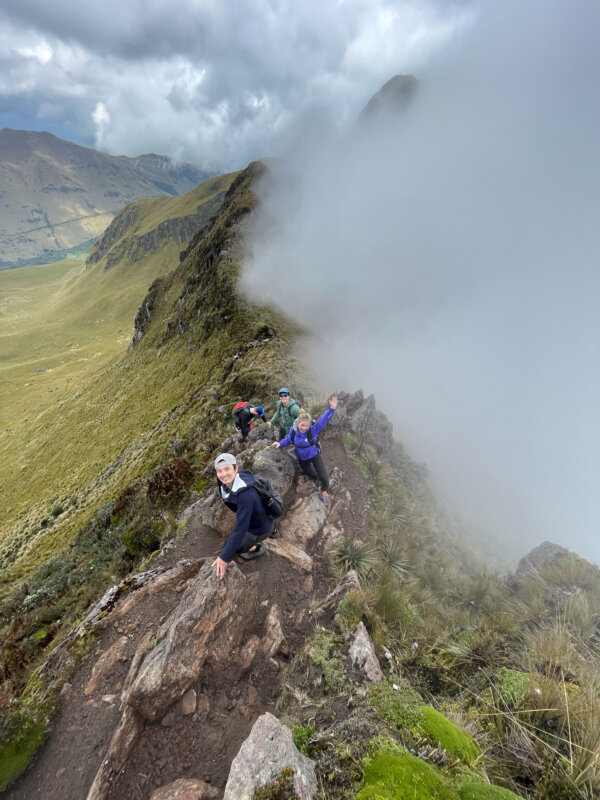
Our expedition begins in Ecuador’s capital of Quito, which tops out at 9,500’/2,896 meters. The high elevation jumpstarts your acclimatization process upon arrival. We will spend the first day exploring the old colonial center of Quito and enjoying fantastic food and hospitality. We continue our acclimatization by taking our classroom out into the field. This entails riding the local telepherique up to 14,000’/4,267m on Rucu Pinchincha and then hiking up to the 15,700’/4,785m summit. If conditions allow, we will traverse a knife-edge rock ridge to the summit, implementing technical rock climbing techniques and the use of fixed lines.
Move to Climb Cayambe
We will then venture on to Otovalo and the Hacienda Pinsaqui. The journey takes you through the beautiful Mojanda volcanic lakes — a great place to stop, sightsee, and climb Fuya Fuya, which tops out at 14,000’/4,263m in elevation. This extinct volcano offers exquisite views of the surrounding mountainside and provides for additional acclimatization. After a relaxing night at the historic Hacienda Pinsaqui, we will move up to the high refuge on Cayambe.
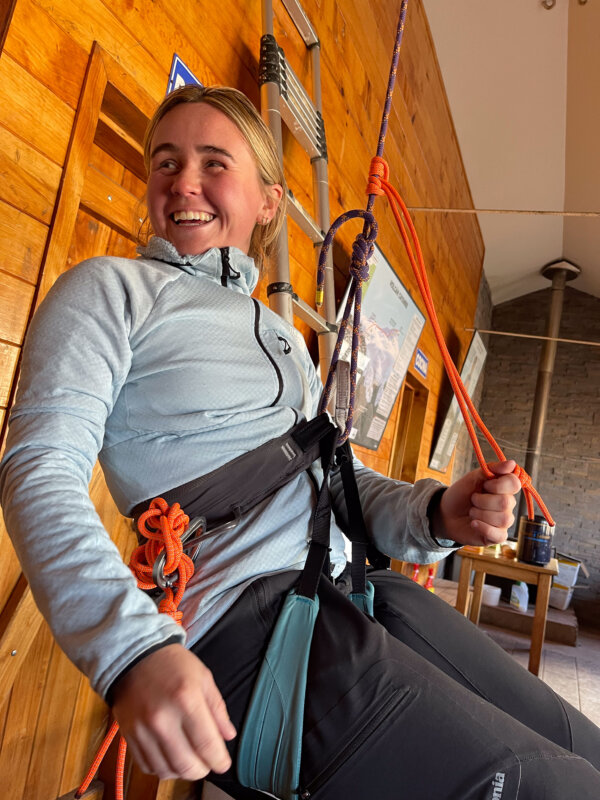
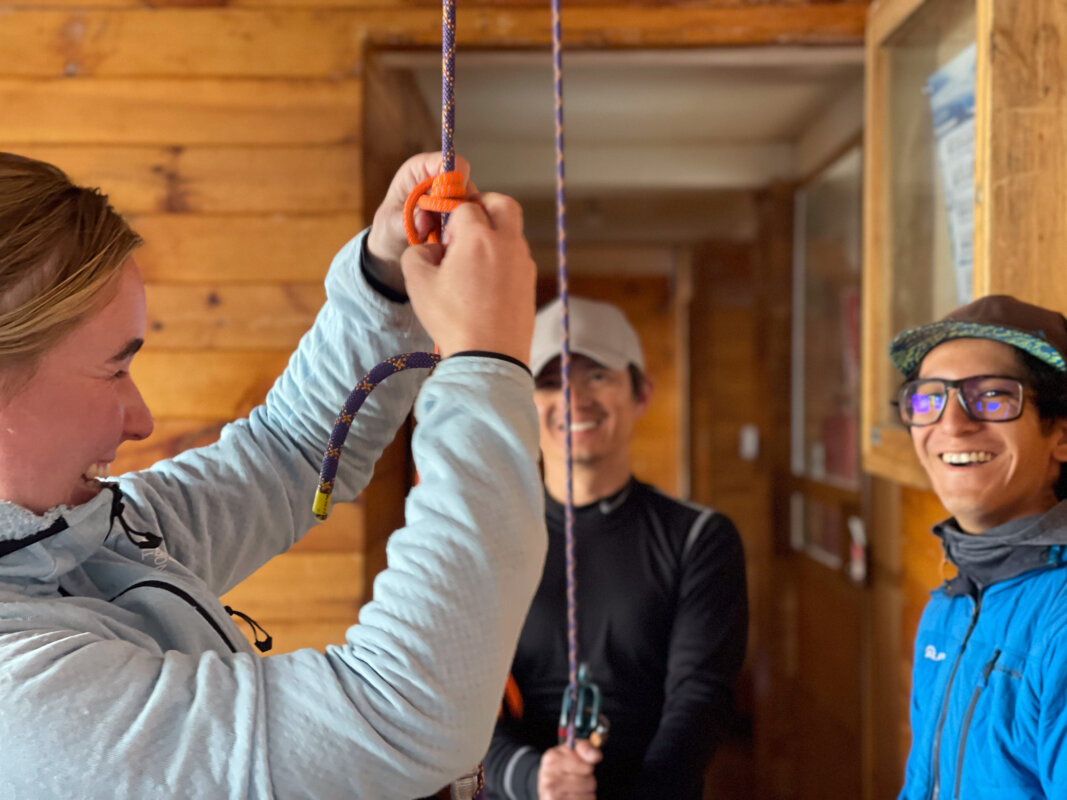
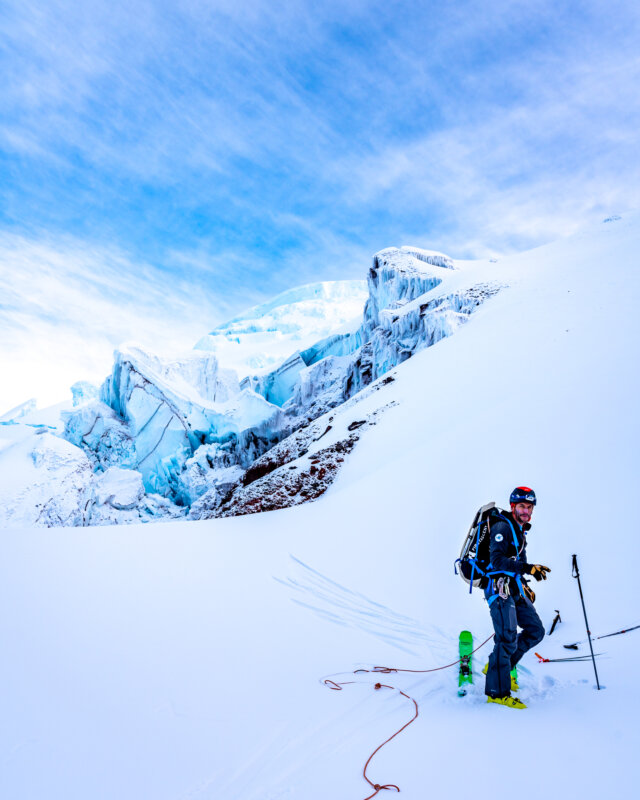
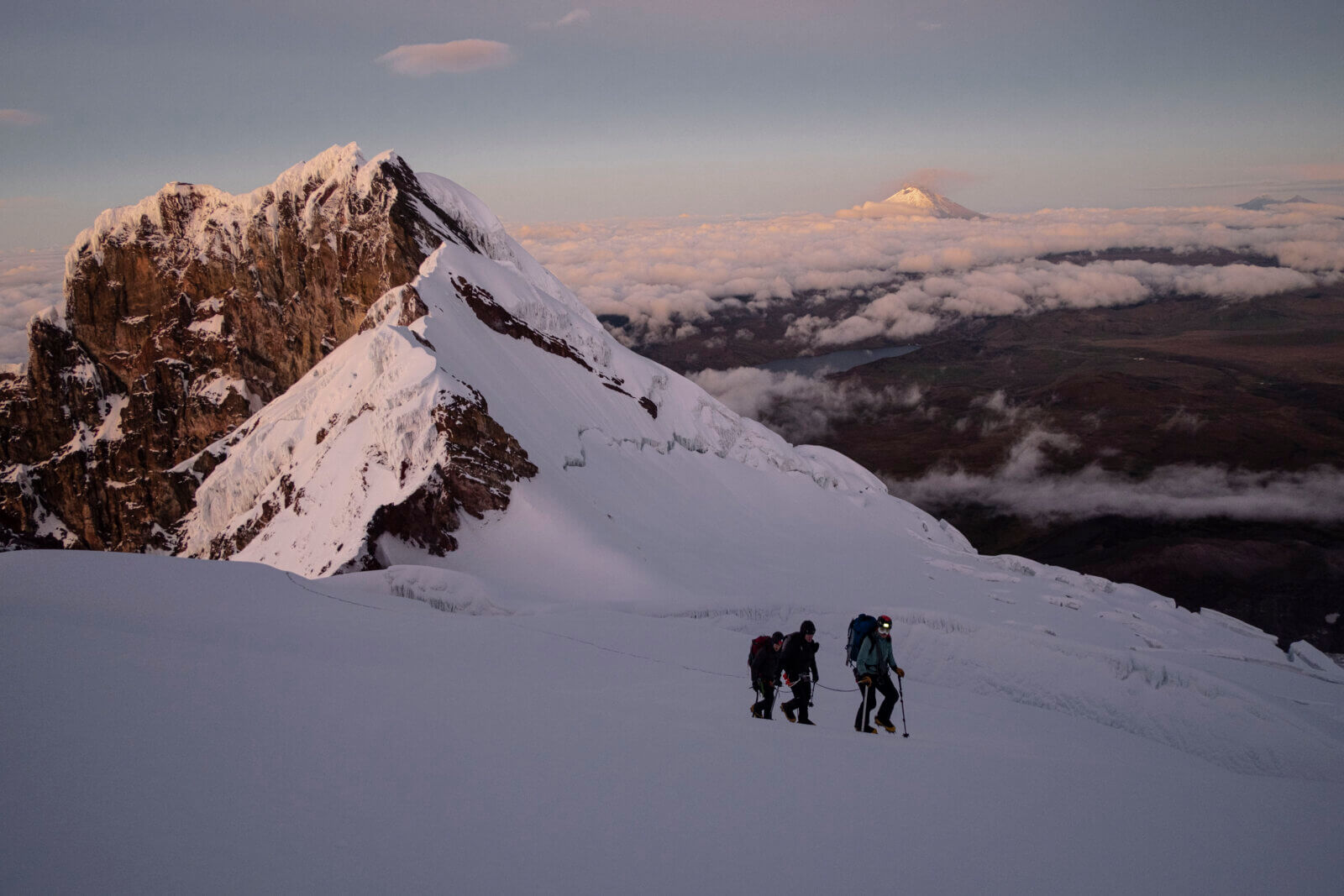
The refuge features excellent food, stunning mountain views, and continued altitude preparation. During our stay, we will discuss and practice climbing skills on Cayambe’s glacier. These skills include crampon and ice axe techniques, roped team travel, snow and ice anchor placement, and crevasse rescue. This education is vital for your development into a competent team member on the Cayambe mission and future expeditions.
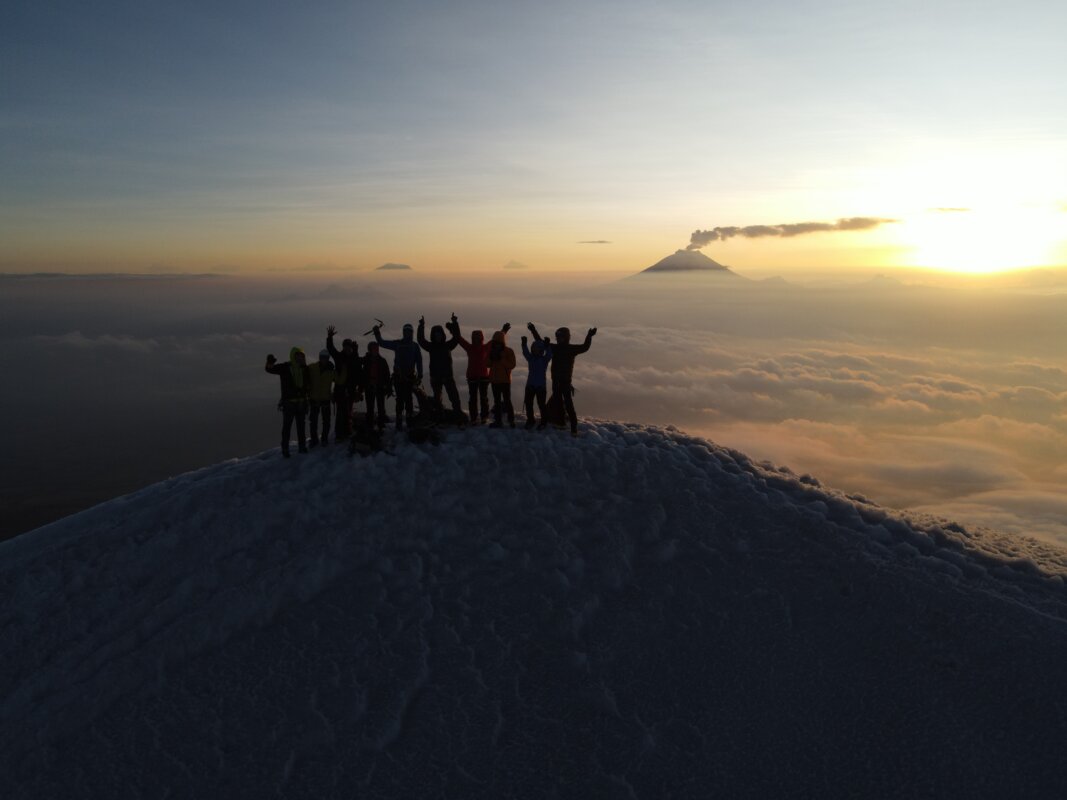
Once we’ve mastered necessary skills, we will be ready to attempt an ascent of the mountain. We will begin our climb around midnight and complete the round-trip journey in about 7-12 hours. The views from the summit are absolutely stunning and encompass many of the surrounding Ecuador volcanoes, as well as Cayambe itself.
Upon completion of our climb, we will head back down to Otavalo for some much-needed rest and relaxation. Otavalo features one of the largest indigenous markets in South America on Saturdays. As this corresponds with the day of our return, there will be ample time to shop for friends back home and opportunities to experience local Otavalan culture.
Questions about The Women’s Ecuador Climbing School w/ Kayli?
Fitness
Technical
Altitude

Ecuador Climbing School Itinerary
- Arrive in Quito
Leave your home for Ecuador, arriving into Quito (9,500’/2,896m) in the evening. Our guides will pick you up and bring you to our hotel, a local family-run place close to excellent restaurants and the tourist center of the city.
Activity: Arrive in Quito, EC
Sleeping Elevation: 9,300’/2,835m
Lodging: San Jose de Puembo
Meals: None - Explore Quito
Explore the colonial section of Quito. The old city is famous for its beautiful churches, the president’s palace, and ever-present views of the glaciated peaks that surround it. After touring for half the day, we spend the afternoon preparing for our expedition and organizing gear.
Distance Covered: 2-4 miles
Moving Hours: 4-5 hours
Sleeping Elevation: 9,300’
Lodging: San Jose De Puembo
Meals: Breakfast - Climb Rucu Pichincha
Today we’ll go on an acclimatization trek to the summit of Rucu Pichincha (15,696’/4,784m). This hike will help us acclimate and keep our fitness. Tomorrow we’ll leave Quito and make our way to mountains.
Activity: Acclimatization hike
Distance Covered: 6 miles
Moving Hours: 4-5 hours
Elevation Gain/Loss: +/- 2,400’/732m
Sleeping Elevation: 9,300’/2,835m
Lodging: San Jose de Puembo
Meals: Breakfast - Move to Otavalo and Trek Fuya Fuya
Today we move to the town of Otavalo. Otavalo has some of the best food in Ecuador and is renowned for its local markets. We will spend part of the day climbing Fuya Fuya, a non-technical 14,000 foot peak, and then spend the evening at the Yanacocha, the lower hut on Cayambe.
Distance Covered: 2.5 miles
Moving Hours: 2 hr drive, 2-3 hr hike
Elevation Gain/Loss: +/- 1,500’
Sleeping Elevation: 12,000′
Lodging: Yanacocha
Meals: Breakfast - Skills Practice
Today we will hike about an hour to the toe of the glacier on Cayambe. We spend the day practicing skills, including self-arresting with an ice axe, climbing in crampons, traveling on rope teams, and crevasse rescue. We also take time to scout our summit route. After a full day, we descend back to the hut for the evening.
Distance Covered: 1.5 miles hiking, 2.5 hours driving
Moving Hours: 1-2 hours hiking, Elevation Gain/Loss. +/-800’ (hiking), +3,200′ (driving)
Sleeping Elevation: 12,000′
Lodging: Yanacocha
Meals: Breakfast, Lunch & Dinner - Skills and Rest for Summit Bid
Today we’ll take the morning to move up to Refugio-Oleas-Berge. We will then continue to practice our skills and let our bodies further acclimatize before our summit push the next day. We spend the afternoon resting, hydrating, eating, and getting to bed early for the summit of Cayambe.
Distance Covered: 2-3 miles
Moving Hours: 2 hours hiking
Elevation Gain/Loss: +/-1,000’
Sleeping Elevation: 15,150’
Lodging: Refugio Ruales-Oleas-Berge
Meals: Breakfast, Lunch & Dinner - Cayambe Summit Bid
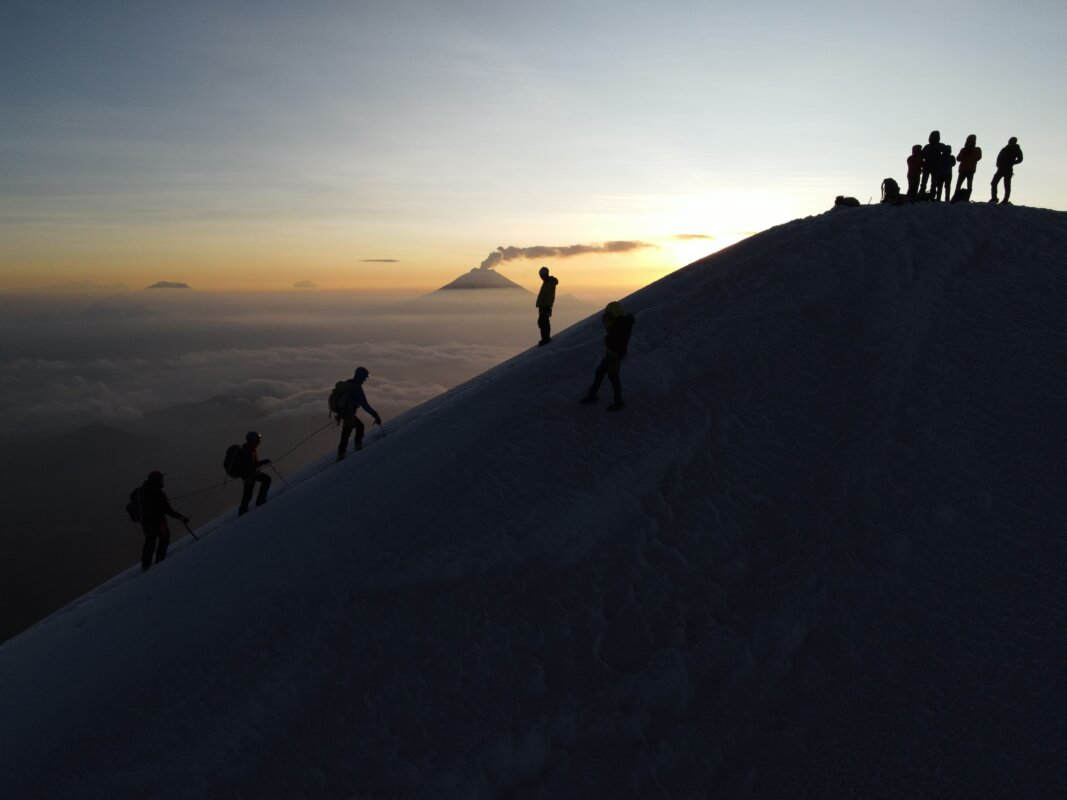
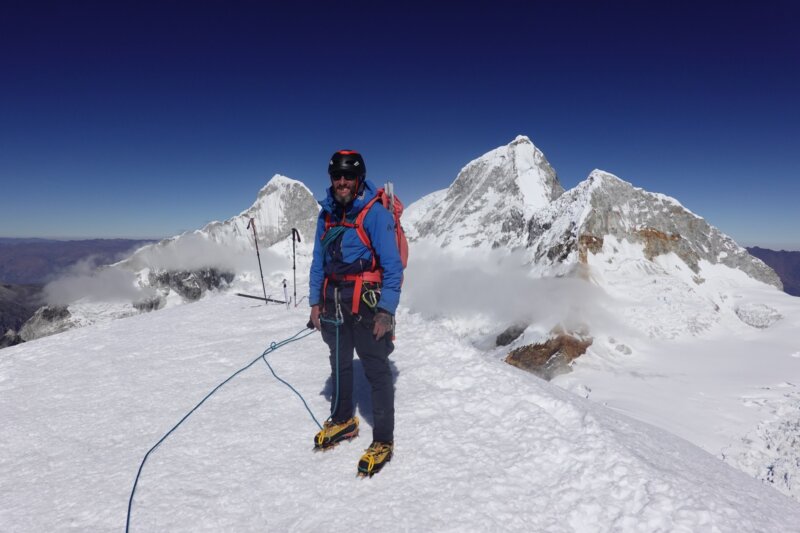
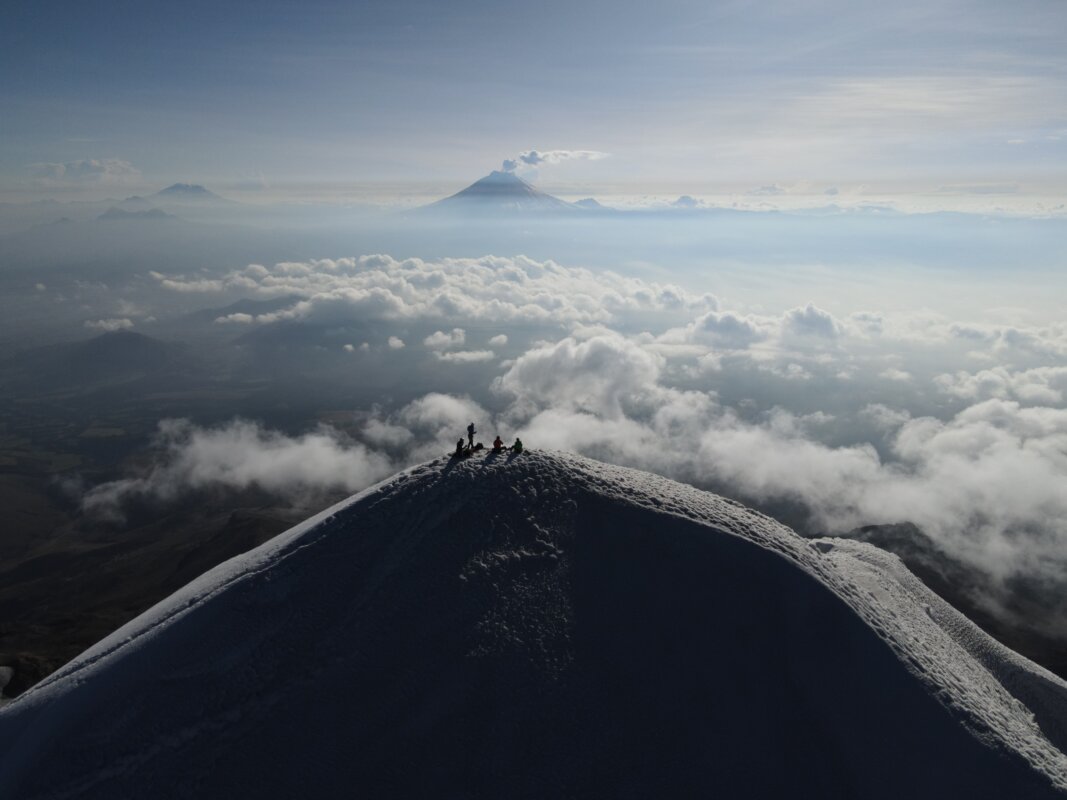
Your training and preparation are ready to be put to the test. After an early wakeup and hot drinks and snacks (typically around midnight), you’ll find yourself moving up the rock steps and onto the vast glaciers above. The rhythmic crunching of crampons, the sway of the rope, and the first inklings of morning light from high above the clouds are all classic aspects of mountaineering and will frame the first several hours of your climb. Pushing higher still, the glacier becomes complex and challenging; your team will navigate around huge crevasses and drop-offs on your way to the top. Cresting just shy of 19,000ft (5,790m/18,996ft), the summit of Cayambe is a proud achievement and offers commanding views of the surrounding mountains. Off to the south, you can make out the glaciated summits of Cotopaxi, Antisana and Chimborazo. After the descent back to the refugio, you’ll head back down to Otavalo and the welcoming gardens of the Hacienda Pinsaqui.
Distance Covered: 5 miles
Moving Hours: 7-11 hours
Elevation Gain/Loss: +/-3,800’, (climbing), -6,850′ (driving)
Sleeping Elevation: 8,300’
Lodging: Hacienda Pinsaqui
Meals: Breakfast & Lunch - Extra Day / Recovery Day
Today we sleep in, eventually waking to the smell of fresh coffee. When we are ready, the bustling Saturday market will be waiting for us, where we can buy everything from grilled guinea pig to hand-woven textiles to handmade silver jewelry. We return to Quito for dinner, and those flying home head to the airport for flights scheduled after 11pm or the following morning. The rest of the team spends the night in our hotel in Quito.
Distance Covered: Varies
Moving Hours: Varies
Elevation Gain/Loss: +1,000’
Sleeping Elevation: 9,300’
Lodging: San Jose De Puembo
Meals: Breakfast - Depart Ecuador
Today we’ll say our goodbye’s and head back home.
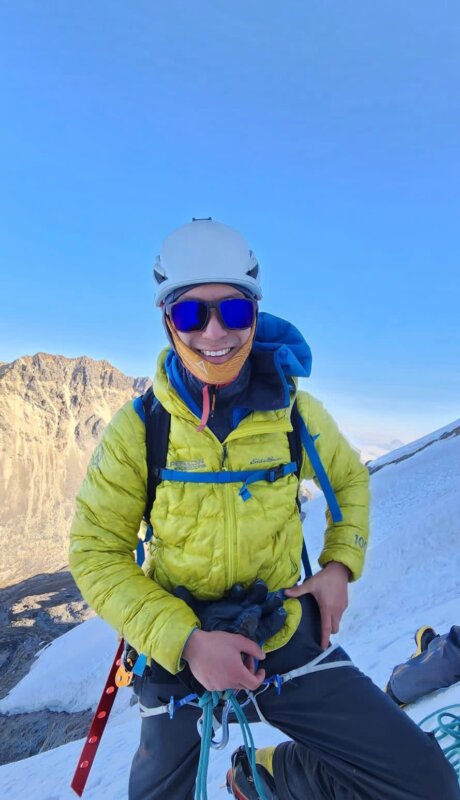
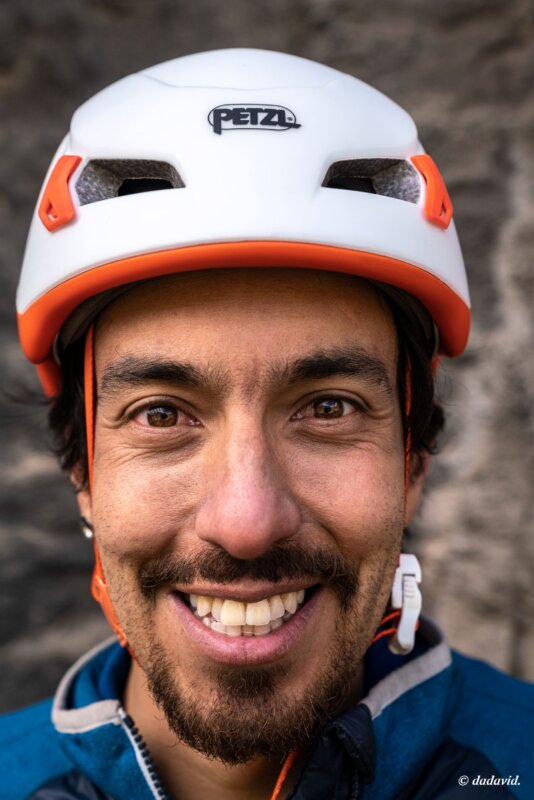
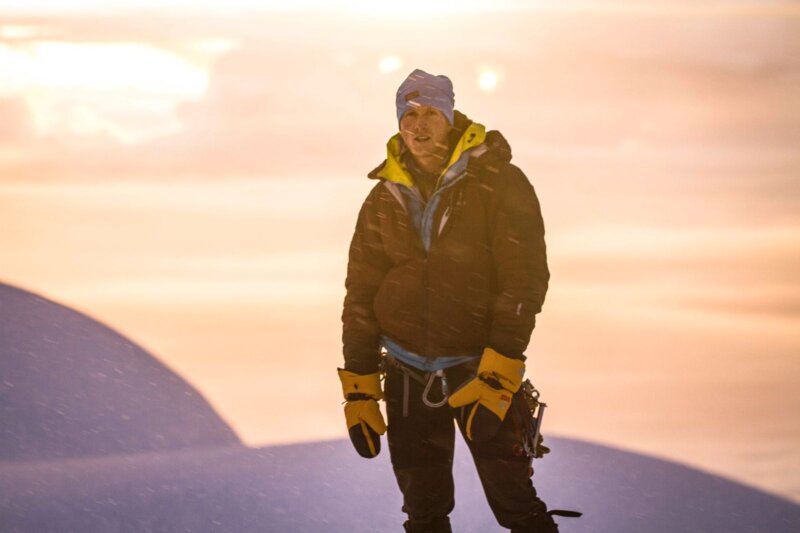
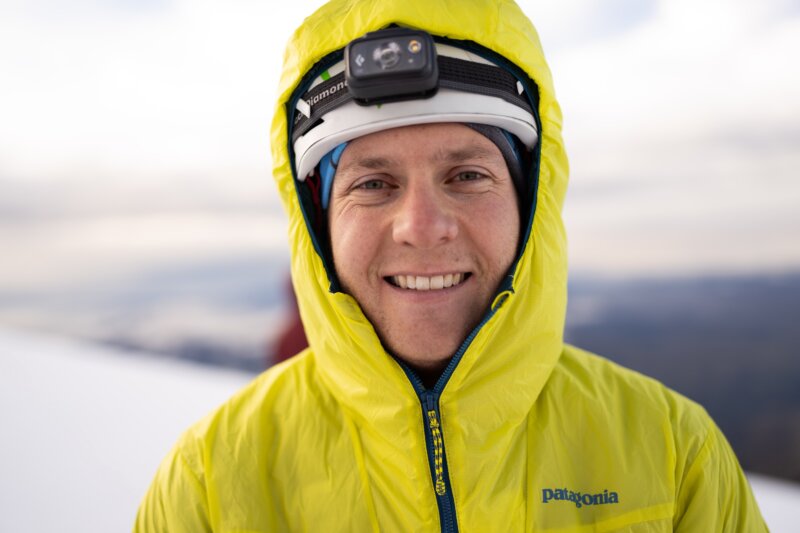
Our Ecuador Guides
Ask us anything about Ecuador
Ecuador Climbing School Equipment
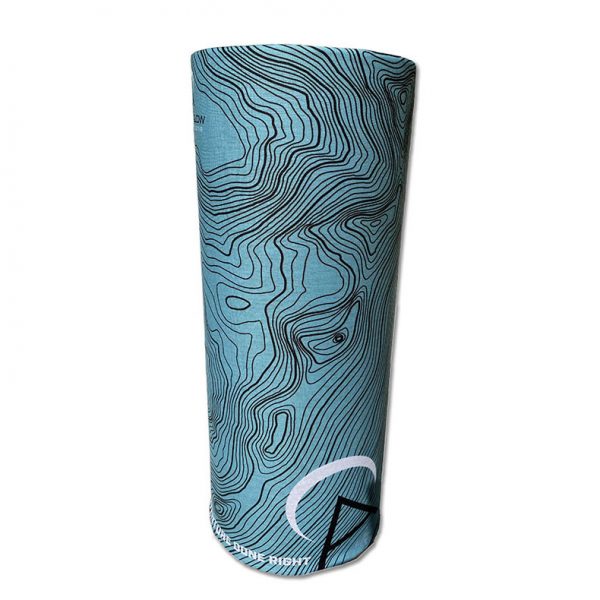
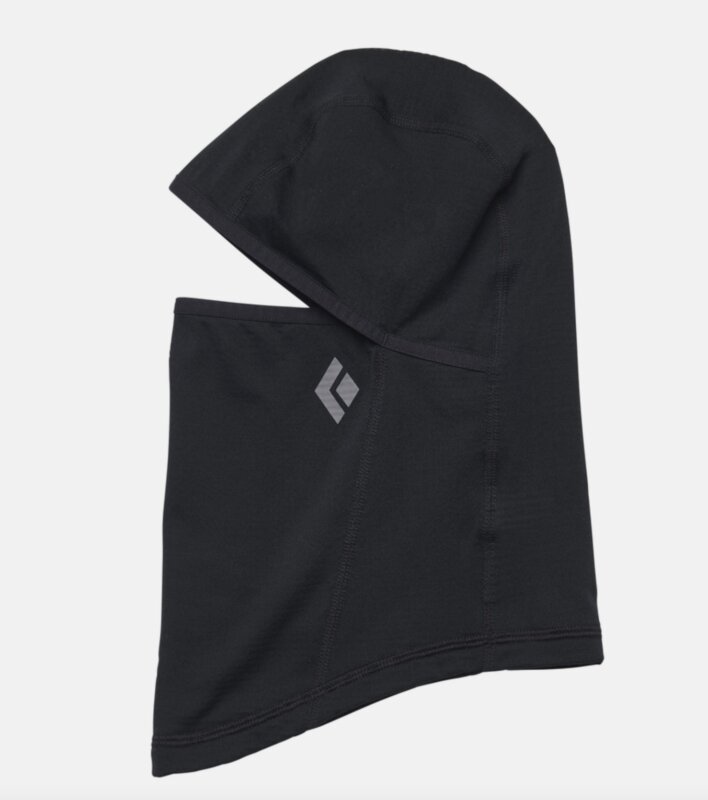
Neck Gaiter (Buff)A multi-purpose neck gator that can also be worn under your hat. Make sure that it covers as much skin as possible and yet is still comfy.
Recommended: Alpenglow Buff
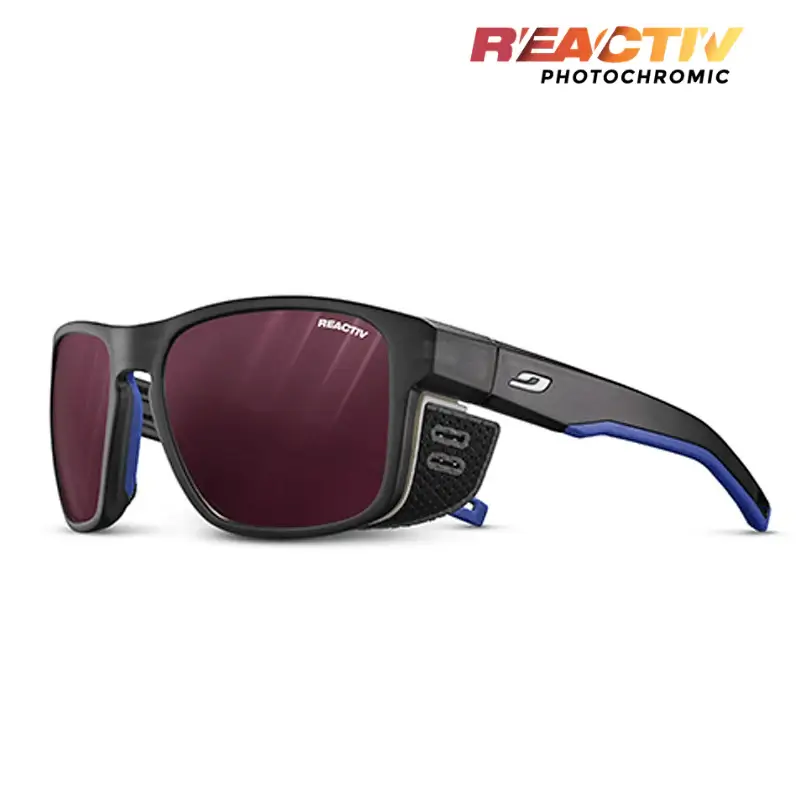
SunglassesMust have dark lenses. Minimal light should come in below, above, or around the sides of the lenses.“Wrap” style is best. Ventilation is important and a retainer strap is very useful (Chums or Croakies). A Category 4 lens is recommended.
Recommended: Julbo Shield
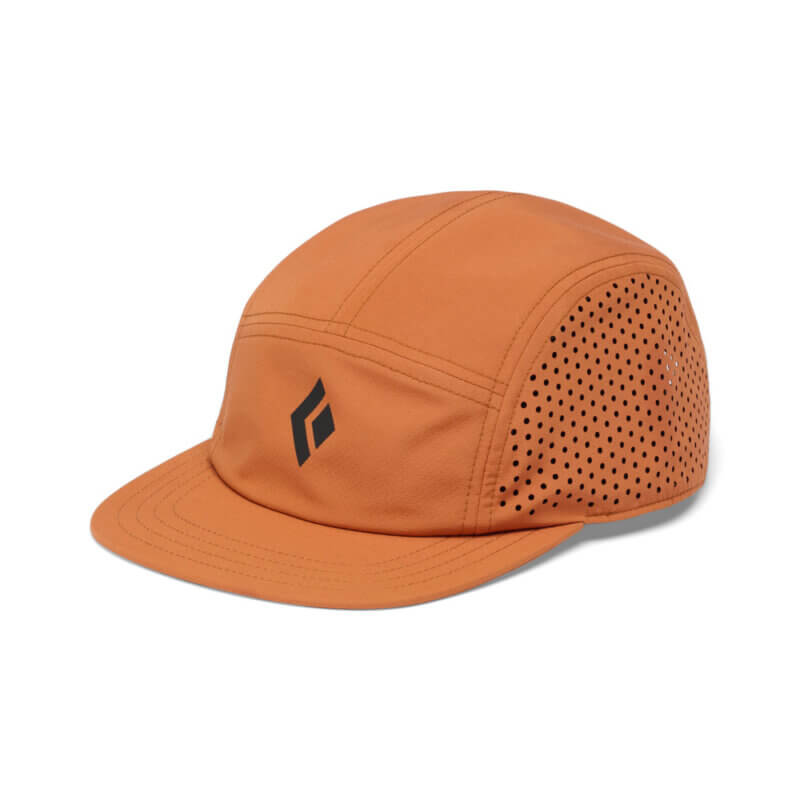
HatBring your favorite baseball hat for shelter from the sun. No white under the brim – the reflection off of it from the sun is blinding.
Recommended: Black Diamond 5-Panel Synthetic Cap
BeanieA comfortable, warm well-fitting hat that covers your ears. Make sure that one of your hats fits under a helmet.
Recommended: Black Diamond Levels Beanie
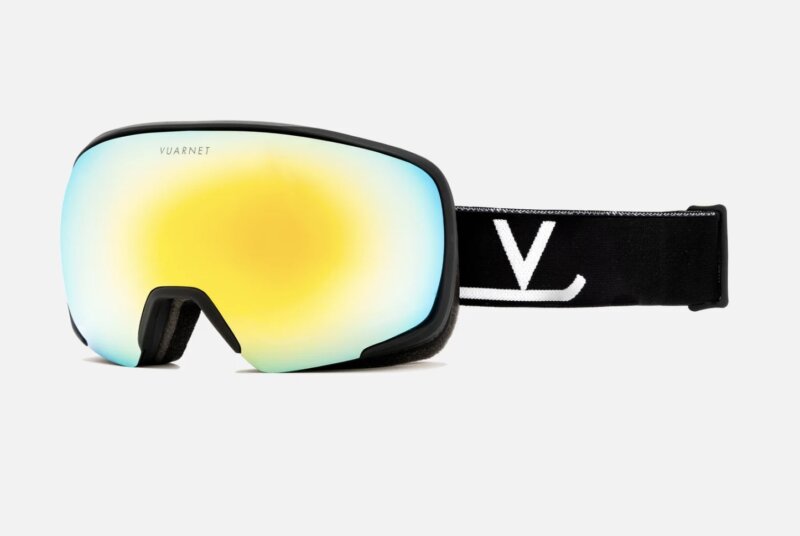
GogglesThese will be worn on stormy or windy days. Make sure you are getting a snug fit with lenses for low light (and preferably an extra lens for bright light as well). Ventilation and anti-fog features are desired.
Recommended: Vuarnet Everest Goggles
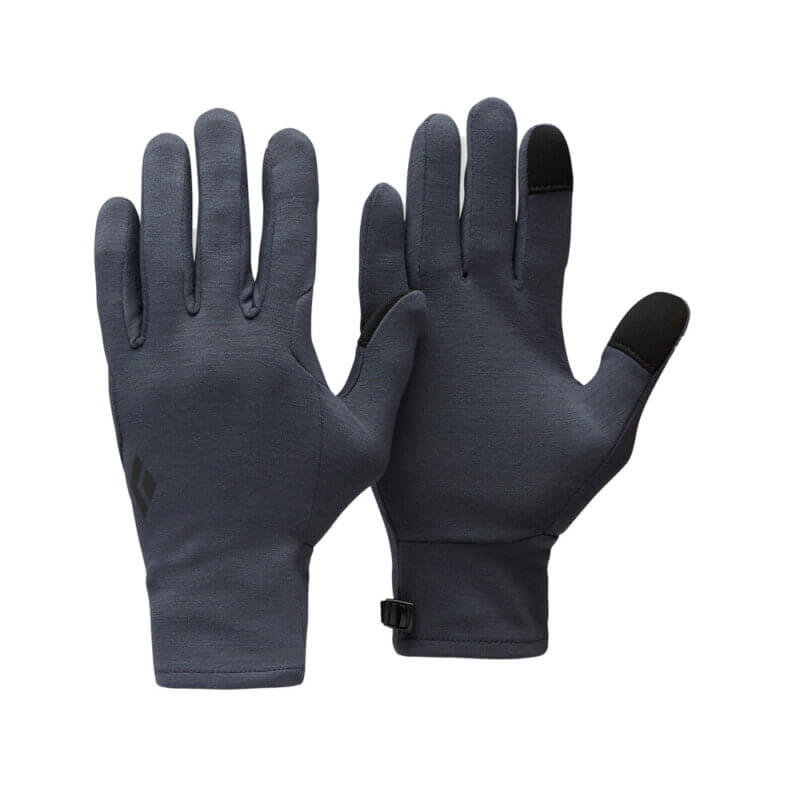
Liner GlovesThese gloves keep the inside of your mitts or other gloves from accumulating sweat on the inside and turning inside out when you take them off, as well as provide additional insulation.
Recommended: Black Diamond Midweight Wool Liners
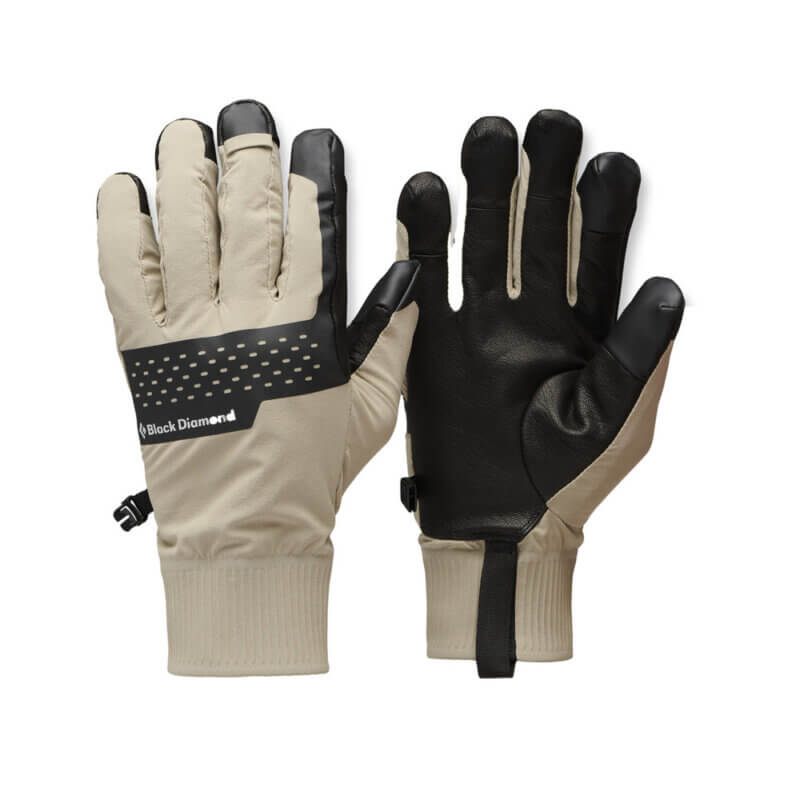
Lightweight GlovesAll-around gloves for mountaineering, backcountry skiing, and hiking. These gloves (and similar options) are warm, wind-resistant, durable and have a sure grip. You will rarely take these gloves off. They should be snug-fitting, and have some sort of reinforced palm.
Recommended: Black Diamond Alpine Softshell Gloves
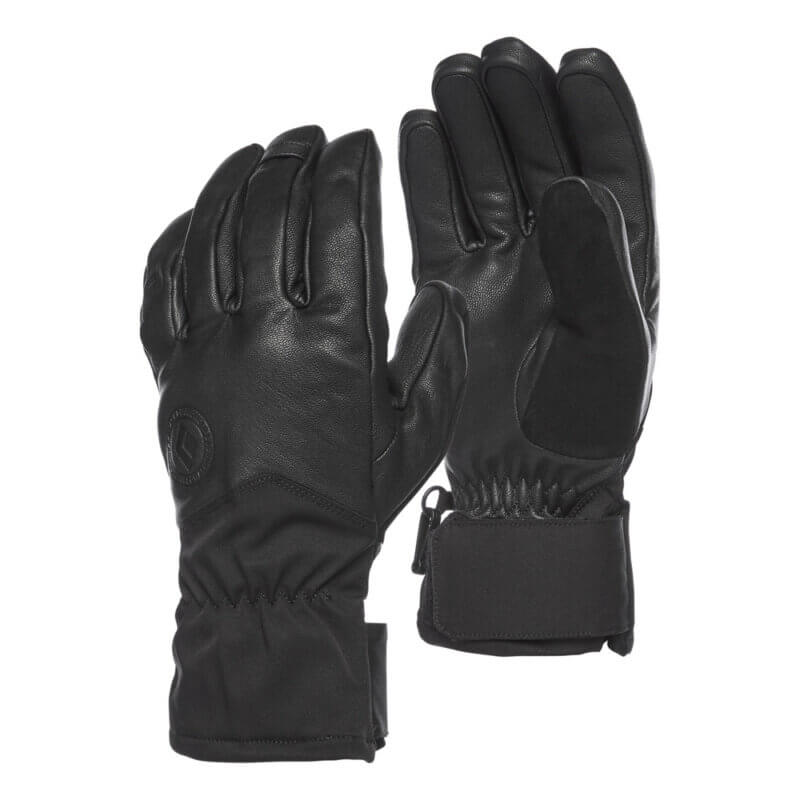
Midweight GlovesThese gloves should be full GORE-TEX®, and insulated. These will be the workhorse glove for any expedition.
Recommend: Black Diamond Tour Gloves
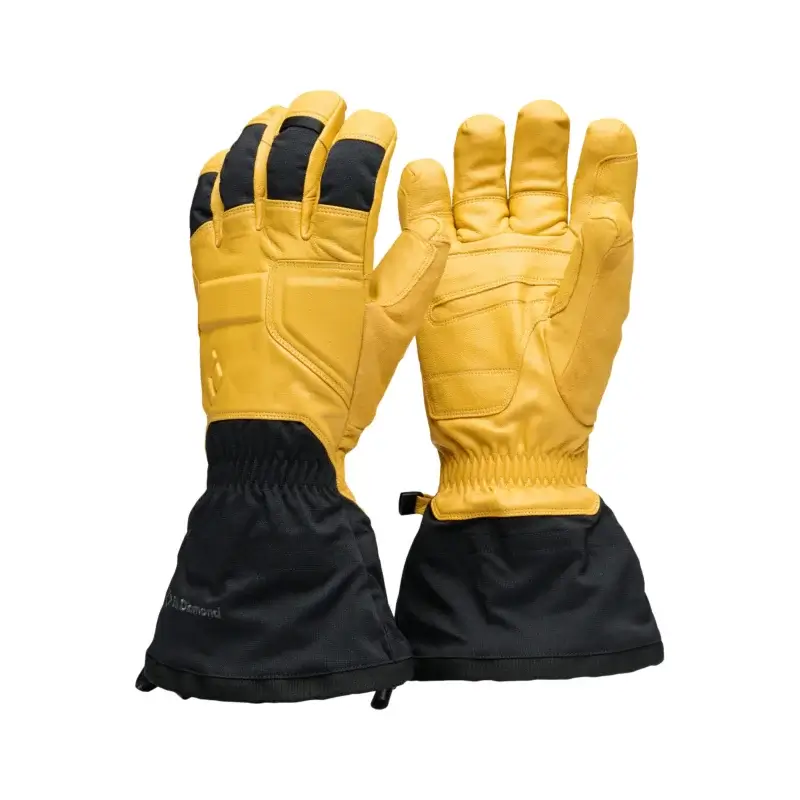
Heavyweight GlovesThese gloves should be full GORE-TEX®, with a removable fleece liner (so you can take the liner out and dry it at night). These gloves are used at higher altitudes and are needed to keep your hands dry, and warm. Over the cuff style is desired.
Recommended: Black Diamond Guide Gloves
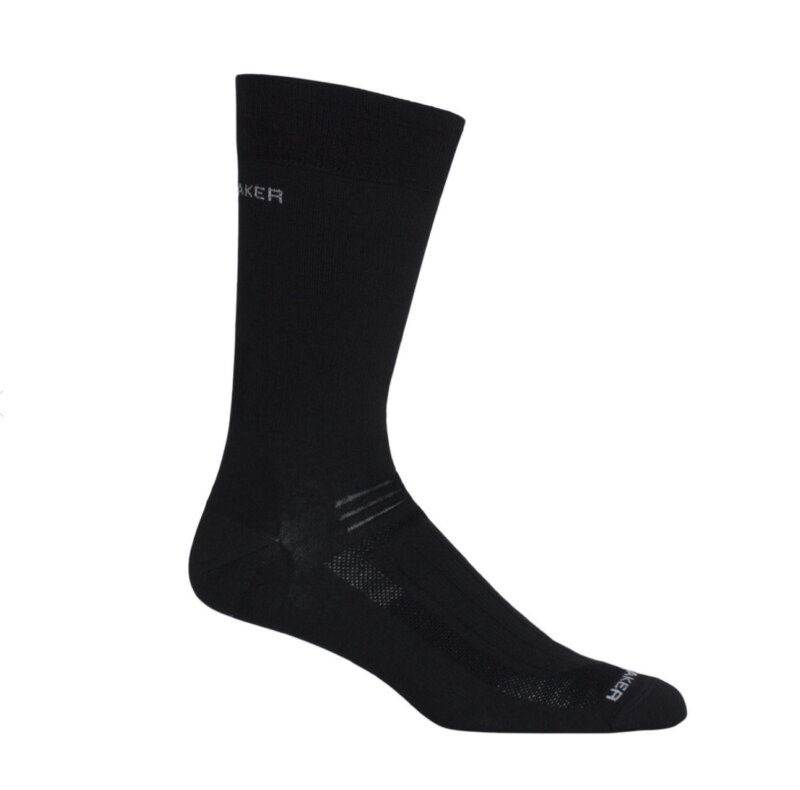
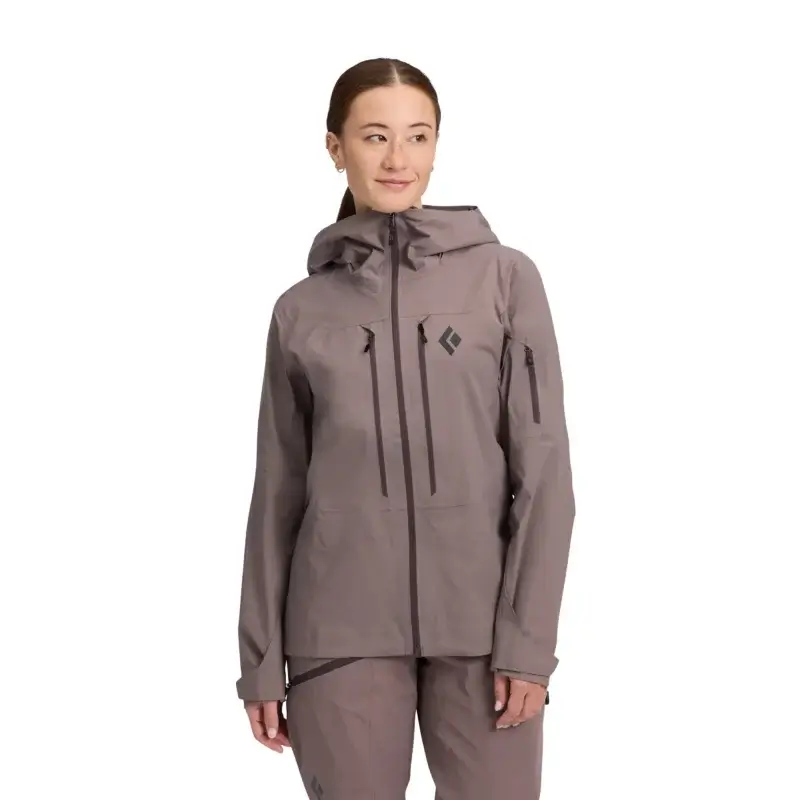
Liner Socks*Optional- A super-thin wicking sock that repels moisture. Liner socks help to reduce the likelihood of blisters. The socks should be thin wool, nylon, or Capilene®. NO COTTON
Recommended: Ice Breaker Merino Liner
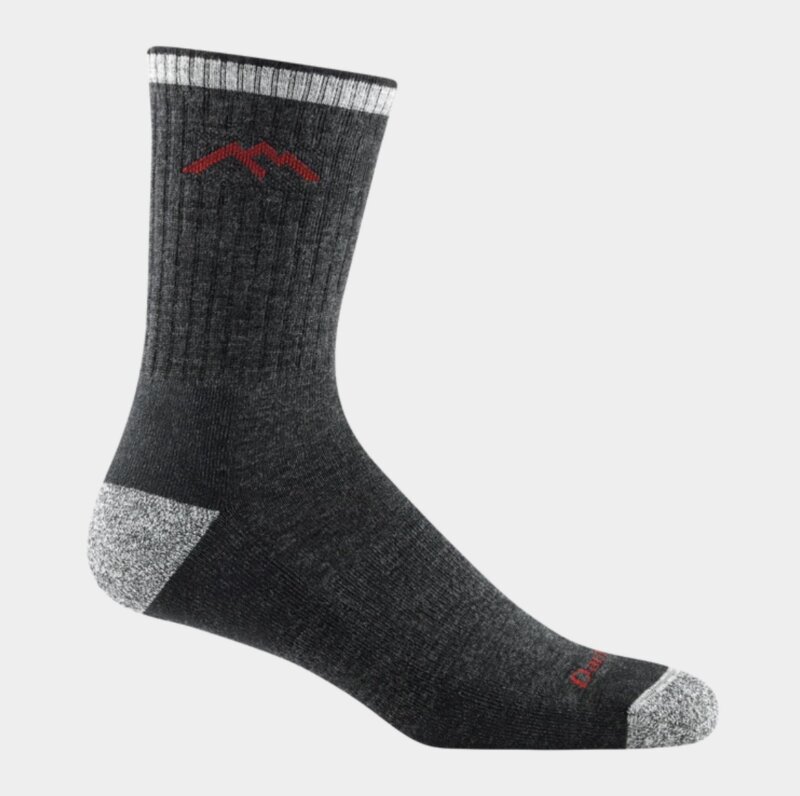
Hiking SocksYour everyday sock, good for day hikes, trekking, and in-town. It’s good to bring several pairs of these socks. NO COTTON.
Recommended: Darn Tough Hiking Sock
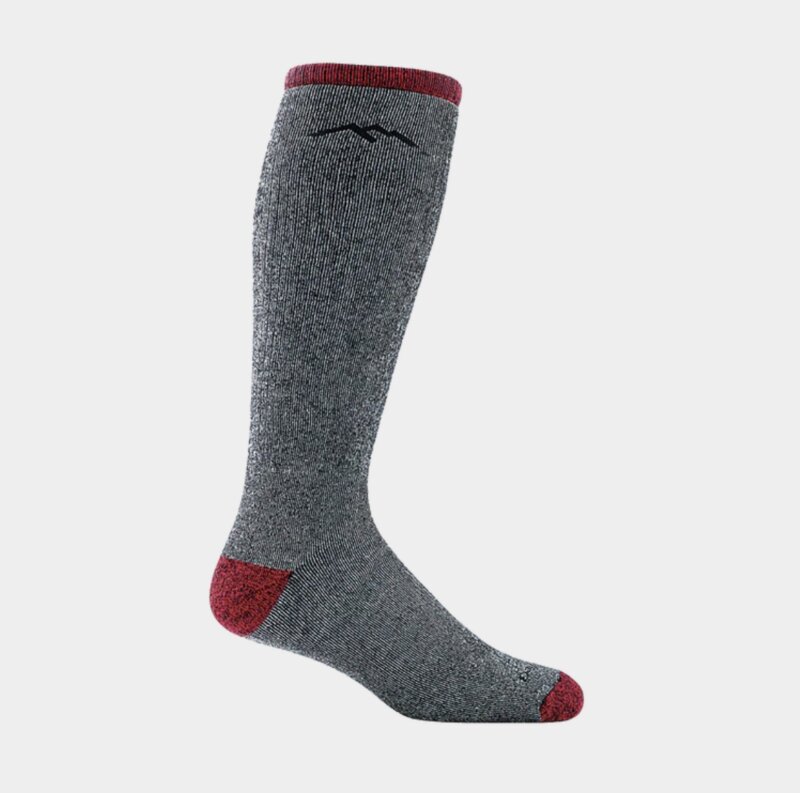
Warm SocksA wool synthetic blend. Pure rag wool socks are not nearly as effective in wicking moisture or retaining their shape and reducing blisters. Bring a few pairs of these socks. NO COTTON.
Recommended: Darn Tough Mountaineering Sock
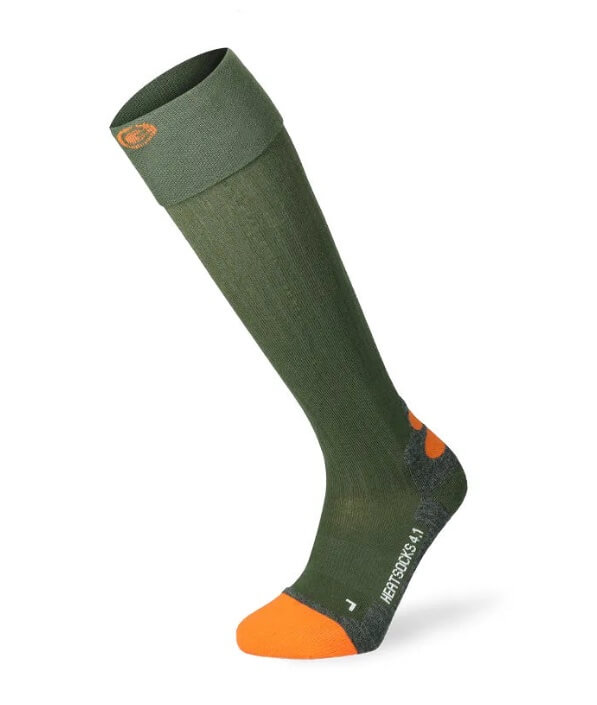
Heated SocksThese are optional, but highly recommended. Bring 2 sets of batteries. Hotronics boot heaters are another option instead of heated socks, but socks are preferred by our guides.
Recommended: Lenz Heat Socks 4.1 Toe Cap or Sidas SOCK SKI HEAT LV
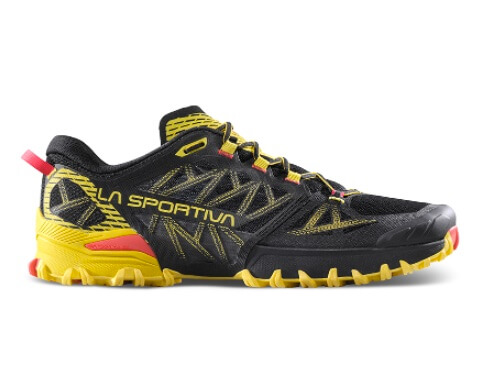
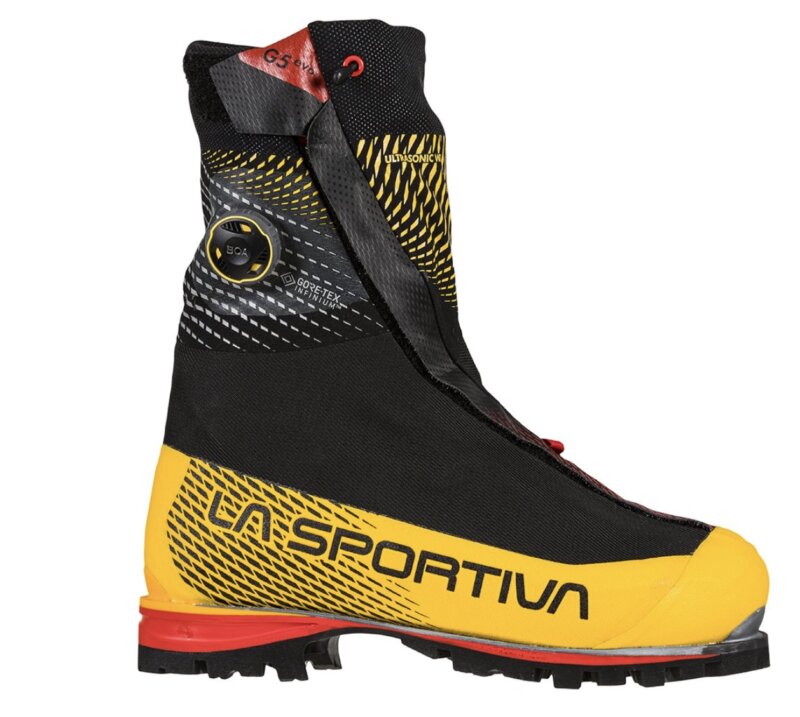
Mountaineering Boots (5,000 – 6,000m)Should be warm single or double boots that have a stiff sole and accept a step-in crampon. The boots should be comfortable, have adequate wiggle room for your toes, and your heel should not lift more than 1/8th of an inch when walking. (If your feet run cold, we would recommend a double boot like the La Sportiva G2 Evo.) For our Introductory Climbing Schools, we have limited availability and sizes for free boot rentals. If you need rentals, please reach out to the office staff asap to ensure we have your size.
Recommended: La Sportiva G-Summit
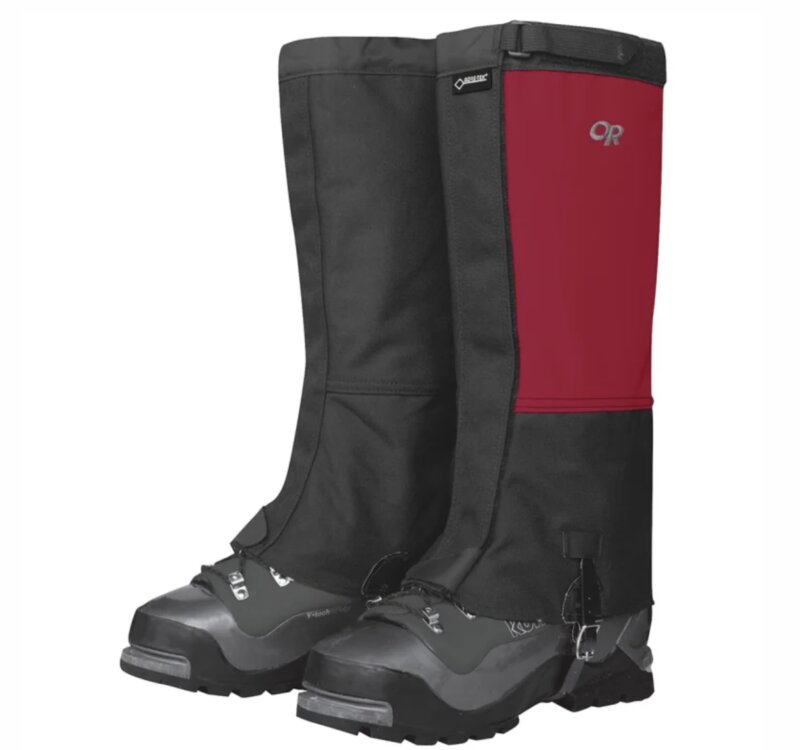
Waterproof GaitersGORE-TEX® or Schoeller® calf- high gaiters, insulated supergaiters are recommended. *Gaiters are not necessarily needed if your pants and/or boots have built-in gaiters. However, if your pants have wide leg openings, then you could have issues with crampons snagging your pants.
Recommended: Outdoor Research Expedition Crocodile Gaiters (required if your boots do not have integrated gaiters)
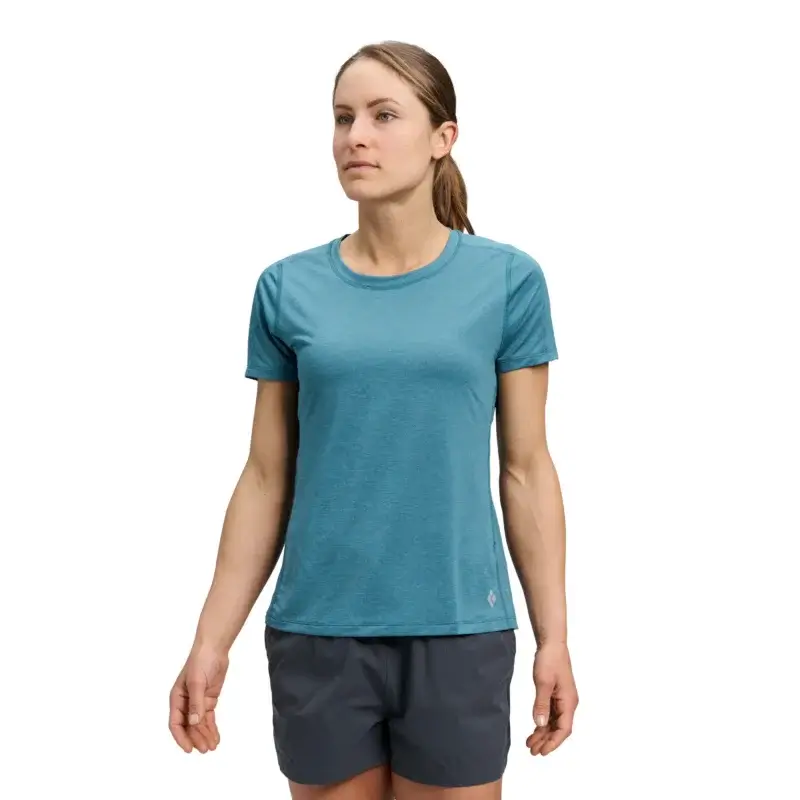
Lightweight TopUltra-light base layer that effectively wicks moisture away from your body and is breathable. Quick-dry is important as well. One light-colored shirt is recommended for extremely sunny days.
Recommended Men’s: Black Diamond Lightwire Short Sleeve
Recommended Women’s: Black Diamond Lightwire Short Sleeve
Sun HoodyLightweight, long-sleeve sun hoody that is great for protecting from the sun.
Recommended Men’s: Black Diamond Alpenglow Hoody
Recommended Women’s: Black Diamond Alpenglow Hoody
Lightweight Baselayer TopA long sleeve base layer that is fitted, lightweight and quick drying. Make sure it is long enough to tuck in.
Recommended Men’s: Black Diamond Men’s Lightwire Long Sleeve
Recommended Women’s: Black Diamond Women’s Lightwire Long Sleeve
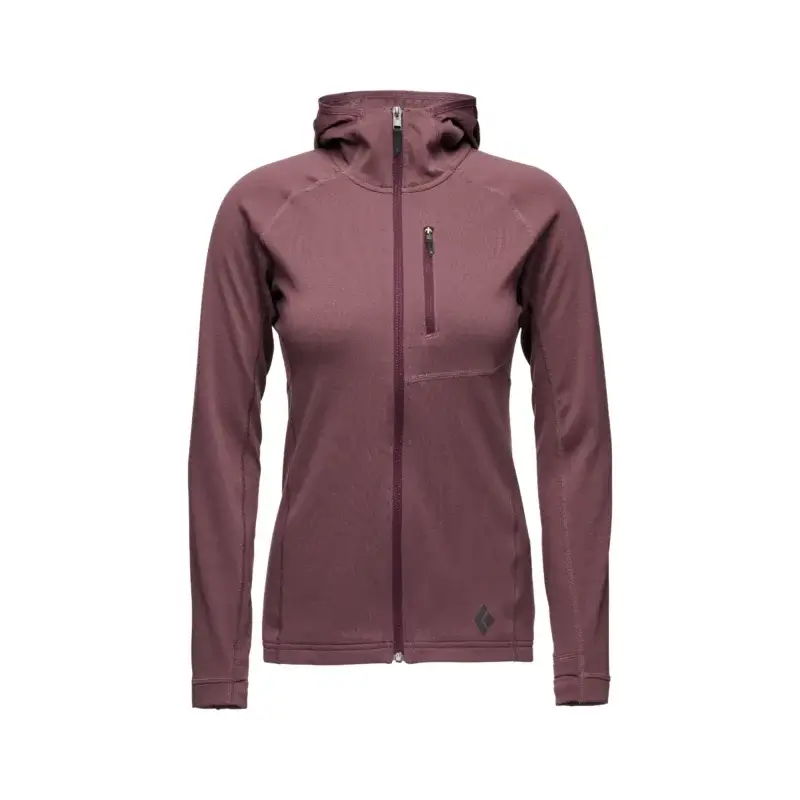
Mid-Weight Warm Layer TopThis mid-layer will be worn over your base layer most of the trip.
Recommended Men’s: Black Diamond Men’s Coefficient Hoody
Recommended Women’s: Black Diamond Women’s Coefficient Hoody
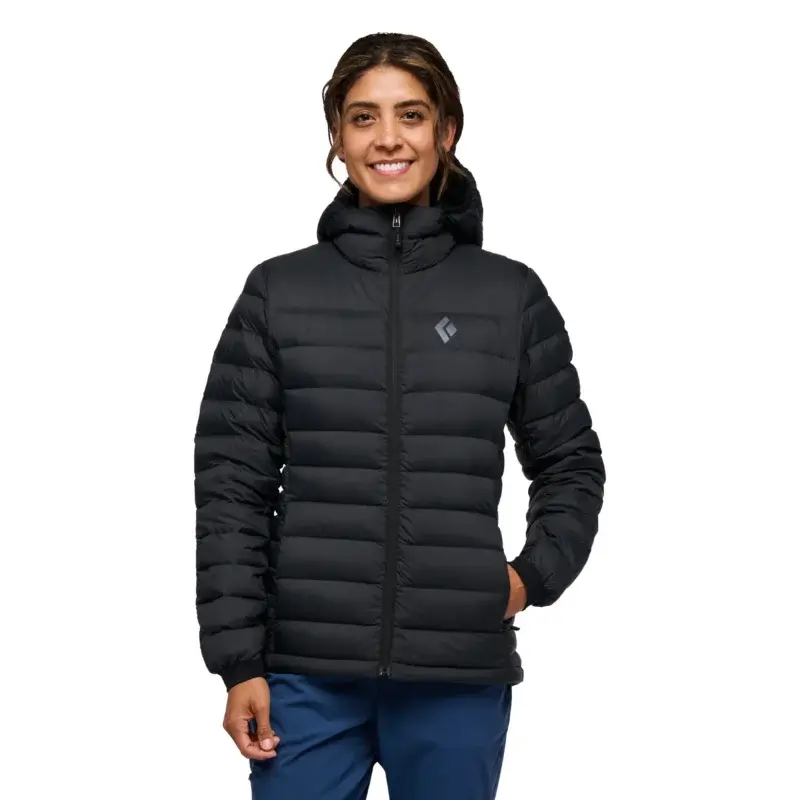
Mid-Weight Puffy JacketA simple, lightweight puffy jacket. This item is good for layering systems and staying warm. We recommend 800-fill down that is packable and resists inclement weather.
Recommended Men’s: Black Diamond Deploy Down 1.0 Hoody
Recommended Women’s: Black Diamond Deploy Down 1.0 Hoody
Soft Shell JacketMore breathable than Gore-tex, these soft shell jackets block wind and light precipitation and are great as an outer layer and warm layer under your parka.
Men’s Recommended: Black Diamond Alpine Start Hoody
Women’s Recommended: Black Diamond Alpine Start Hoody
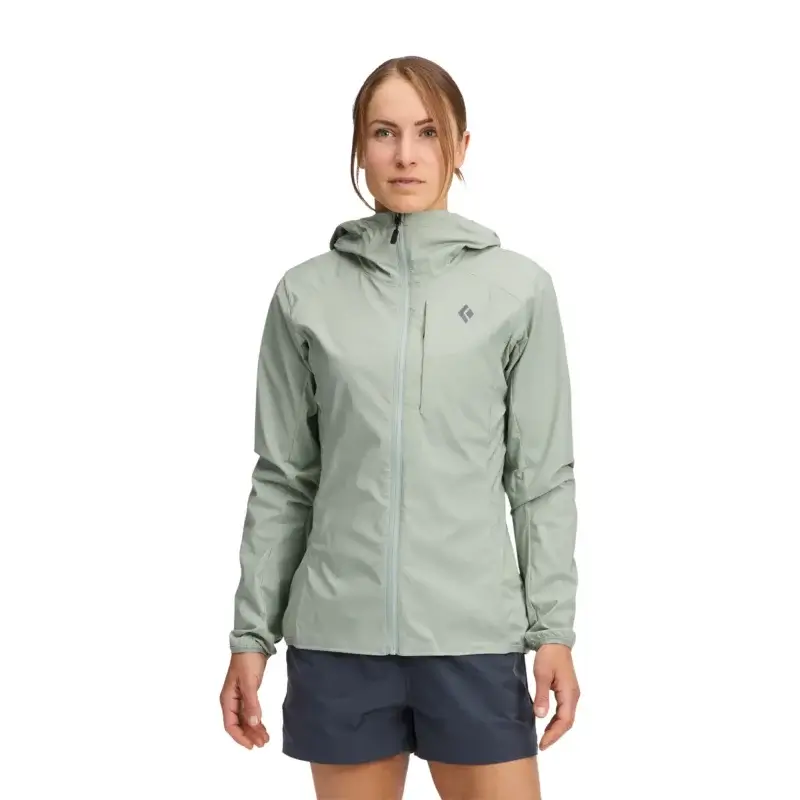
Hard Shell JacketA lightweight, waterproof and breathable jacket WITH A HOOD that can withstand extreme weather conditions. Make sure you have pit-zips and if you are using an old jacket, re-waterproof it.
Recommended Men’s: Black Diamond Recon LT Stretch Shell
Recommended Women’s: Black Diamond Women’s Recon LT Stretch Shell
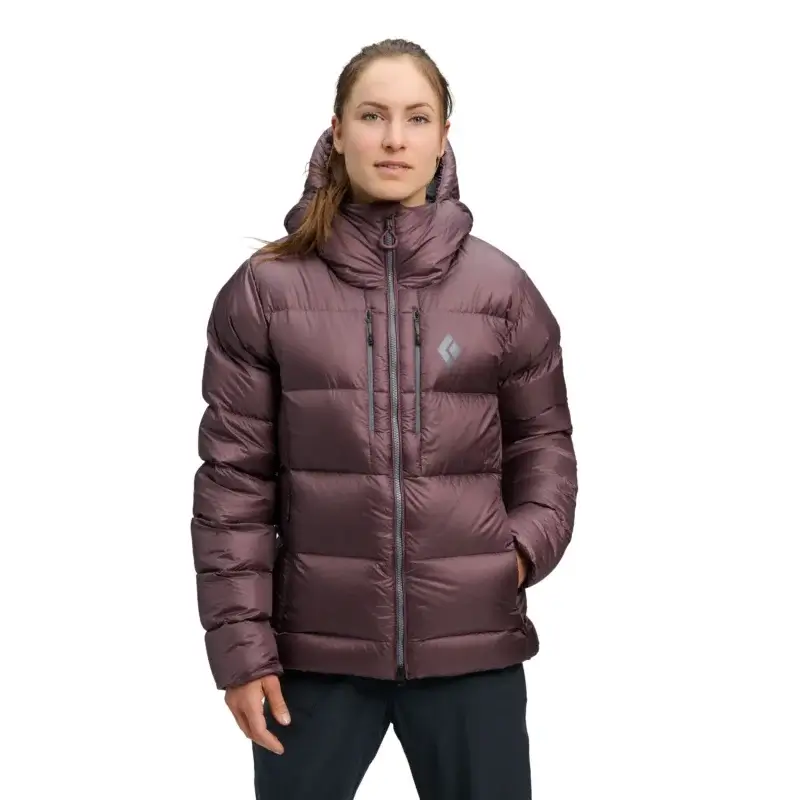
Down ParkaA puffy jacket with a hood that will keep you warm during the coldest of conditions. The higher the quality down, the better (800-fill is best). Although this jacket should be lightweight, it should have a decent thickness and be closer to the 2 lb. range than your typical mid-weight jacket.
Recommended Men’s: Black Diamond Mission Down Parka
Recommended Women’s: Black Diamond Mission Parka
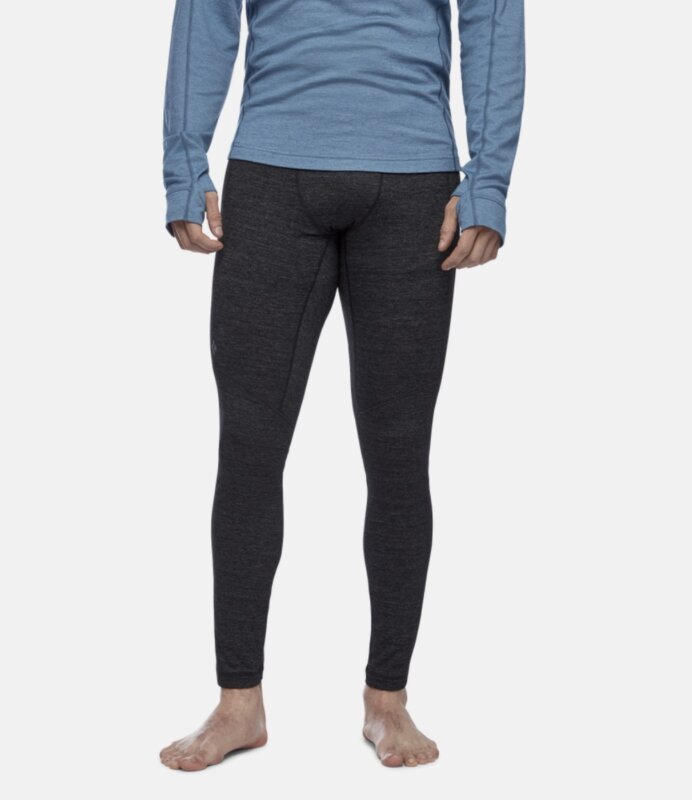
2x Base Layer BottomsFitted, light-weight, next to skin base layer.
Recommended Men’s: Black Diamond Mens Solution 150 Merino Bottoms
Recommended Women’s: Black Diamond Women’s Solution 150 Merino Bottoms
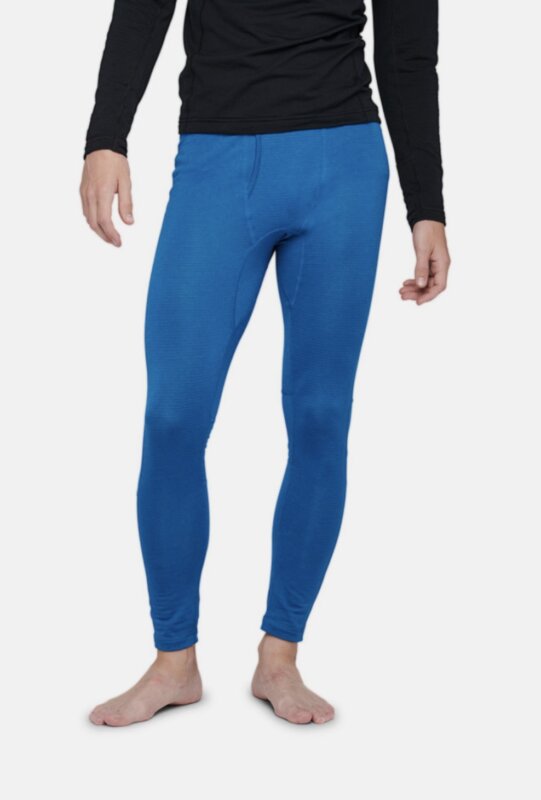
2x Mid-Weight Layer BottomsFitted and quick drying. This piece will be a Mid-Weight Layer that will get you through a wide range of temperatures.
Recommended Men’s: Black Diamond Coefficient LT Pants
Recommended Women’s: Black Diamond Coefficient LT Pants
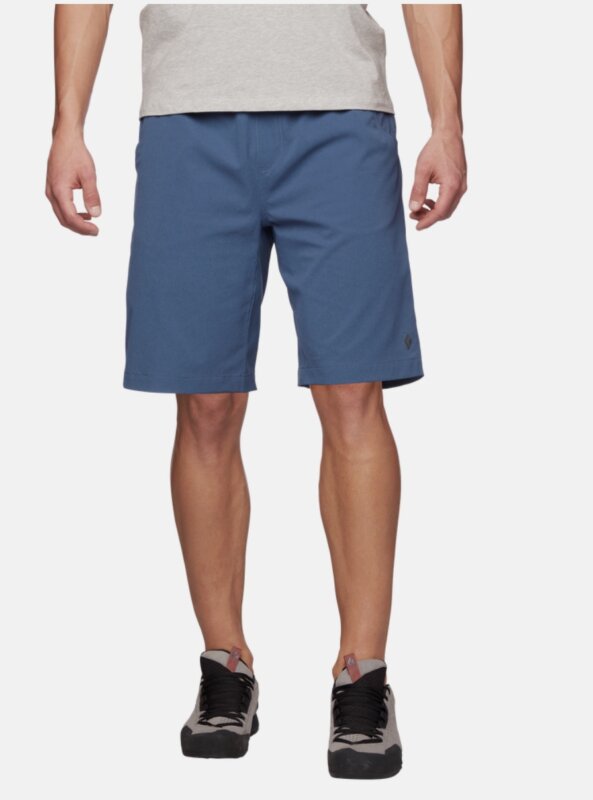
Quick Dry ShortsThrow these on under other layers for when the sun begins to beat, or you want to stretch / relax in Basecamp. Lightweight, durable and comfortable. NO COTTON.
Recommended Men’s: Black Diamond Sierra Shorts
Recommended Women’s: Black Diamond Sierra Shorts
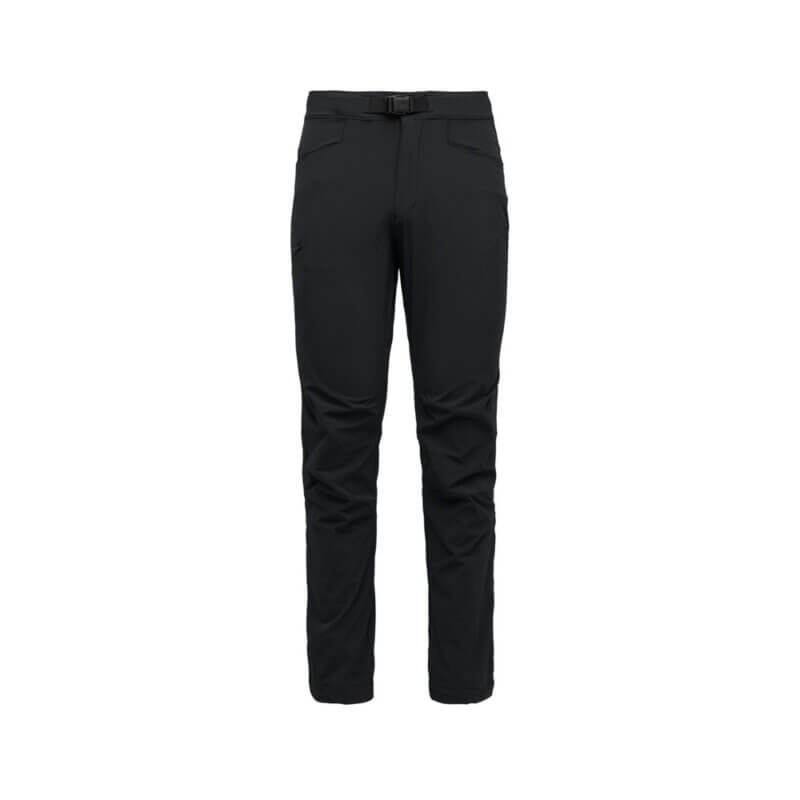
Hiking PantLightweight, durable, quick-drying hiking pant that will be your day-to-day pant during the expedition
Men’s Recommended: Black Diamond Alpine Light Pants
Women’s Recommended: Black Diamond Women’s Alpine Light Pants
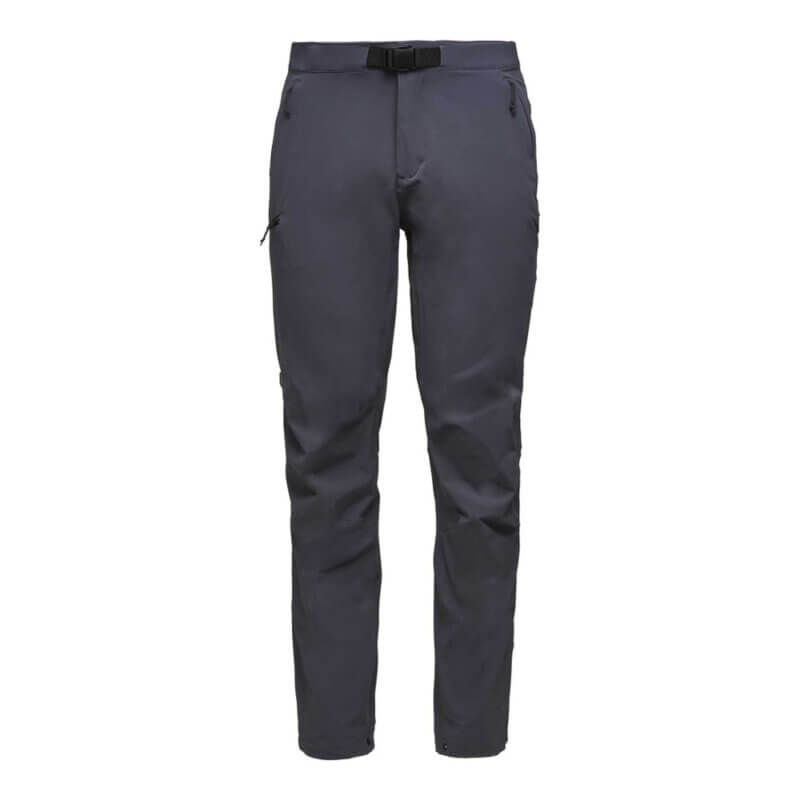
Soft-Shell Alpine PantYou will spend most of your days in these pants. They should be breathable + water-resistant.
Recommended Men’s: Black Diamond Alpine Pants
Recommended Women’s: Black Diamond Alpine Pants
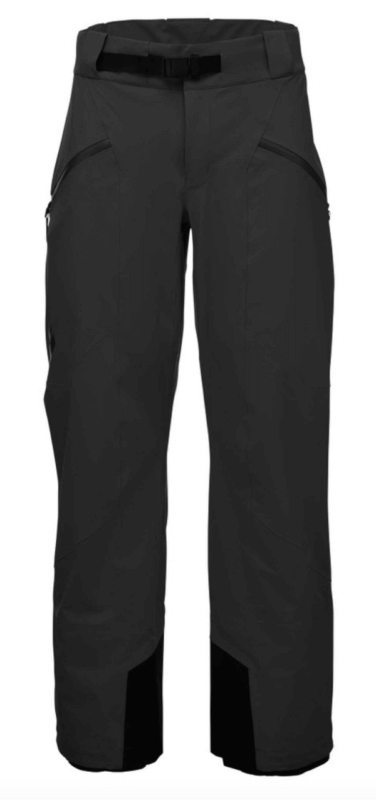
Hard Shell Climbing PantYour waterproof bottom layer for extreme weather days. Make sure you have water-resistant zippers, crampon patches + good pockets.
Recommended Men’s: Black Diamond Fineline Stretch Full Zip Pants
Recommended Women’s: Black Diamond Fineline Stretch Full Zip Pants
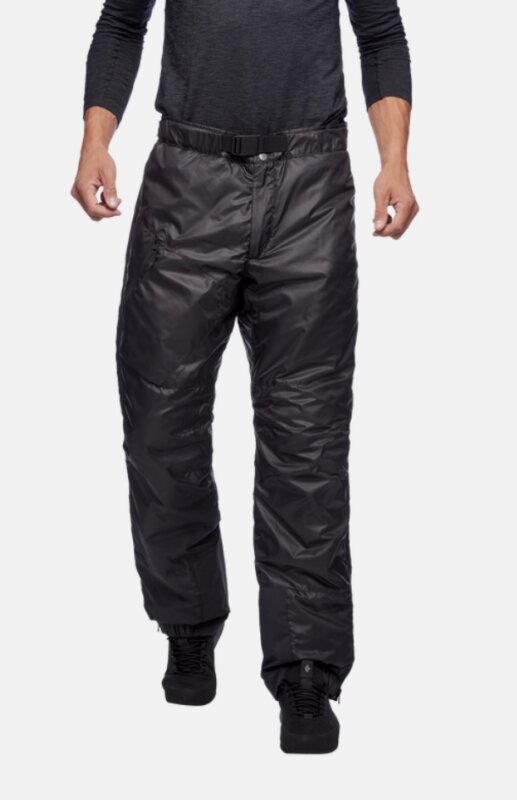
Insulated PantFull-length side zippers are recommended, for throwing on top of all of your layers.
Recommended: Black Diamond Solution 4.0 Pants
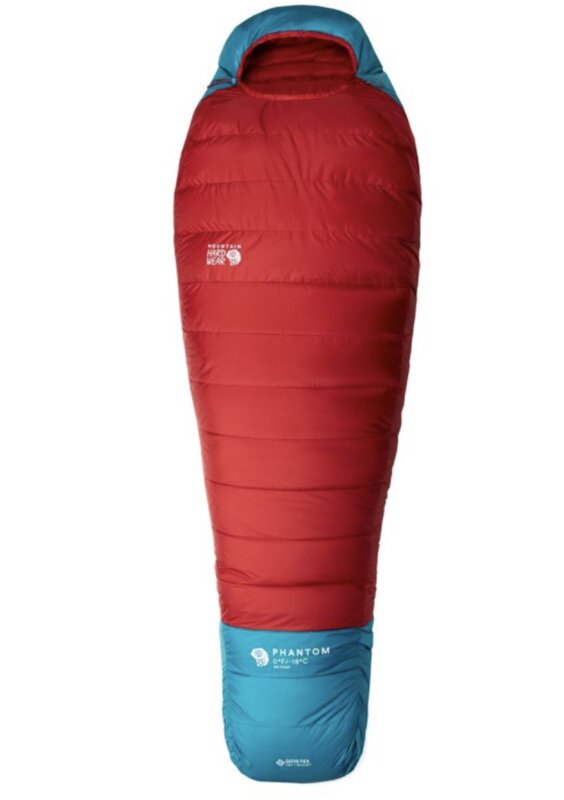
Sleeping Bag (0°F)Rated to 0º F. Make certain that the sleeping bag is the right length. DON’T FORGET A COMPRESSION SACK FOR THE SLEEPING BAG. Many climbers also like a silk liner. For the Ecuador Climbing School: If you’re on our 9-Day (non-extension) trip, a 20º F rated bag is ok.
Recommended: Mountain Hardwear Phantom 0°F
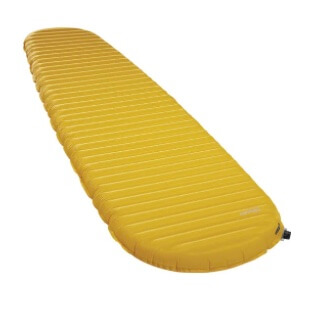
Inflatable Sleeping Pad72-inch long inflatable pad required. Make sure you also purchase and bring a repair kit + bag for the sleeping pad.
Recommended: NeoAir® XLite™ NXT Sleeping Pad
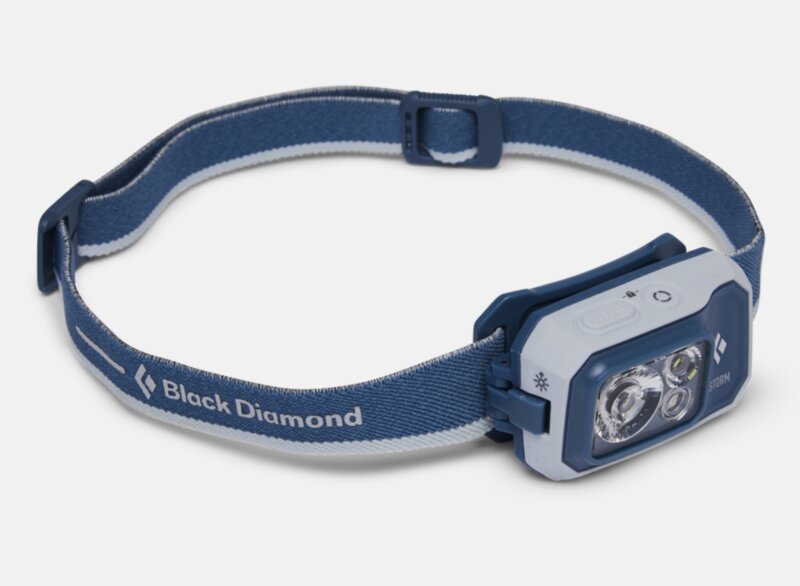
HeadlampsPlease bring two L.E.D. Headlamps. One will be intended as a lightweight backup. L.E.D. headlamps are required. Make sure they have 3+ bulbs. Bring extra batteries. We highly recommend a tilting lamp.
Recommended: Black Diamond Storm 450
Backup Headlamp Recommended: Black Diamond Deploy 325
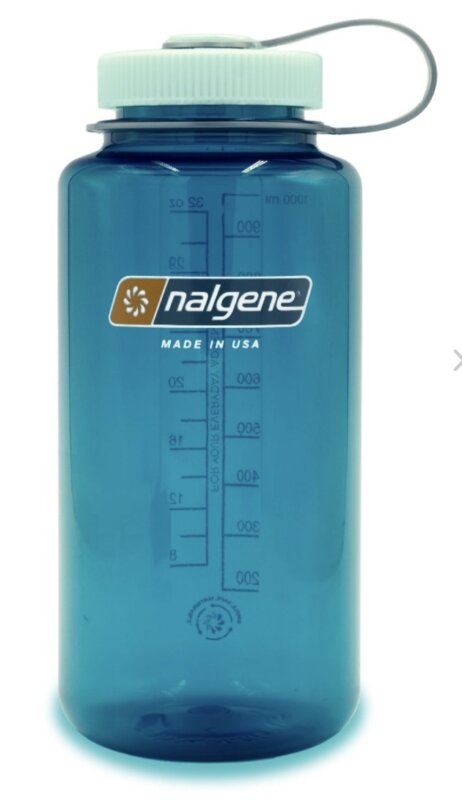
Two 1L Nalgene BottlesTwo 1 Liter Wide Mouth Nalgene bottles.
Recommended: Nalgene 1 L wide mouth
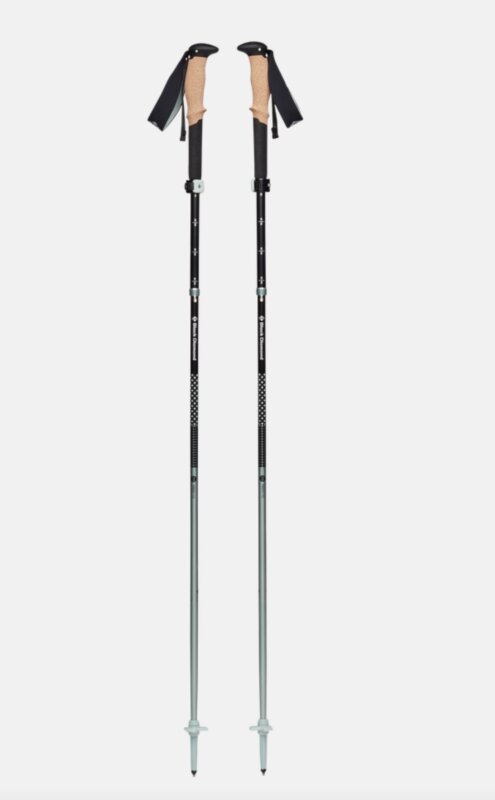
Trekking PolesMake sure that they are durable, lightweight + easily adjustable. These are optional, but highly recommended.
Recommended: Black Diamond Pursuit FLZ Trekking Poles
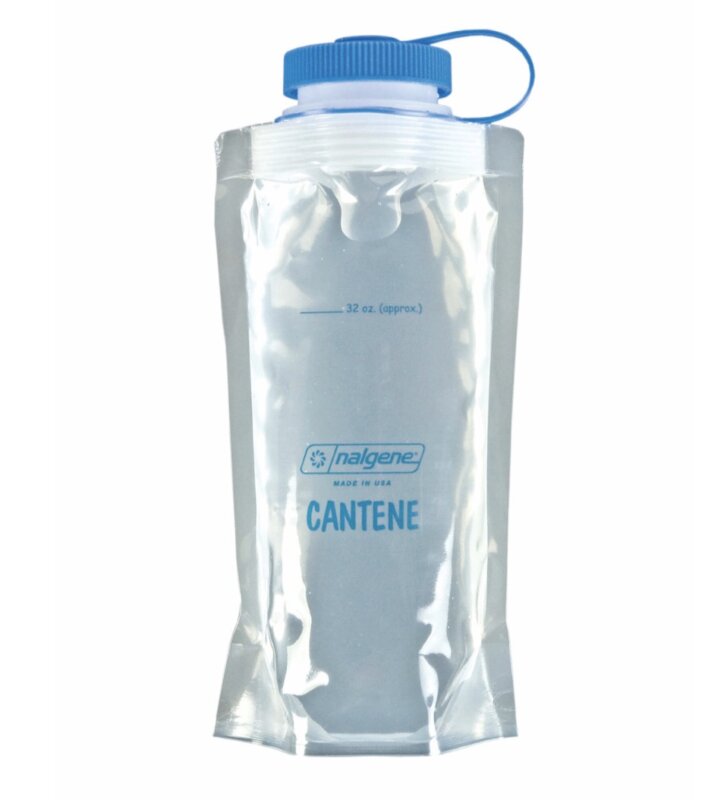
Compressible 1-1.5L BottleWide mouth compressible 1-1.5 liter bottle. Optional but strongly recommended. Often used as a designated pee bottle.
Recommended: Nalgene Flexible Cantene
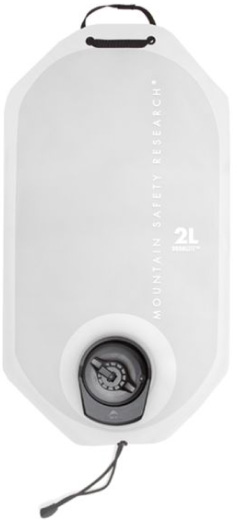
Hydration SystemShould carry 70-100 ounces. Must be durable and have a reliable closure system. Recommended: MSR Dromlite 2L with Hydration Tube
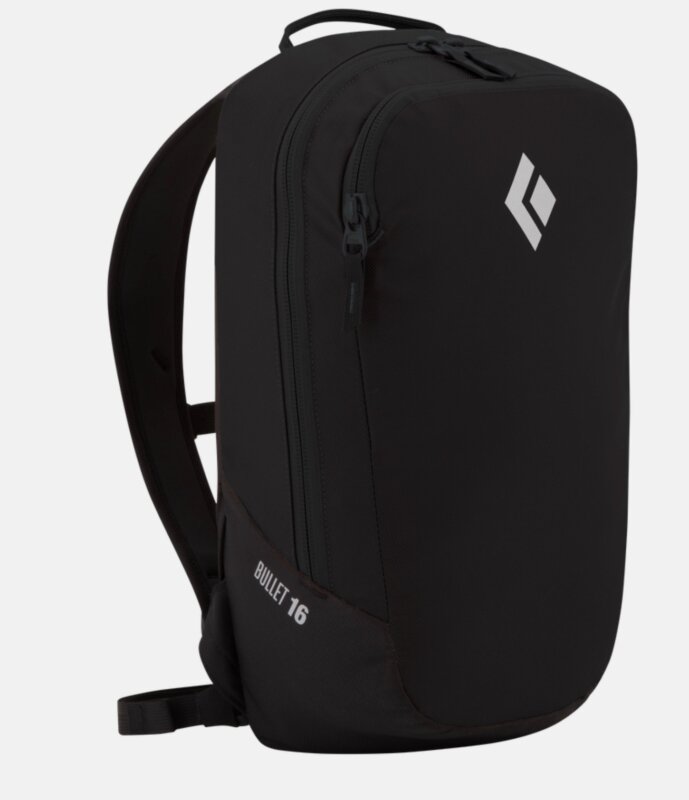
Day PackMid-size pack for city days and trekking. Streamlined, neat and lightweight (10-20 liters).
Recommended: Black Diamond Bullet 16 Pack
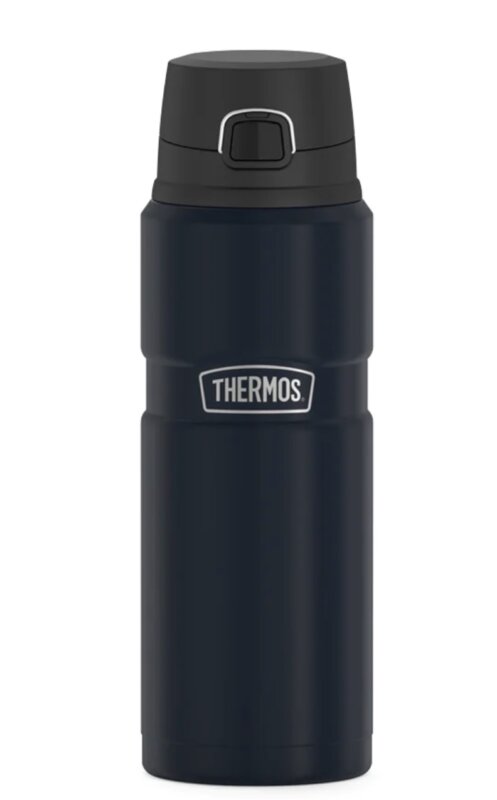
ThermosA fully insulated thermos is optional but recommended for warm drinks that help with comfort, hydration, and safety on cold days in the mountains.
Recommended: Thermos STAINLESS KING™ DRINK BOTTLE 24OZ
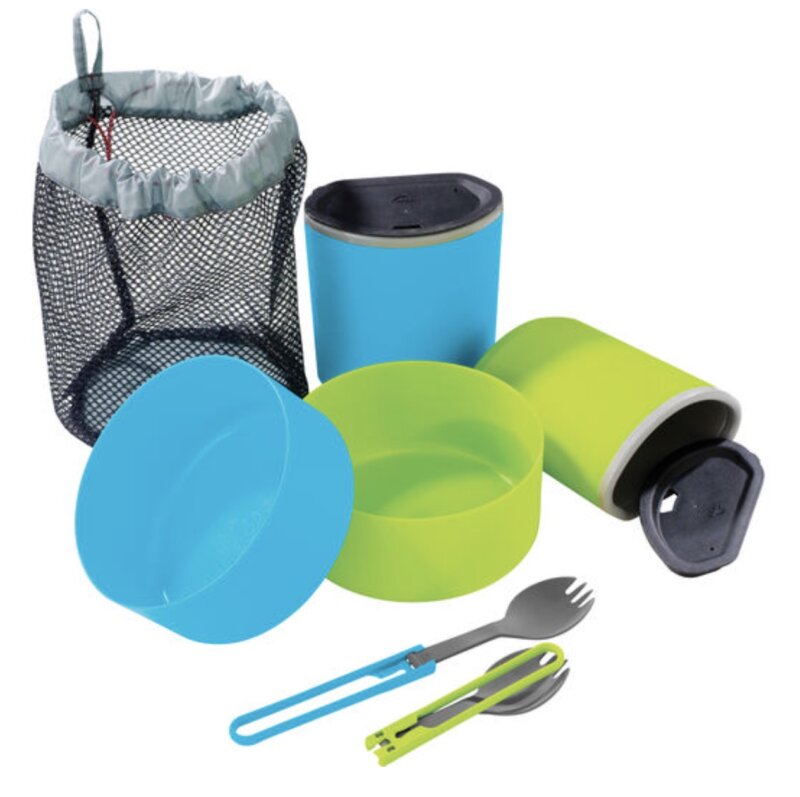
Plastic Bowl, Mug, and SpoonA lightweight and compact cookware setup. You’ll want a plastic bowl, mug and spoon.
Recommended Kit: MSR 2-Person Mess Kit
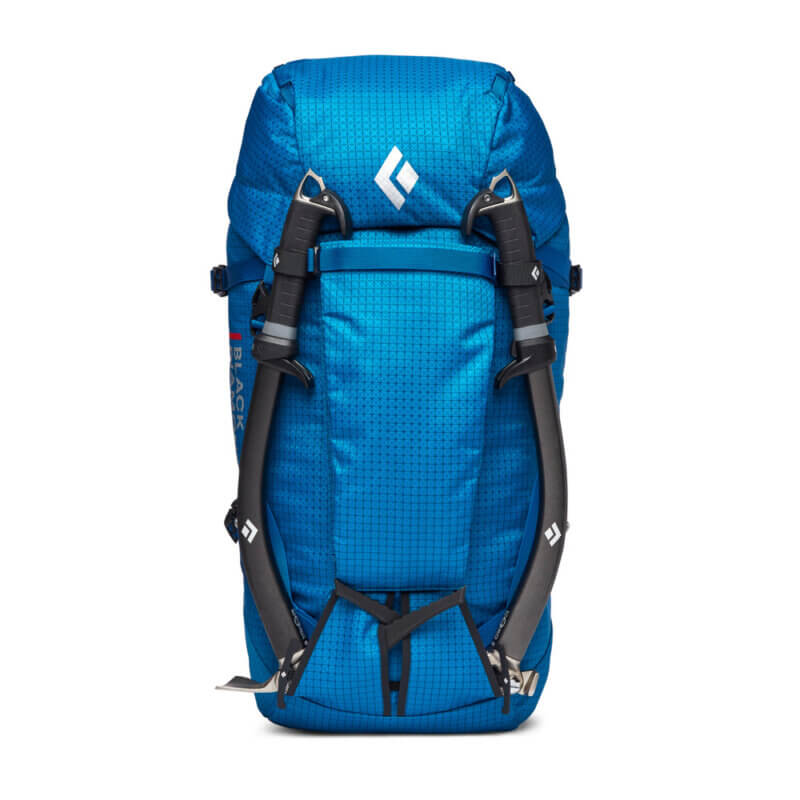
Climbing Pack: 50-60LInternal frame pack that is between 50 and 60 liters. Either purchase a matching pack cover, or use garbage bags as liners. Make sure the pack is fitted to YOUR body.
Recommended: Black Diamond Mission 55L Pack
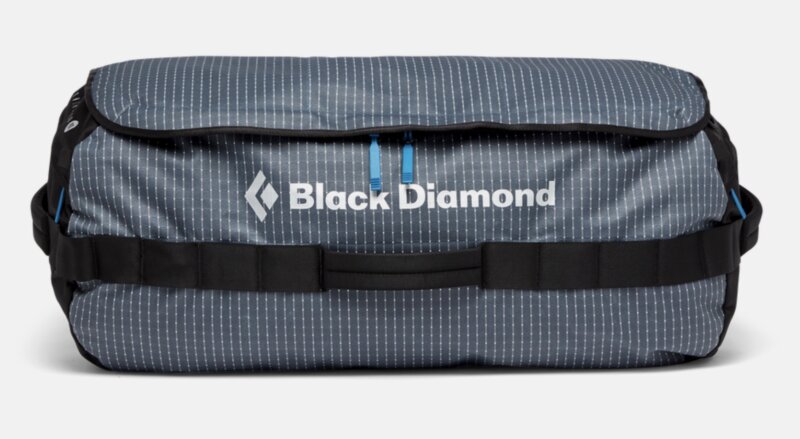
Duffel Bags2 Duffel Bags – At least one bag should be extremely durable, waterproof, and big – between 90L and 120L. You should feel comfortable leaving it in a puddle for several hours. Remember dry clothes are hot commodities in the mountains! Large enough to fit everything you own, plus what you anticipate buying. Two duffel bags are necessary to fit all your equipment for travel (we don’t recommend checking your climbing pack separately, best is to put all gear and climbing pack into your duffel).
Once in country, you can consolidate your gear into one duffel and your climbing pack. You can leave the second duffel with city clothes and other non-necessary items behind in a locked and secure location that your guide will arrange for you.
Note: For ski expeditions such as the Ecuador Ring of Fire, you can replace one of these duffel bags with a ski/splitboard bag.
Recommended: Black Diamond Stonehauler 120L
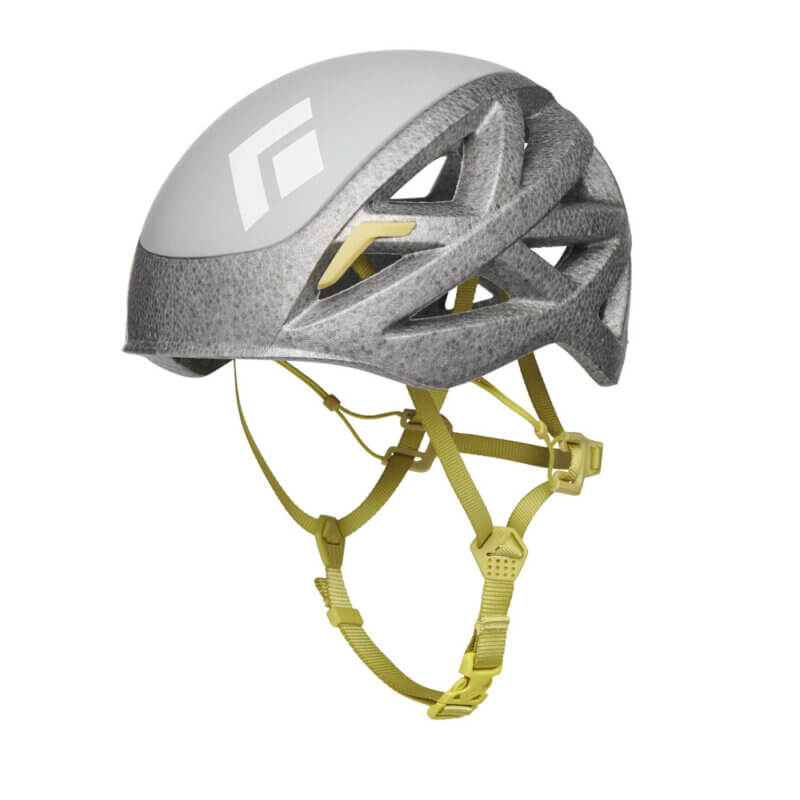
HelmetAn easily adjustable lightweight helmet that fits with hat and Balaclava. Make sure this is a climbing-specific helmet. *Climbing helmets are also available to rent (for our introductory climbing courses) at no charge from Alpenglow Expeditions on a first-come, first-serve basis.
Recommended: Black Diamond Vapor Helmet
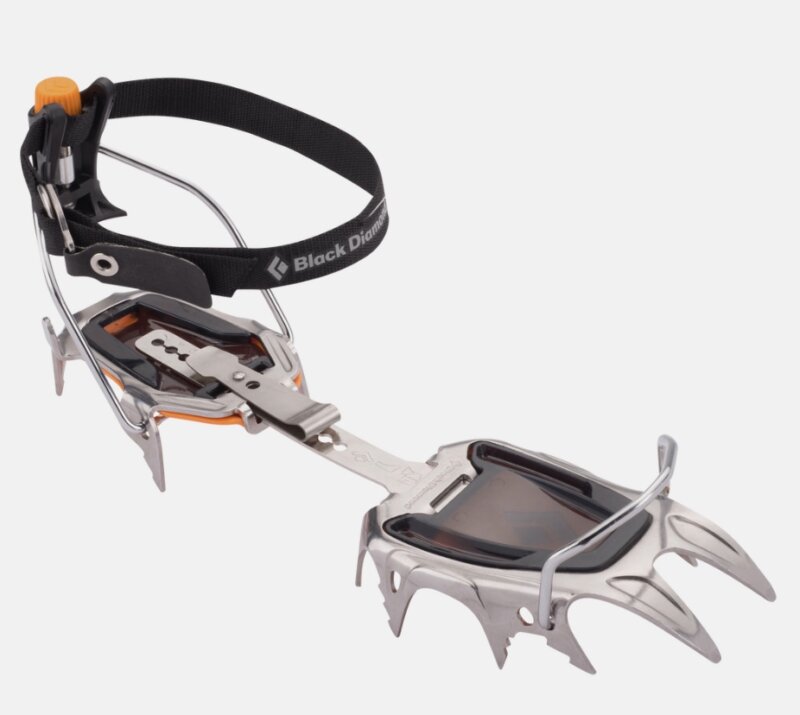
Mountaineering CramponsSteel crampons with anti-balling plates are required (so that snow does not build-up in the base of your foot). Make sure that crampons have a heel bail and that they fit snugly on your ski or snowboard boots. Crampons are available to rent (for our introductory climbing courses) at no charge from Alpenglow Expeditions on a first-come, first-serve basis.
Recommended: Black Diamond Sabretooth Crampons
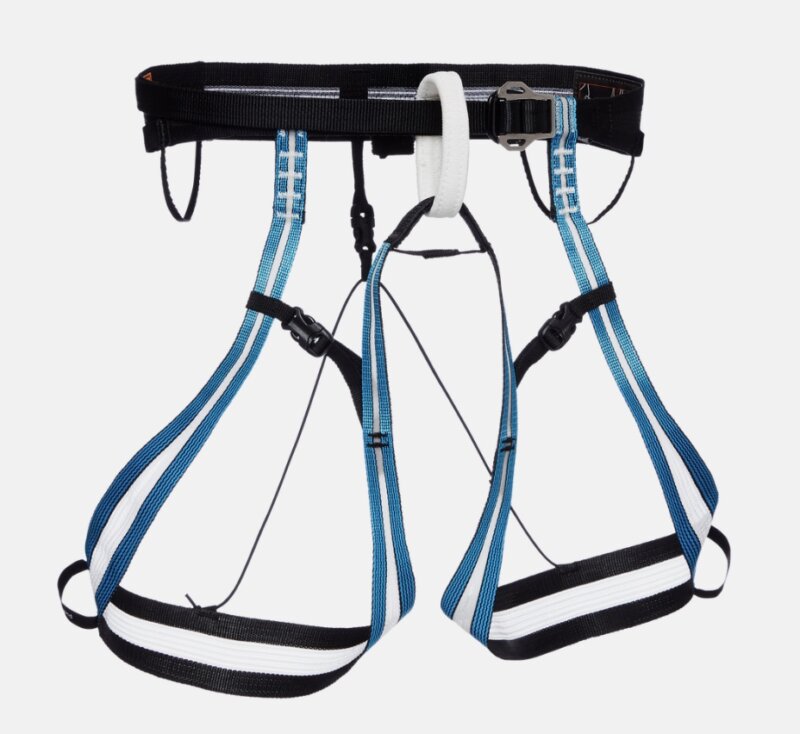
Mountaineering HarnessMust have belay loop, gear loops and adjustable leg loops so that you can layer up underneath it. Easy to pack, lightweight + comfortable. *Harnesses are also available to rent (for our introductory climbing courses) at no charge from Alpenglow expeditions on a first-come, first-serve basis.
Recommended: Black Diamond Couloir
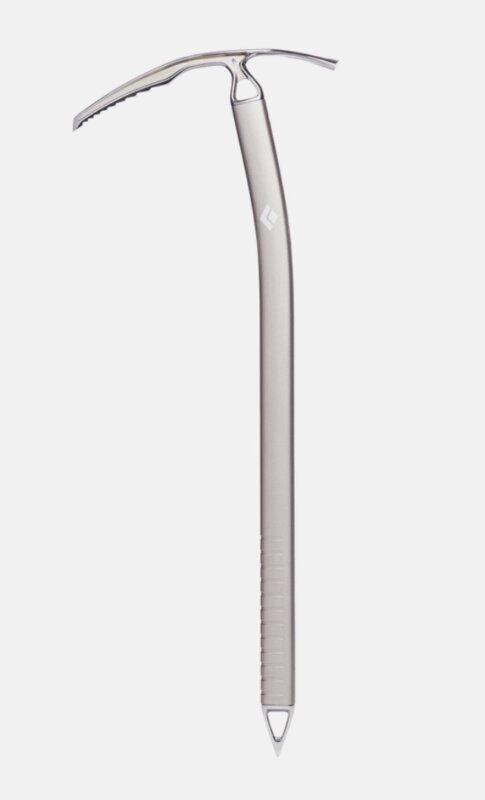
General Mountaineering AxeOne non-technical climbing axe. The tool should be approx. 55cm- 65cm long and comfortable to hold. *Ice axes are also available to rent (for our introductory climbing courses) at no charge from Alpenglow expeditions on a first-come, first-serve basis.
Recommended: Black Diamond Raven Pro Ice Axe
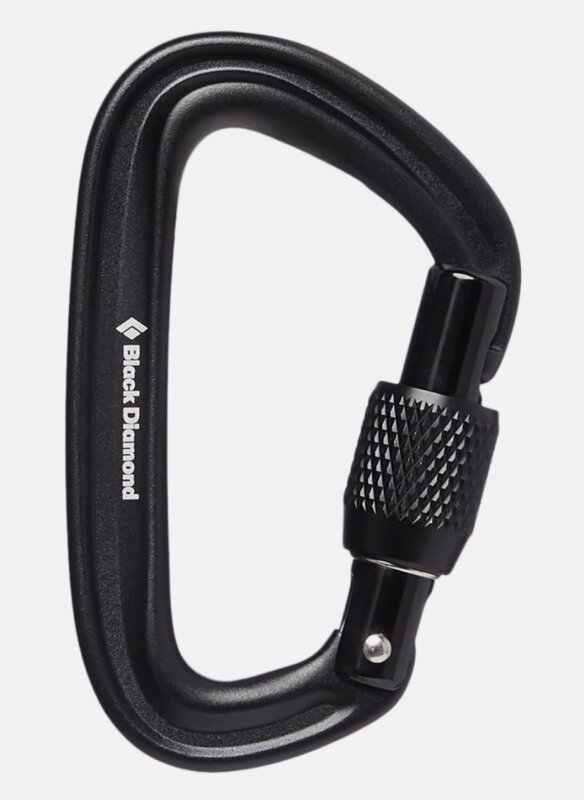
Locking Carabiner (2)Small, lightweight locking carabiners are best.
Recommended: Black Diamond LiteForge Screwgate
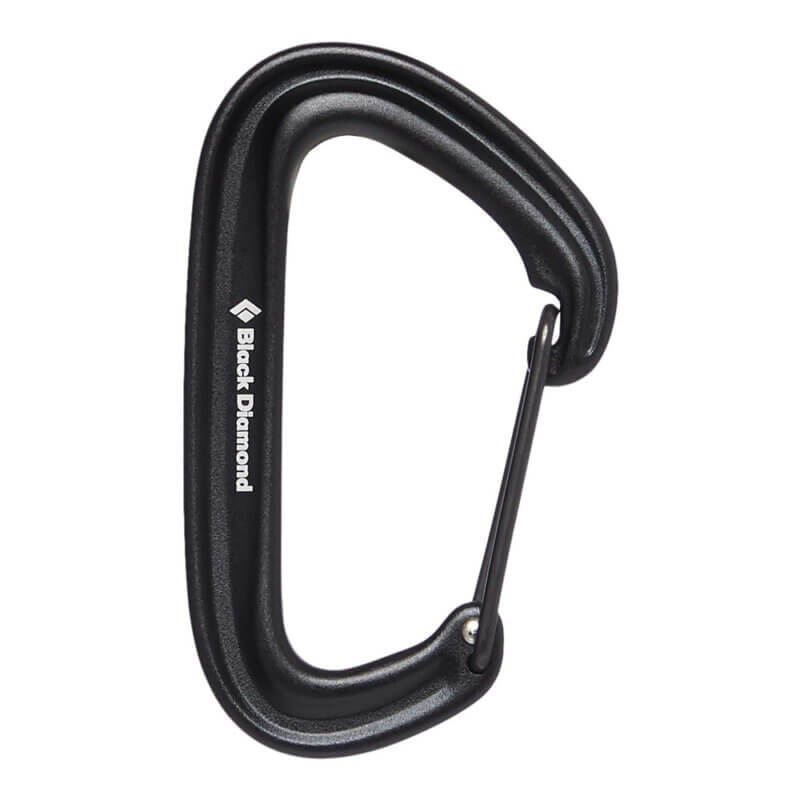
Non-locking Carabiner (2)Small, lightweight small carabiners are best, wire-gates are fine.
Recommended: Black Diamond LiteWire Carabiner
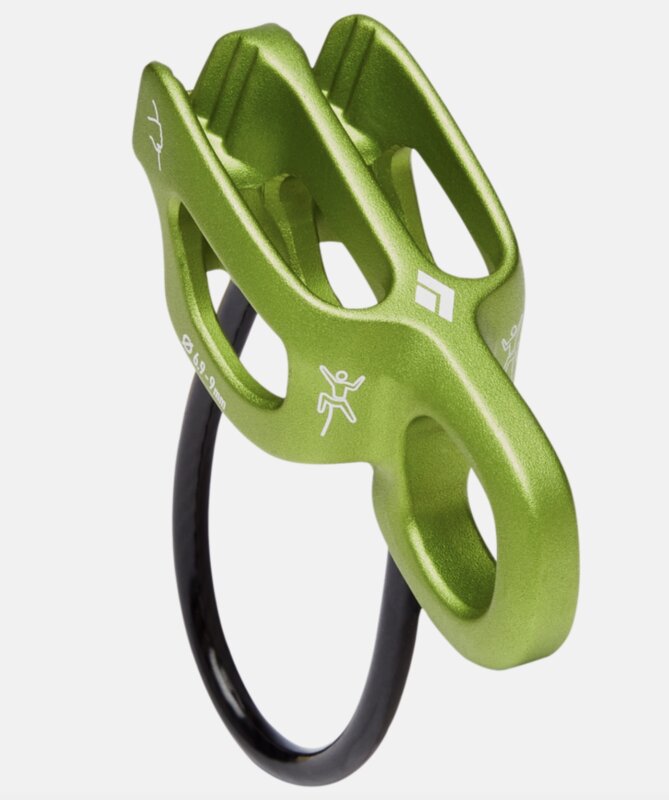
Belay DeviceLight, easy to use + simple. Should have teeth/grooves for skinny ropes.
Recommended: Black Diamond ATC Alpine Guide Belay Device
Miscellaneous Items- Passport (with visa, if necessary)
- 2 luggage locks (TSA compliant)
- Non-cotton underwear
- Wag bags, 1 per night camping as to leave no trace
- Day Pack (optional) – Mid-size for city days/trekking
- Stuffsacks: assorted sizes, for organizing your clothes and gear
- Sunscreen: SPF 30 (or higher)
- Lip balm with SPF 15 (or higher)
- Personal first-aid kit (Band-aids, Ibuprofen, Cough Drops, Moleskin, Pepto-bismol, Imodium, Personal Medications, Saline nasal spray)
- Toiletries
- 3-4lbs of Snack food (a variety of snack food, some whole food, some bars, some gels)
- Hand Warmers
- Flip flops or sandals/crocs – for showers, lounging, etc
- Small Pack Towel
- Face Mask
- Hand Sanitizer
- Knife
- Mountain Face Mask (optional)
- Headphones
- Powerbank (6-10K mAh good for 2-3 phone charges, weighing under 8oz)
Ecuador Climbing School Questions
Non-8,000m: A trip is confirmed 70 days before the start of an expedition. This doesn’t happen often, but if a trip is not meeting the enrollment minimums at the 70-day mark, Alpenglow will need to cancel the expedition or team members will need to pay a greenlight rate.
8,000m Peaks: A trip is confirmed 100 days before the start of an expedition. This doesn’t happen often, but if a trip is not meeting the enrollment minimums at the 100-day mark, Alpenglow will need to cancel the expedition or team members will need to pay a greenlight rate.
If Alpenglow cancels due to low enrollment, a full credit or refund can be issued.
We would recommend buying flights 60 days prior to the start of the expedition, when the trip is confirmed. We would also recommend opting into the option to change flights with a minimum fee, in case we summit early and you have the chance to get you home a few days earlier than expected.
Yes, all hotel, lodge and hut accommodations are double occupancy. A Single Room Supplement can be requested but is subject to availability and additional cost. Please contact the office directly (tony@alpenglowexpeditions.com) to request, confirm and pay for single room arrangements. Note: Simply indicating interest for a single room in your Client Portal will not confirm your single room.
For the Ecuador Climbing School, we utilize mountain huts while on Cayambe and Cotopaxi, and we establish a camp while climbing Chimborazo. The huts feature heat, running water and electricity, and are strategically located near the glaciers.
Your longest, most difficult day will be summit day on Cayambe. We wake very early in the morning, using headlamps and warm layers. Climbing steadily through the night, we find ourselves high in the peak when the sun rises. After gaining the summit, we descend all the way back to the town of Otavalo. You can expect between 8 and 12 hours of steady movement. The longest day of the extension will be Chimborazo, climbing nearly +/- 4,000′ (1,200m) over the 8 – 12 hours.
Yes! The primary goal of our climbing schools is to give our guests the needed skills and experience to tackle bigger objectives all over the world.
Yes! The Climbing & Mountaineering School is an entry-level program designed to teach you all the skills you need to begin your mountain climbing career. While you do need excellent general fitness, no climbing experience is necessary.
Yes, we provide the following gear at no charge for our climbing schools. Helmet, harness, crampons, ice axe, boots and carabiners/ cord. Please note- this equipment is available on a first come, first served basis, so please make your reservations early!
When an expedition is more than 90 days out, we require a 20% deposit to guarantee your reservation. Within 90 days we require full payment.
While no outdoor adventure can be completely free of risk without losing the essence of the activity, hiring a professional guide is a fantastic way to manage and mitigate this risk. Activities like skiing and climbing have what we call “inherent risk”, which can be defined as a risk that cannot be completely mitigated by a professional. That is part of playing in the mountains. We encourage you to reach out to the office if you would like to discuss this in more detail.
I had an absolute blast
“I had an absolute blast–everything ran super smoothly. The program was incredibly well-designed to maximize both acclimatization and rest, and both Nacho and Christian were rock stars. I’d climb with either of them again in a heartbeat, and would 100% recommend the program to anyone!”
Kate L