Expedition Recap: Alpamayo 2026
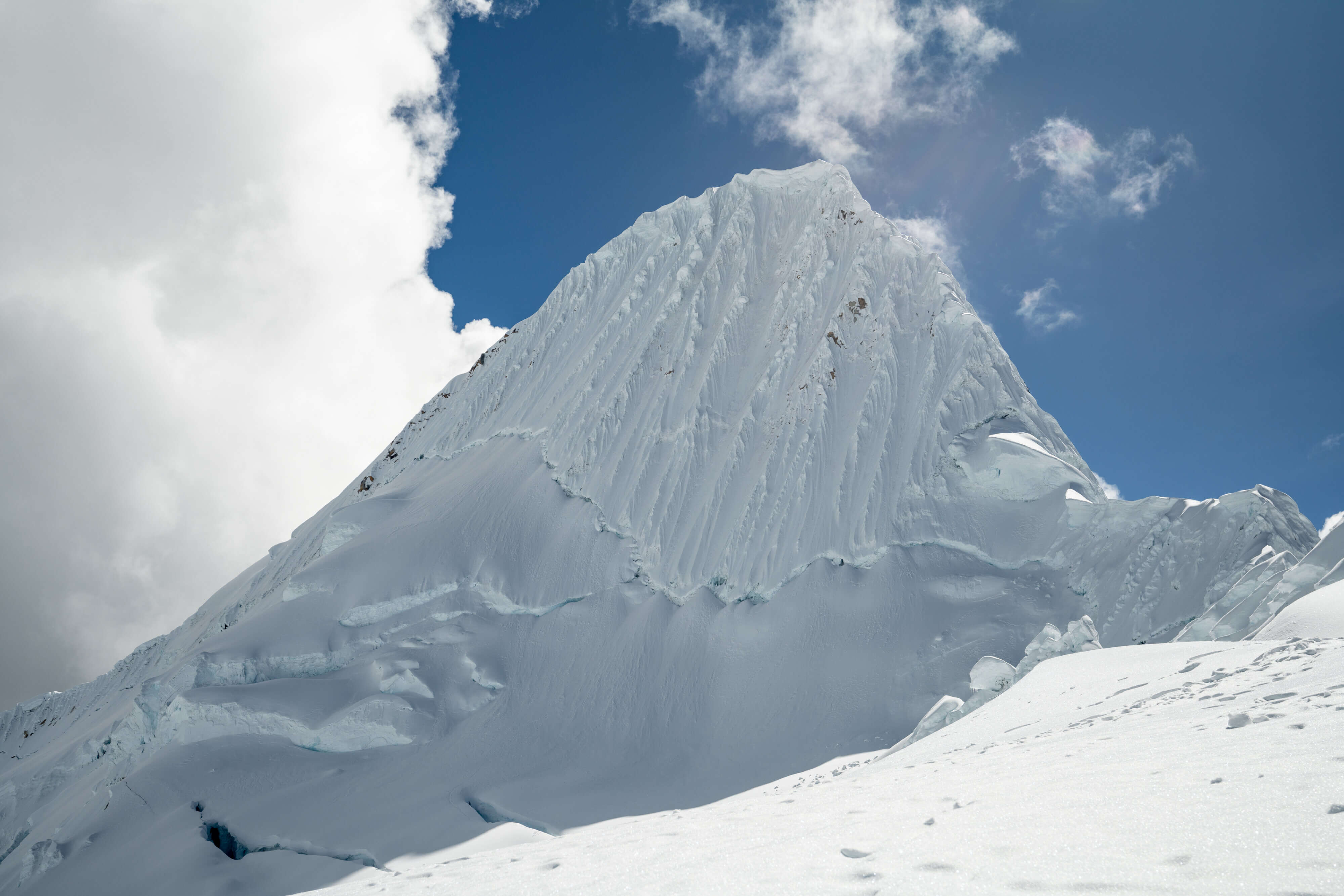
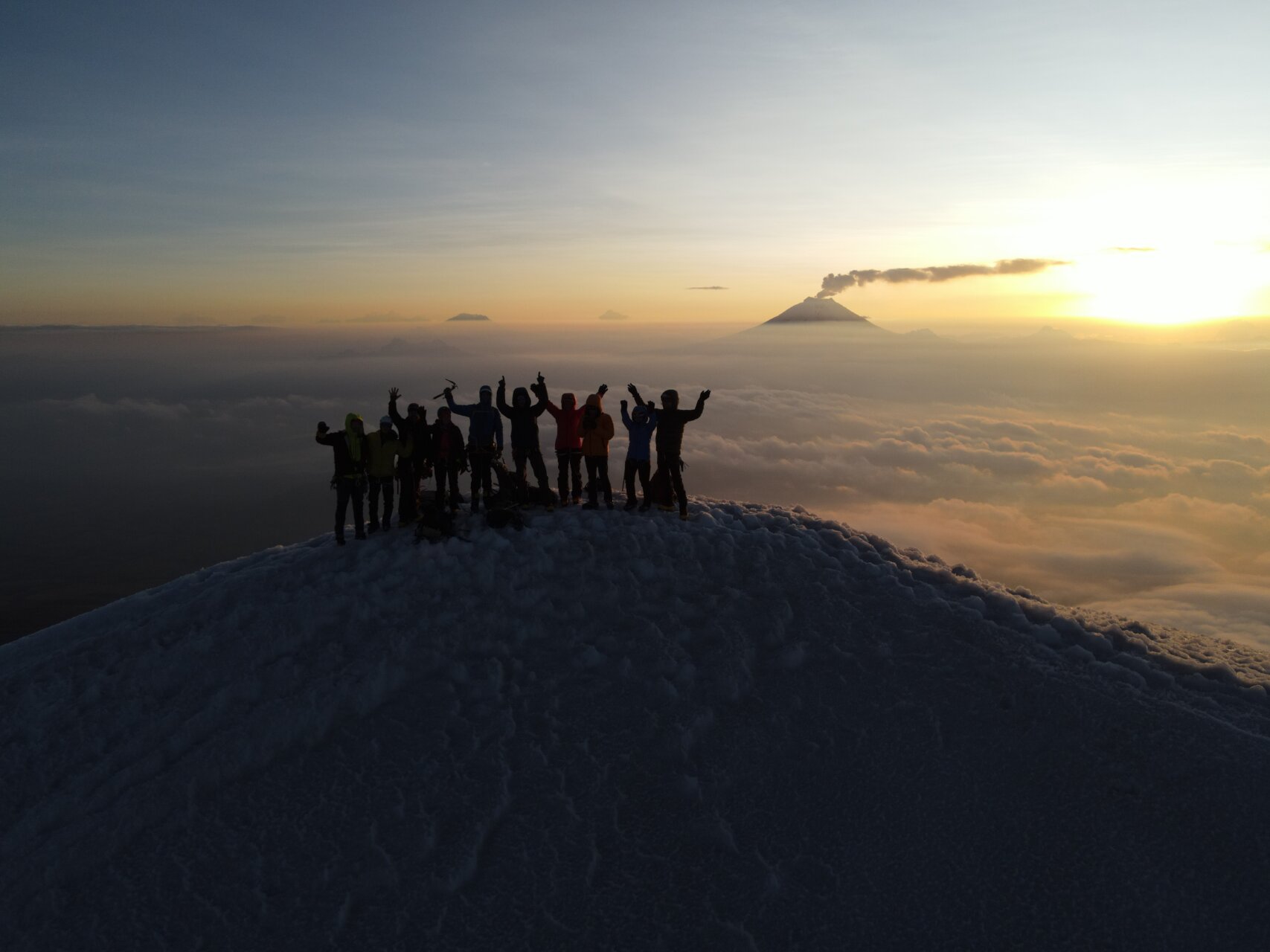
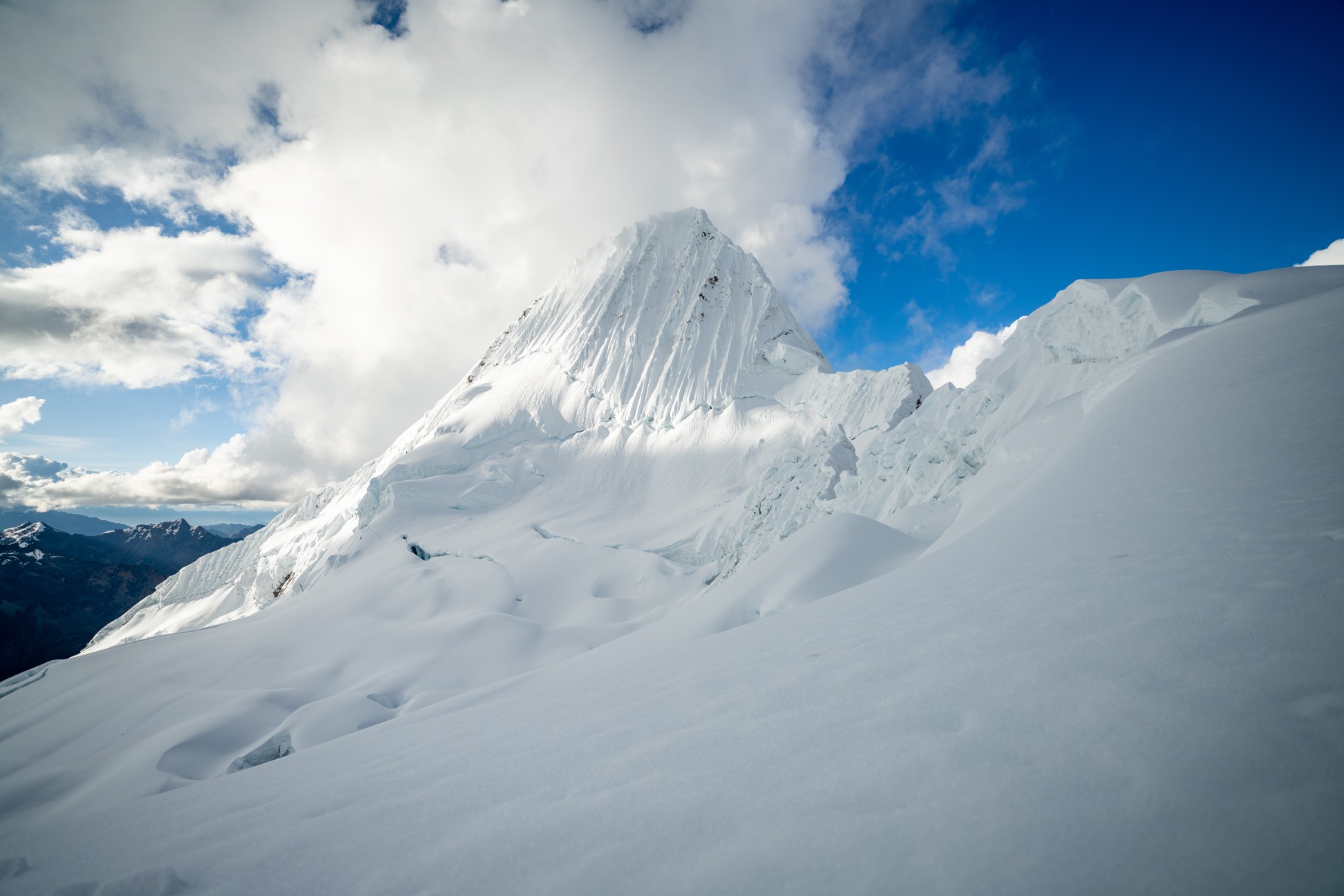
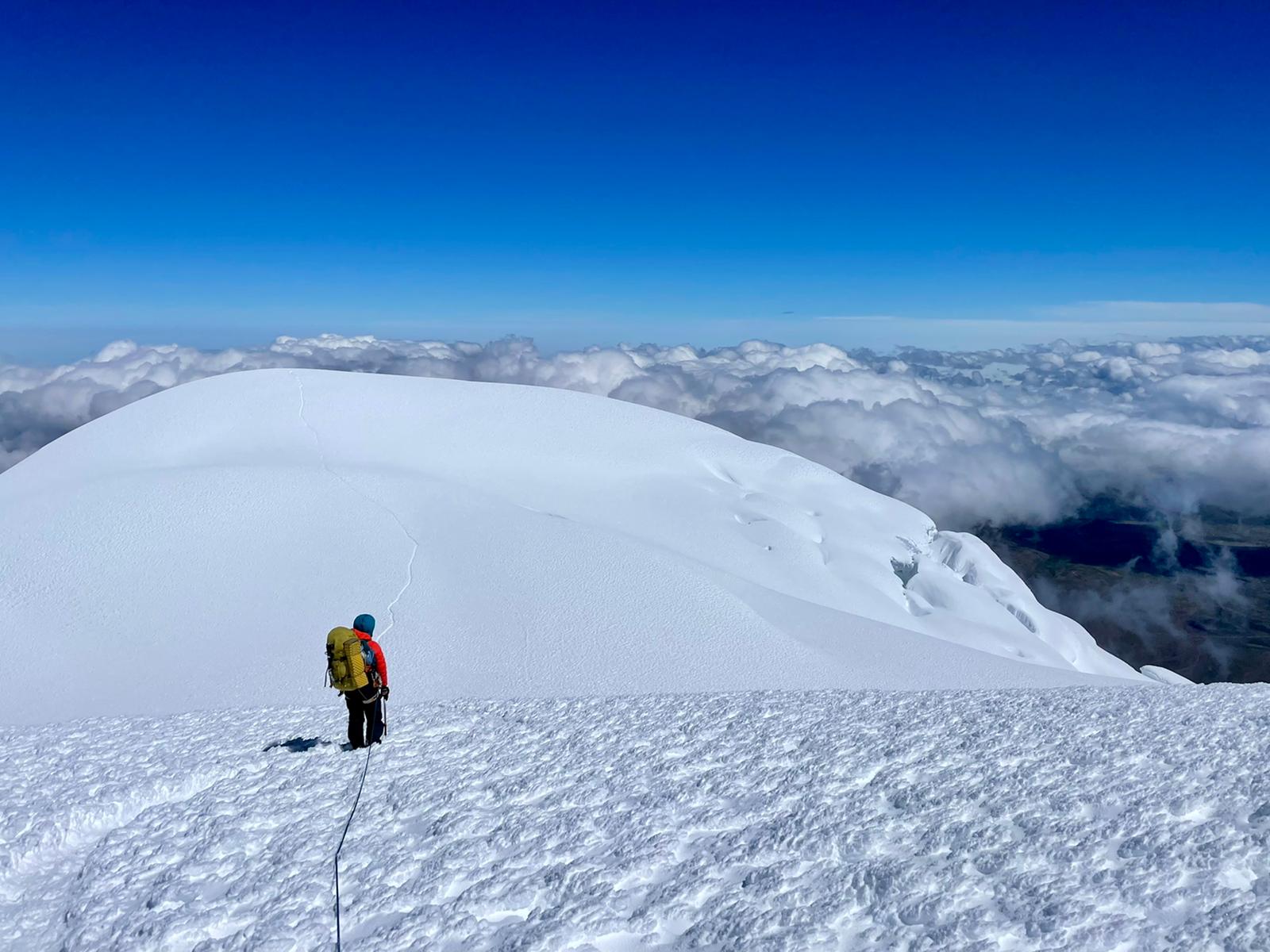
In early July 2026, at 11:30 am, Alpenglow guides Christian, Nacho, and Micher, along with five clients, summited Alpamayo. The mountain, considered one of the most stunning alpine objectives in the world, rises to 19,511 feet in western Peru’s Cordillera Blanca range.
The team stood above the beautiful Santa Cruz Valley, where, just days before, inclement weather continually delayed their trip. Walking through the valley, they arrived at basecamp where they set up tents alongside other climbers. Above all this, and 1,300 feet below them now, Moraine Camp was somewhere beneath the clouds. They had hiked there twice for acclimation and to half-carry gear, and left from there six hours earlier for the summit. Stepping off the summit, some of them undoubtedly thought of the cook in his tent, where they had been initially surprised by how good the food could be on an expedition.
“Everyone was really strong, organized, and independent on the climb,” said Christian.
The Technical Climbing
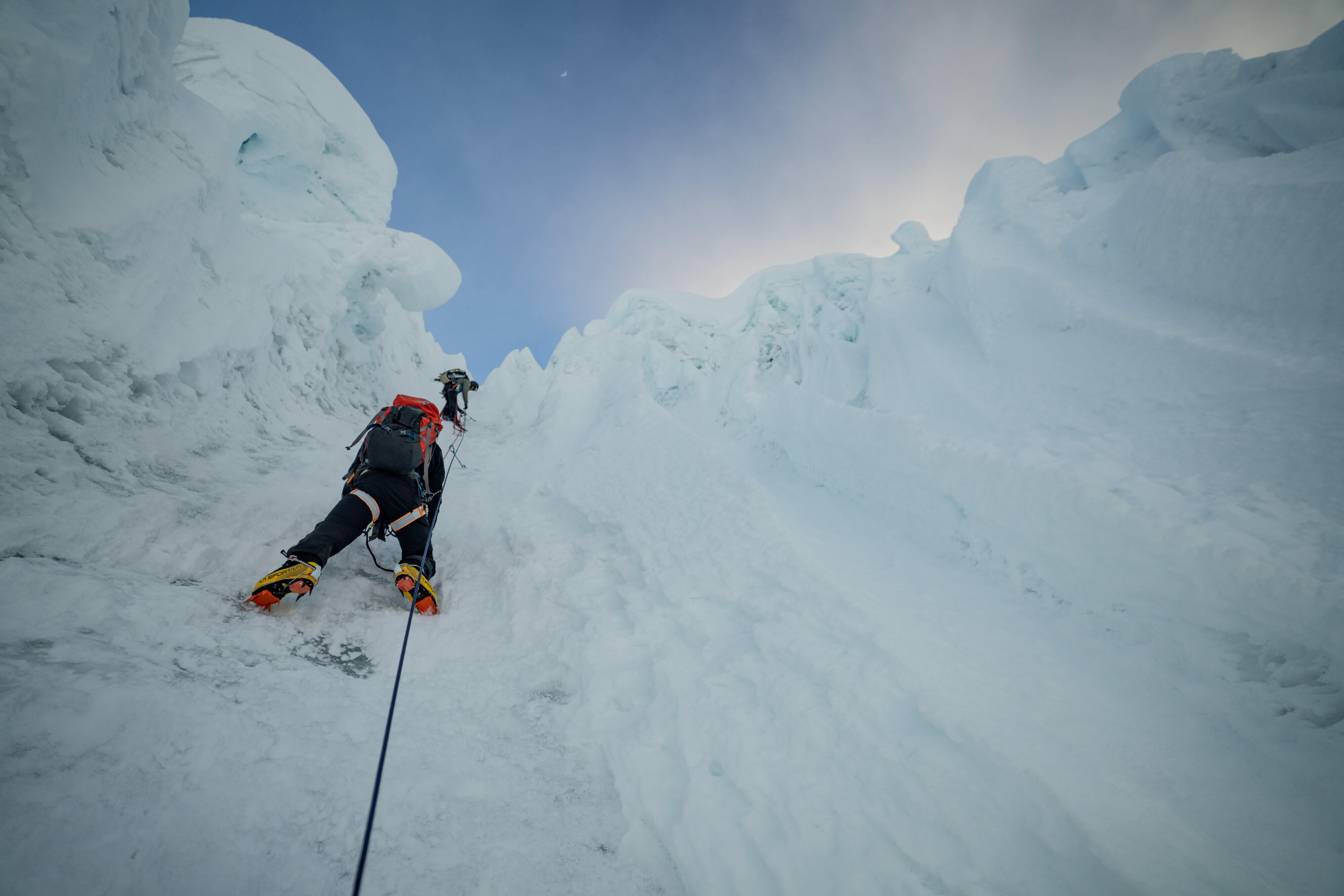
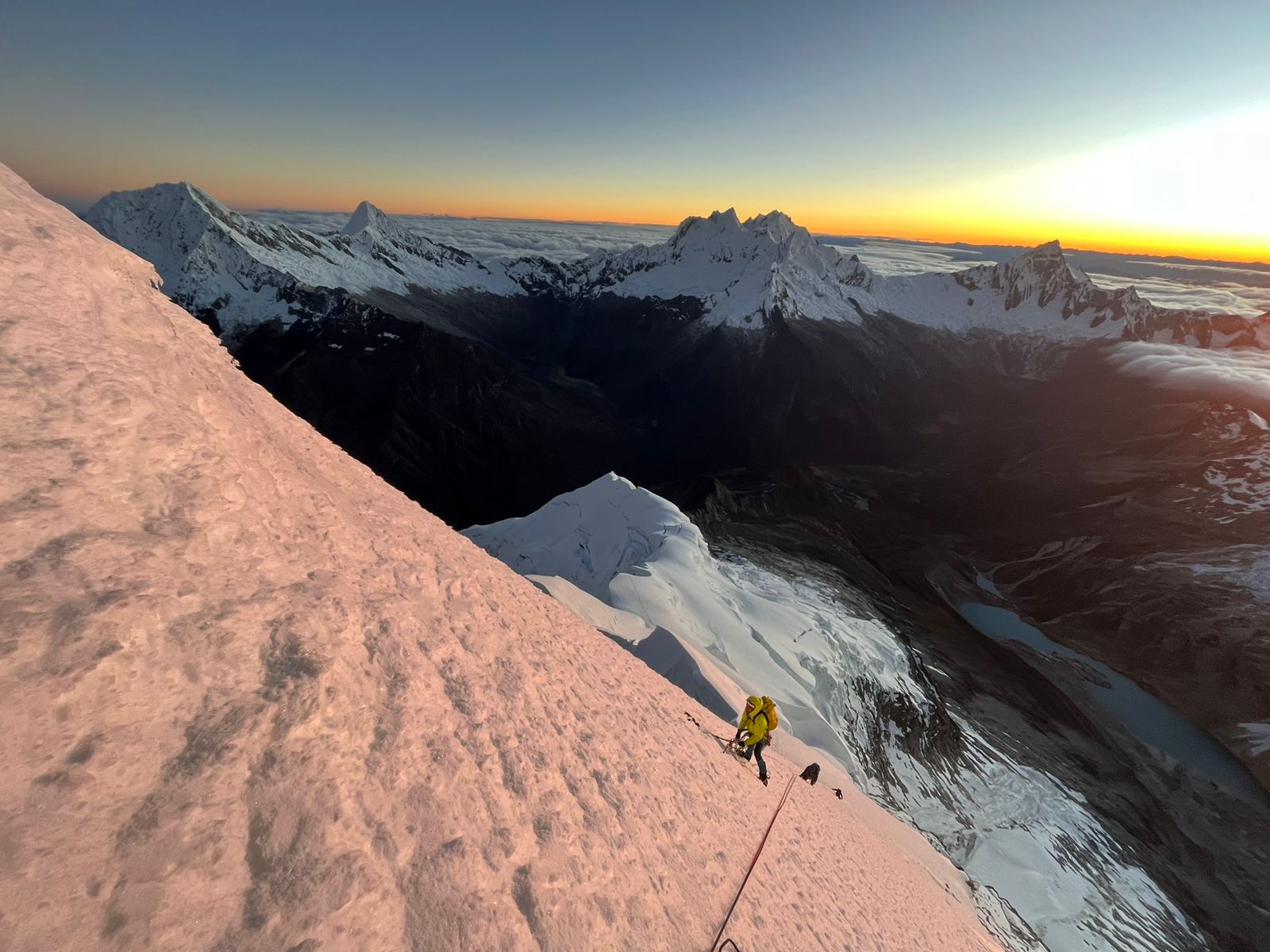
The technical portion of Alpamayo begins at around 18,200 feet, where the ice averages as steep as 60 degrees for the 1,300 feet to the summit. “There were only a few pitches of steeper climbing where we had to take our packs off and haul them through,” said Christian, in a testament to the fitness and capability of the group.
Preparing for Alpamayo
Climbers who attempt Alpamayo with Alpenglow have prior experience on other high altitude peaks with less technical challenge. Many have climbed Aconcagua, 22,841 feet, the highest mountain in South America, and volcanoes in Ecuador. Because the climb requires endurance under load, climbers also train for Alpamayo by running and lifting weights. Alpenglow provides a 12-week mountaineering training program for people preparing for Alpamayo.
Climbing Alpamayo at the Right Time
This expedition was in the middle of Alpamayo’s climbing season, typically from June through July. These months in Peru are often dryer and the snow and ice allows easier travel on the mountain, so it is the best time to climb Alpamayo.
The Alpenglow team was slowed down by weather at first, but climbing Alpamayo is already a slow process. Acclimatizing for Alpamayo takes days of slow movement up the mountain and sleeping and resting at high elevation, or day hikes to move gear up, but returning to a lower camp for the night.
Alpenglow guides go through extensive multi-year trainings, and take time every year to practice their skills on and off the job.
“It was my first time climbing and guiding Alpamayo,” said Christian, who has guided other high altitude peaks around the world, “I don’t know for Nacho and Micher, for sure lots of times.”
Because of the amount of logistics, preparation, and technical knowledge needed to climb the mountain, guided expeditions on Alpamayo have about a 30% better success rate than unguided, only 20% of which summit.
As the Alpenglow team looked out from the summit, they saw no one beneath the clouds. They were the only ones to summit that day.
Ready to Climb Alpamayo?
Curious if you’re ready to climb Alpamayo? Connect with our team. You can schedule a call with Griffin Mims, our International Client Manager, by clicking HERE. You can also email us at info@alpenglowexpeditions.com, or call our office any time at 877-873-5376.
Read More from Peru
Alpamayo: Route, Acclimatization, and What to Expect at 5,947m
Alpamayo has been called the most beautiful mountain in the world more than once, and not by casual observers. In 1966, an international panel of climbers and photographers named its southwest pillar the most beautiful mountain on earth.Read the story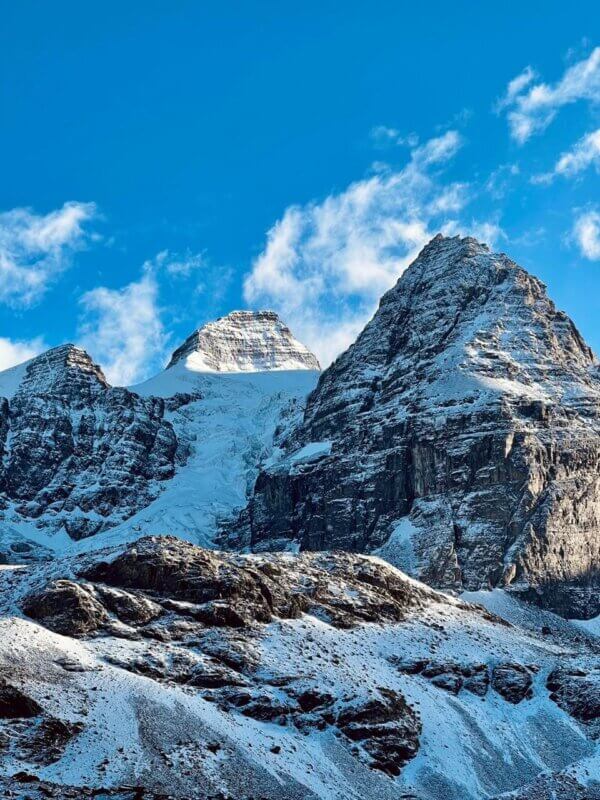
Climbing Pequeño Alpamayo: A Hidden Gem in Bolivia
Climbing Pequeño Alpamayo: A Hidden Gem in BoliviaRead the story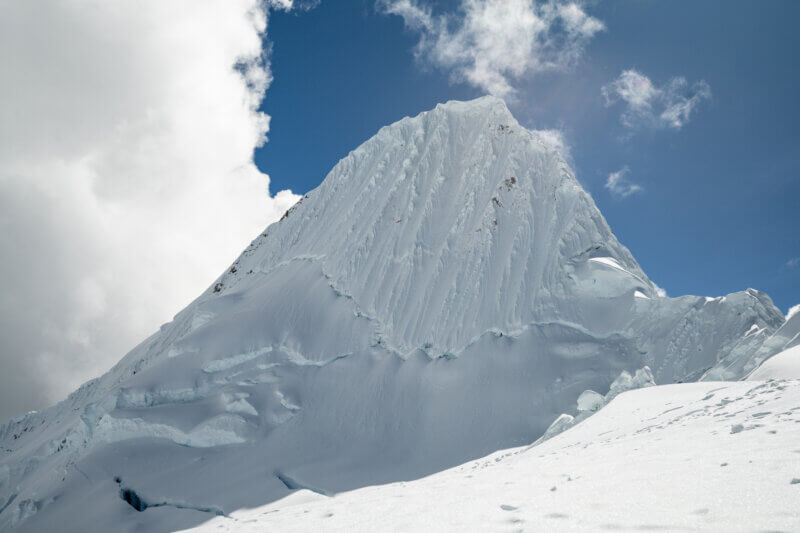
From Nebraska to Peru: Griffin Mims on Alpamayo
This week, I spoke with Griffin Mims, Alpenglow’s International Coordinator and one I am grateful to call friend. I’m excited to share a piece of Griffin’s journey with you from his June 2023 expedition to Alpamayo in Peru, where he climbed a dream line to the summit of a dream peak.Read the story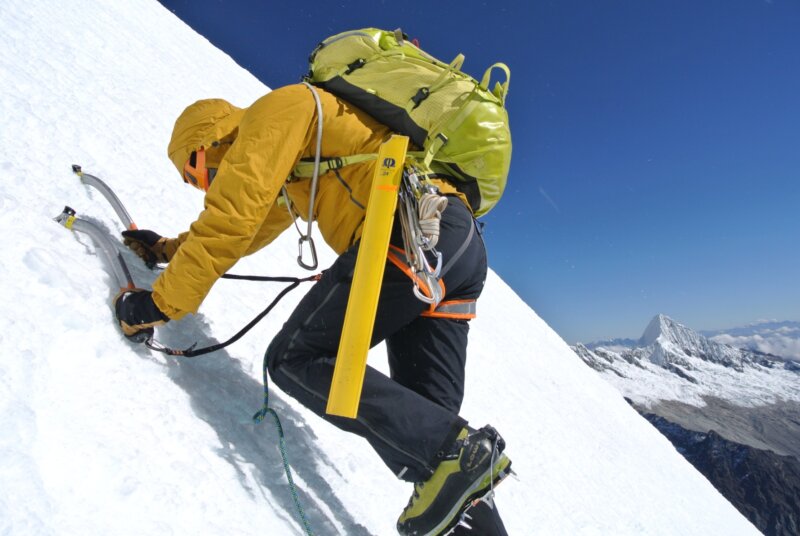
Discover the Heart of the Andes: Alpenglow Expeditions’ Peru Climbing School
The Peru Climbing School is Alpenglow’s most immersive introductory expedition—anyone can join us to climb Yanapaccha (17,913’/5,460m) and Pisco (18,871’/5,752m). We chose the Cordillera Blanca because its allure lies in its diversity, from gentle slopes offering stunning vistas to challenging, unforgiving climbs that test the limits of even the most seasoned adventurers.Read the story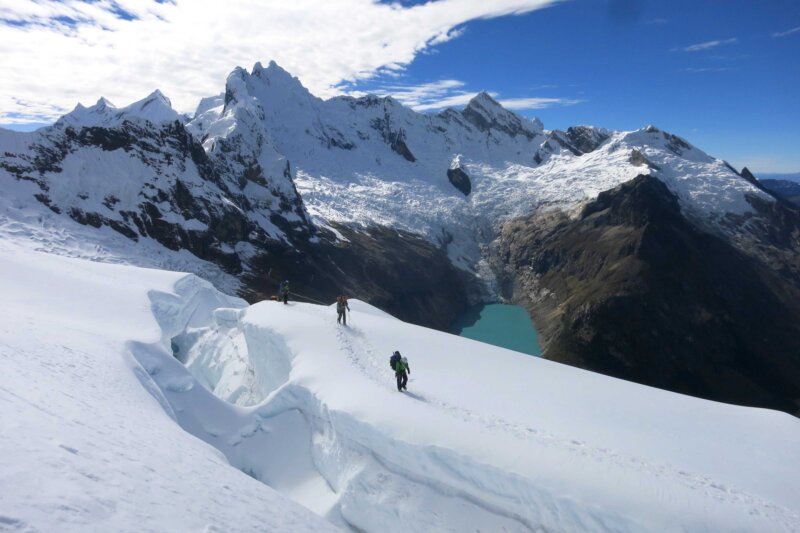
Five Essential Skills You’ll Master at the Peru Climbing School
If you’re looking to build real alpine climbing skills in a high-altitude environment, Peru Climbing School is one of the best options out there.Read the story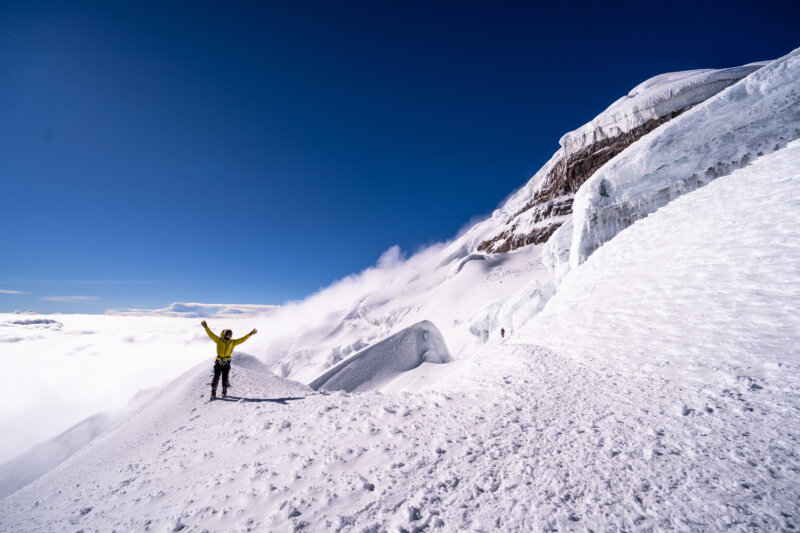
Ecuador vs. Peru Climbing School
Read about the differences between our climbing schools in Ecuador and Peru.Read the story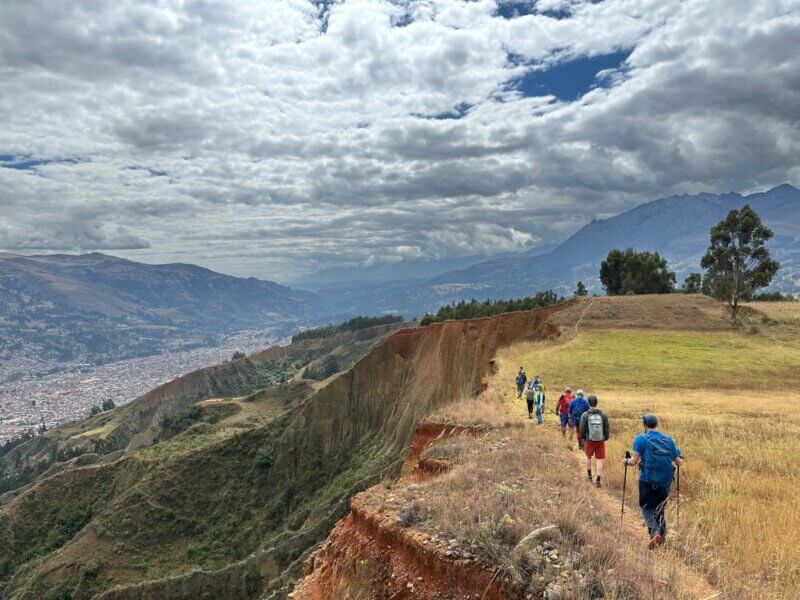
How Alpenglow’s Peru Climbing School Prepares You for Aconcagua and Everest
If you have dreams of climbing Aconcagua, Everest, or other high-altitude giants, proper training is essential. Alpenglow Expeditions’ Peru Climbing School is designed to build the technical skills, acclimatization strategies, and expedition mindset needed for success on the world’s biggest mountains.Read the story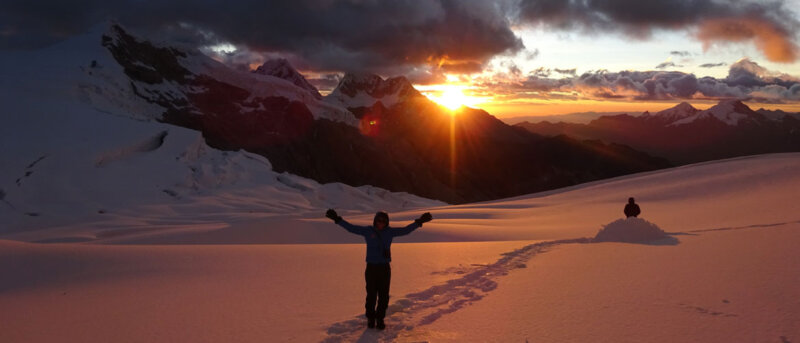
Learn Foundational Skills in Peru’s Cordillera Blanca
Situated amidst the rugged grandeur of the Peruvian Andes, the Cordillera Blanca is affectionately referred to in the climbing community as one of the most beautiful mountain ranges in the world. With a rich history dating back decades, the Blanca has been a focal point for climbers seeking to test themselves and grow as much as it has been a training ground for burgeoning mountaineers.Read the story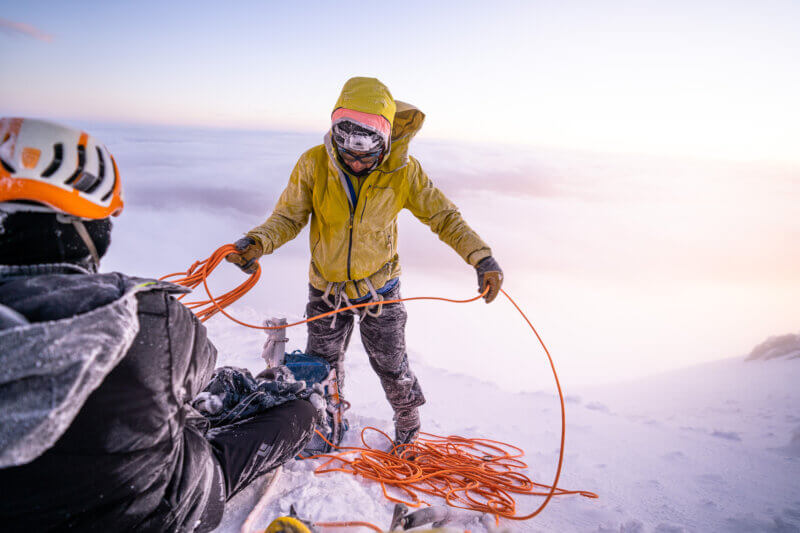
“Give Yourself the Time”: Graduating from Trekking to Climbing with Topo Mena
While ‘walking’ may sound trivial, a number of big mountains involve a lot of walking, albeit in extreme places. To talk about the journey, we connected with IFMGA-certified Alpenglow guide Esteban ‘Topo’ Mena about graduating from trekking to climbing. For beginners, he had this advice to offer: “At first, it’s important to give yourself the time to walk in the mountains and appreciate the land and the opportunity to just be there.”Read the story
More Expeditions in the Andes
- 32.653179° S, 70.010868° W
- 0.180653° S, 78.467834° W
- 33.4489° S, 70.6693° W